Preview Summary –
- Some pundits believe what Senator Booker did recently, beyond making history, might also be a game-changer in our social tempo.
- Since history speaks for itself, the nation’s founding saw people coming together based on two social streams: civics & politics.
- Making history isn’t so much about trying to break records but trying to make a difference. However, some in public service have lost their moral/political will to be decent human beings.
Signup Center –

Main Content:
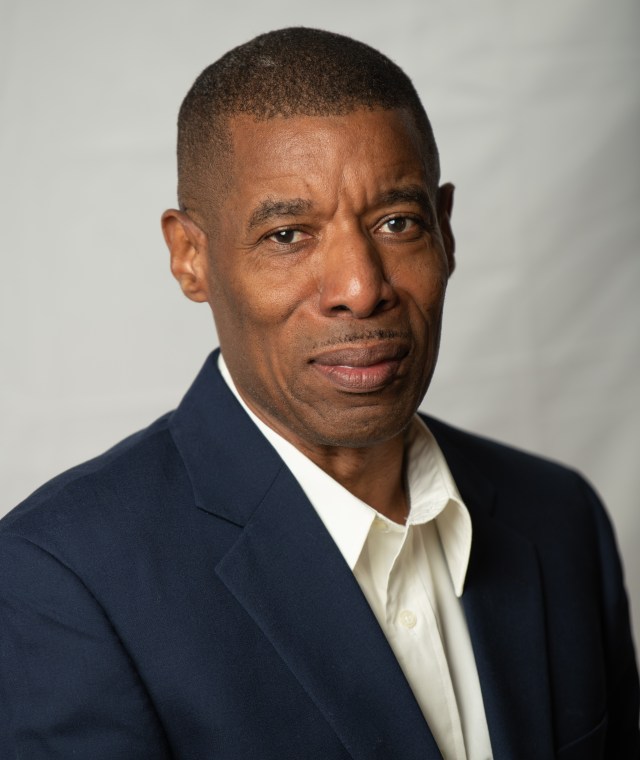
“Da Island Guy”
Sounding Off Social
Another NCAA March Madness is in the books! Three weeks of intense competition led to the Final Four playoffs on the men’s and women’s sides. The UConn woman took the crown through the rounds as the big three of Sarah Strong, Azzi Fudd and Paige Bueckers racked up points like an April showers downpour. On the men’s side Florida came out on top against Houston, after a gutsy rally from 12 points down. The last time all four #1 men’s seeds made it to the Final Four was in 2008. Even though that happened again this year like basketball heaven, fans still had busted brackets.

These days we’ve got a different kinda busted brackets to deal with in public affairs. As economic policy gets rolled out, the stock market and many biz leaders have gotten roiled-up. Things have taken a nosedive with investor fears setting in about the global economy. Meanwhile, in Washington we saw something bold happen on Capitol Hill recently. NJ’s senior Senator Cory Booker, spoke on the Senate floor for 25 hours and 5 mins, breaking the previous record held by noted segregationist Senator Strom Thurmond. That 68-year-old record is no more, but making history is more than breaking records.
It seems Senator Booker decided to do it ‘boom’ for the public good. He realized that by the end of April, we’ll have lived through 100 days of a new Administration in Washington. It has been a rollout driven by politics, politics, politics. Now, politics is an aspect of public service that involves carrying out the policies of governing. As Abraham Lincoln once said, “government of, by and for the people shall not perish from the earth”. But what if the government is being run by factions of self-interest? Maybe it’s because some folks have lost sight of the purpose of public service as seen in:
- The five objectives of the republic: social justice, domestic tranquility, common defense, general welfare, liberty & posterity.
- The five pillars of democracy: voting access/safeguards, shared power, human freedoms, social equality, rule of law.
- The five perspectives for making #HometownStrong comebacks: faith, fear, firsts, fight, face.
Some pundits think what Senator Booker did, beyond making history, might also be a game-changer in our social tempo. He said these first 100 days haven’t been normal and shouldn’t be seen as such. He challenged his colleagues to do better. He used John Lewis as inspiration, like many used Fannie Lou Hamer’s Boston speech in 1968 as inspiration, imploring Americans to wake-up for “good trouble”. That’s like SAIC’s ‘Operation Mojo’ to make our journeys one by how we empower many as one. It’s a chance to rekindle our ideals and virtues. One concern is some have lost the moral/political will to be decent human beings. In the past, when civics got lost or leaders lost their decency (e.g. slavery), politics did too. As we’re seeing now, some folks then make bias, bigotry and bombastic views, fashionable.

One author said the road of America’s founding wasn’t necessarily an ‘immaculate conception’. Plus, since then there’ve been times of contradictions, complications and complicity. But even with those past moments, the road to a better America can be one that rallies around a quote Senator Booker shared in his speech: “The power of the people is greater than the people in power.” History shows that ‘money as power’ has played a role in public policy decisions than put self-interest over public good. While there’s nothing wrong with wealth, there’re some wealthy folks who see themselves among ‘we the people’ and others who see themselves above ‘we the people’. So, what if the power of the people and the people in power came together in a major way? It might lead to a new sense of civic engagement in our:
1. Mindset
UConn player Azzi Fudd was asked at half-time of the game against UCLA, “How is it that you started the game so strong?” Paraphrasing, she said when you get to this level, it’s about having a ‘breakout mindset’ as a team. Everybody’s got to be locked in. Similarly, as things unfold today, we gotta be aware of the stakes. When players are locked in it raises their performance as individuals and as a team. Moreover, it helps raise fan engagement which can impact the outcome of the game. These days in our nation call for a ‘breakout mindset’ that raises our awareness and civic engagement.
2. Mojo

During the civil rights movement local marches got folks’ juices flowing. They’d often gather in black churches to strategize, synchronize and galvanize their mojo. In the 21st century, what’s it gonna take to bring fresh mojo to the movement? Last time we mentioned that when consumers complained about the early PCs, tech heads came up with an innovative solution. This gave us Windows with a ‘point & click’ interface. SAIC uses that model for doing the same in our social discourse, by how we ‘point’ to the more perfect union we seek, and connect the dots across history, civics and culture to make things click.
3. Mission
Some of the nation’s founders and bold citizens back in the day might relate to SAIC’s “mission to educate, vision to empower”. Consider this sequence: Independence declared, 1776; E Pluribus Unum adopted, 1782; Constitution ratified, 1788; NJ’s ‘Township Act’ incorporated 100+ municipalities of citizens governing their public affairs, 1798; national political parties in elections, 1800. Folks led with civics before politics, in life, liberty and pursuit of happiness. That’s why SAIC’s civic rollout includes introducing a Resolution that helps folks rally around answering the question, “What’s America Missing?”
4. Millennials
The U.S. Bureau of Labor reveals that millennials will become the largest population block in the workforce by 2029. Folks in their late 20s to mid-40s will hold key positions of influence and authority in the foreseeable future. We’ve gotta make sure they’re on-board as we influence family, impact culture, invite community and inspire dreams. They’ll bring ‘#MojoOfMillennials energy’ that connects with these words Senator Booker said in his marathon speech: “Moments like these require us to be more creative, more imaginative or just more persistent and dogged and determined.”

So, how do we ‘point & click’ for a better America? How might we do it ‘boom’ for the public good? Our nation’s early days had people come together around two social streams: civics & politics. Civics spoke to our common good and shared humanity. They evolved with politics by outlining citizen concerns (grievances) and developing a template for governing as a democracy. We can use those examples for how we do the same towards life, liberty and the pursuit of happiness in 21st century America. Folks, this is your invitation to our ‘conscious party’ as “J.A.M. Sessions with the People”. Let’s push to start!
Chime-in on impacting Democracy & Public Good, Education & Community or Entrepreneurship & American Dream, ‘Civic Mondays’ events or Civics & Community forums. Plus,you can “J.A.M. With Us” (join a movement) in civic engagement, social change and community life. Checkout the Signup Center below.
Tracks: Ziggy Marley – Conscious Party – https://youtu.be/RSfQ4oE9W9I?si=6Mzfe4xqFLruGEvP
Tyla – Push to Start – https://youtu.be/2WU5pK3ZIQI?si=ws-l4ORUa3SuLZnM
 See America In Color