Preview Summary –
- In the 1600s, Massachusetts colonial governor John Winthrop is known to describe America as a shining “city on a hill”. It’s in seeing the twinkling of America at a higher elevation.
- What’s it going to take for us to be seen as a shining ‘city on a hill’ in 2026 and beyond? We can take a page from the past based on the idea of “Hometown 1776 meets ‘America 250’ in 2026.”
- In the same way women’s sports have brought a certain ‘fullness’ to fan engagement, we can foster a fullness in civic engagement because we were born for this moment.
Signup Center –
Main Content –
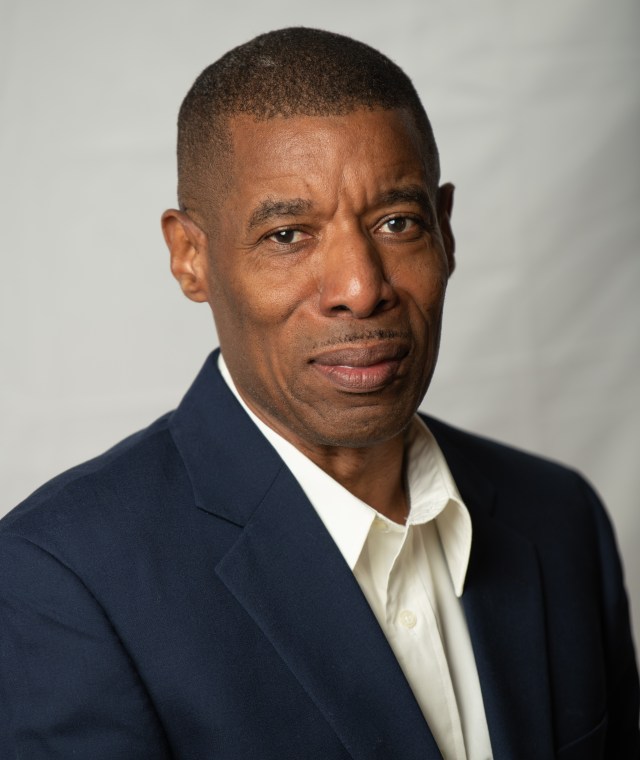
“Da Island Guy”
Sounding Off Social
This is one of those feats that couldn’t be kept quiet. It happened right before our eyes as many watched the Artemis II spacecraft take off from its Florida launch site. In a matter of ten days, the crew traveled to the outer reaches of space and back to earth, with magnificent images and history-making for the record books. They traveled farther into the orbit of space than anyone has ever gone. The trip was a warm-up for what’s expected to be more breath-taking things in space exploration.
While that’s been happening, the world has been on pins and needles across the middle east and Europe. An irony shared by a science enthusiast is how this was the first time the U.S. has done a moonshot trip since the Apollo mission. What is worth noting from back then, while that achievement left folks in awe, here we are many decades later in a similar predicament of a war footing and space-travel expanding. We seemed to have moved leaps & bounds in the science/tech space but still are in a repeating cycle when it comes to the social development space. Maybe a closer look into history, as well as the evolution of technology might help us understand this vexing situation.
In the 1600s, Massachusetts colonial governor John Winthrop is known to describe America as a shining “city on a hill”. It’s in seeing the twinkling of America at a higher elevation. Since then, the phrase has been used by various presidential candidates in campaign messaging. Interestingly, the images sent back from Artemis II and the starry skies gave us a twinkling feeling about what’s possible for humanity. Then, in 1863 there was President Lincoln’s Gettysburg address about “government of the people, for the people and by the people, shall not perish from the earth”. So, as we reflect on America’s first 250 years, what’s on deck for the next chapter? What’s it going to take for us to be seen as a shining ‘city on a hill’ in 2026 and beyond?
Maybe we could commit the same level of ingenuity and foresight that we just experienced with the space program and do the same in the civic/social arena. We can take a page from how they rallied in the past based on the idea of “Hometown 1776 meets ‘America 250’ in 2026.” This would go well with other times throughout history, for how we respond in 2026 and beyond in an inclusive multi-cultural format:
- Thomas Paine’s vision for 1776 and beyond he put in a book called ‘Common Sense’ which made the case for the Declaration of Independence. Nowadays we’ll build on ‘public good sense’.
- Paul Revere (regular citizen) worked with officials to rally hometown voices committed to unity of purpose. These days we can do the same with folks around civic ends and public good.
- Frederick Douglass, Ida B. Wells, Dr. King, John Lewis and others helped young people and a cross-section of folks add voice to social justice. Young people want to clock-in a rebirth in voice.
Moreover, back in our nation’s early founding there were a few organizations spreading patriotic messages. They had their own focus and objectives for engaging with residents. Some of them included the Sons of Liberty, Daughters of Liberty, Philadelphia Patriotic Society, and so on. These days we have a few organizations delivering messages in civic engagement and social justice. But in 1776 there was a certain group that was key to laying the foundation for what would become a new America. They were instrumental with forging a shift in consciousness as a nation. Their example serves us well for a ‘Civic 250’ in America model today by how we develop a new:
1. Language
The recent space launch was next-level stuff. It’s hard to wrap your head around all the mathematical formulas and pre-launch drills that went into the voyage. Similarly, what happened during our nation’s founding was next-level stuff too. Back then we saw new terminology being introduced to describe what America could be. When it comes to technology, there’s always a new language to help folks embrace the concept. Whether with Windows or smart phones, we find ourselves expressing concepts differently. Well, SAIC represents a new language for capturing civic/social issues in a next-level way.
2. Mindset
It’s become generally accepted that ride-share services are here to stay. A decade or more ago there was a different mindset for takeout and transportation services. So, what made the shift happen? Well, ride-share services seem to offer the marketplace a sense of purpose for getting people or food to a destination. People feel like they’re involved with something that gives them the feeling of fulfilling a consumer-driven demand. Even these delivery options came with a new language in the transportation and food services sectors. What if we had a similar mindset for civic-driven demands of our times?
3. Process
When you look back in time, you see that the founders/influencers were ‘civics heavy, politics light’ to overcome fear of King George III and the colonial structure. We can do the same in 2026 to overcome current fears, with a new & improved approach. Imagine if as a Caribbean dish, we wanted to make a more perfect jerk chicken or oxtails, we’d need the right ingredients, utensils and recipe for our ‘cooking best’. Well, to be a more perfect Union, we need the right vision elements, conviction of purpose and voice of players, with a process for being our ‘hometown best.’
4. Sizzle
What does it mean to speak to the consciousness of the nation and young people? Think back to when you heard an old song you’ve listened to many times, but something was different at that moment. It’s not that the words or beat changed, it’s just that you had a eureka moment in realizing you were making up your own words in the song. Take any other cultural phenomenon. What happens for people to latch-on isn’t just the new language, but there’s a new sizzle with the concept. Similarly, we can have a new sizzle with civic/social issues in how we embrace SAIC’s new lingo for interpreting history, civics and culture.
Political Scientist Kevin Smith has found in his research that Americans are dealing with ‘politically induced fatigue.’ There’s also Pew Research Polling that aligns with those findings where the fallout has become bad for our mental health. It’s as if, like in 1776, we need a new social rebrand and civic vantage point. Back then some elected officials supported regular citizens in ways that sent a message to ‘we the people’. Well, in the same way women’s sports have brought a certain ‘fullness’ to fan engagement, we can foster a fullness in civic engagement with a new language, mindset, process and sizzle.
Chime-in on impacting Democracy & Public Good, Education & Community or Entrepreneurship & American Dream, ‘Civic Mondays’ events or Civics & Community forums. Plus,you can “J.A.M. With Us” (join a movement) in civic engagement, social change and community life. Checkout the Signup Center below.
Tracks: Skip Marley – Calm Down – https://youtu.be/eyq74jtdgnY?si=yTFzqb-spzrWp8DQ
The Score – Born For This – https://youtu.be/EP_CDtyV41g?si=yGttsKxH6f8WOeIo

