The Repeating Cycle of America: It’s Time for Us to Grow-up as a Nation and Stop Being Stuck in The Past of Our Old Ways

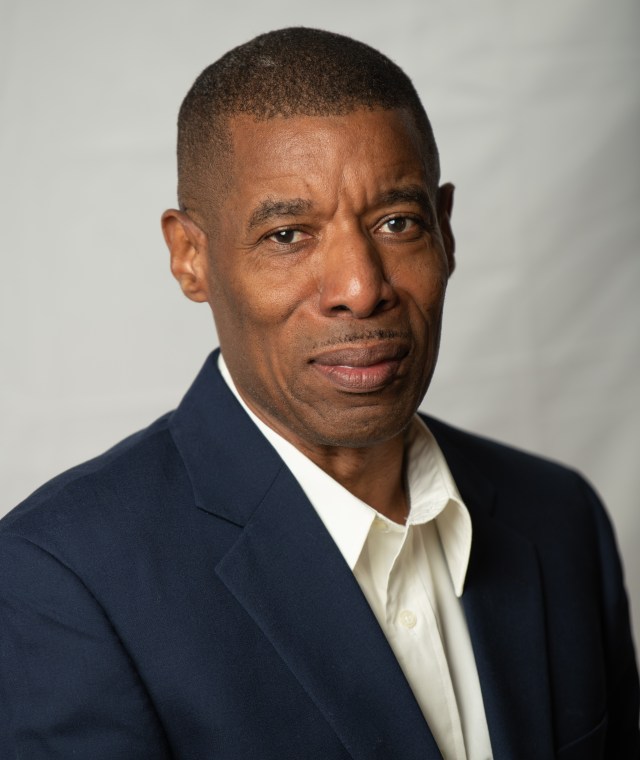
Doc Cunningham
“Da Island Guy”
Sounding Off Social

Artistic genius at its best! That’s how many have been describing the Superbowl halftime performance by Kendrick Lamar. As one friend wrote on social media, “he used hip-hop bars to deliver symbolism and messaging over entertainment.” There’re a bunch of clips about the subtext and subliminal lessons in the performance. Not everybody saw it that way though as some felt the show didn’t have enough razzmatazz. But maybe the current social climate called for a different way to view the rhymes. Ever wondered how folks made it through crazy times of the past? Well, we’re living in such a moment.

Social Media Options

To understand where we are in time, let’s look back to the period of Reconstruction. This ties-in with the phase of America’s story after the civil war that saw a ‘rollback’ (sorry biz leaders) in civil rights gains. Back then, when blacks were promised 40 acres and a mule, there was a rollback. When black folks started to win elected office, there was a rollback in ballot access. After voting rights and citizenship laws were passed, there was a rollback to what became known as Segregation. In our current season of backlash to Black History Month and anti-DEI sentiment there’s basically a rollback in fulfilling America’s ideals.

The problem is that Black history has always been a catalyst for change against the bogeyman, sometimes known as a ‘white supremacy’ mindset. Said another way, whenever America makes headway towards a more perfect Union, there’re forces that operate around:

  • Denial of truth: Self-evident truths turn into ‘social truth’ like sometimes happens at a bar.
  • Withdrawal of trust: As America withdraws from neighbors/agreements, denial is to autocracy as withdrawal is to hypocrisy.
  • Tyrannical in task: There’s so much angst due to knee-jerk decisions and faulty explanations.

In the past, this has led to citizens getting bamboozled by a skewed reality as leaders chose to unwind progress under the pretense of trying to upgrade policy. Plus, in some circles these days, patriotism seems to be more about a ‘race to riches’ than a service to the common good as a nation. It’s interesting, last time we talked about the words ‘establish justice’ appearing in the Constitution. Well, another objective listed after the preamble of ‘We the people in order to form a more perfect Union,’ is found in ‘general welfare’. Some in America have lost their way on ‘general welfare’ and handling of grievances.

Headline Rapper

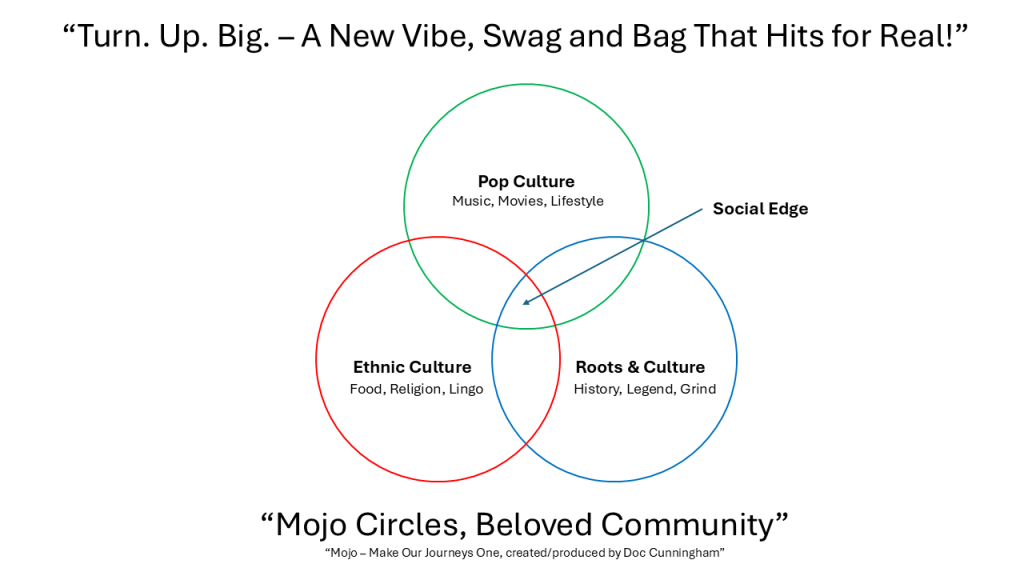
Well, like Lamar’s halftime show, SAIC’s efforts as a social-edge campaign/platform bring symbolism and messaging with uplift entertainment. A new phase of our rollout (as opposed to rollback) is in ‘Operation Mojo’ where community partners join forces to ‘make our journeys one’. Not enough time to get into how this relates to history, but moments in our past have had wake-up calls. Those times in history were followed by two scenarios: (1) Boycotts, (2) ‘Social Moonshots’. In other words, there were upshift steps in civic engagement, social consciousness and programs to level-up our game. An important note is that America seems to have a repeating cycle. So, it’s time we choose to grow up and stop being stuck in the past of our old ways. We’ve got to learn from those past moments by how we:    

1. Influence Family

    People often say Black history is American history. One way to understand this is when white folks can take to social media and read between the lines of Lamar’s symbolism and messaging. This means his performance wasn’t just a ‘black history’ performance. There’re some ‘common good’ aspects to black history that have significance beyond black people. We know that’s true from Dr. King’s message about building a ‘beloved community’. Yea, he was rooted in Black America based on genealogy. But his message was the ultimate example of diversity, equity and inclusion as a family line or American family.    

    2. Impact Culture

    One of the ways folks tried to impact culture back in the day was through intimidation. The KKK became a thing after Reconstruction because folks wanted to reset the narrative about the civil war. They also did that through ‘denial of truth’ by saying the civil war was about ‘State’s Rights’ when it really was about trying to hold on to slavery. We can impact culture today by how we relate King’s ‘beloved community’ with SAIC’s ‘mojo circles’. What if we could show folks another way to ‘slice & dice’ the craziness of our times through civics, the way Lamar gave us a new way to get the message across through his lyrics?     

    “Operation Mojo”

    3. Invite Community

    Think about how smart TV’s have made streaming apps and multi-media features possible? We can watch Internet broadcasts on our TV sets and ‘mirror’ content from our phones to our family room big screen. Well, think about what ‘smart civics’ might do to raise our civic engagement and social consciousness. SAIC’s expertise in this area is about connecting the dots across history, civics and culture. This way we’ll achieve ‘informed living, homeland rising’ with EASE: Educational, Aspirational, Social, Entrepreneurial. Ready to get on board our Friday Night Flights to a higher destiny of community?

    4. Inspire Dreams

    It’s hard to believe that next year will be 40 years since we’ve been honoring the MLK Holiday. It was signed into law on November 2,1983 and first observed as a holiday on January 20, 1986. That should be enough for us to see it’s time we grow up as a nation. Also, next year we’ll have the 250th anniversary of America’s Independence. Let’s put it this way…America’s independence inspired dreams of a new nation built around democracy as a republic. Moreover, Dr. King’s dream was built around the idea of making diversity, equity and inclusion meaningful in our journey. How are those dreams looking these days?      

    Life Dreams

    At a civil rights movement transition point in April 1968, Dr King said these words: “The nation is sick. Trouble is in the land. Confusion all around.” By Summer ‘68, Fannie Lou Hamer at a Boston speech said America must “wake up.” Are we at a similar point now? Well, Dr. King outlined two high-level steps: (1) Fierce urgency of now, (2) Do something for country, keep moving with new energy. So, does ‘Operation Mojo’ interest you or your group? Let’s get through the rumble & tumble moments by how we influence family, impact culture, invite community and inspire dreams in the next chapter of America’s story.    

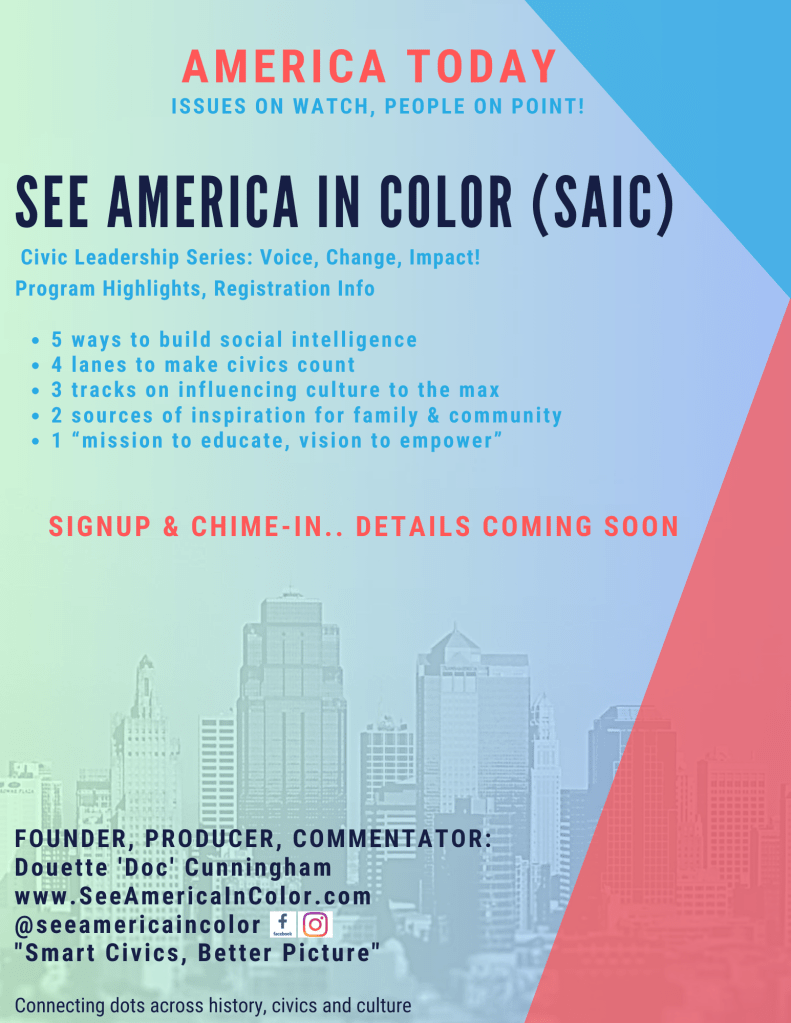
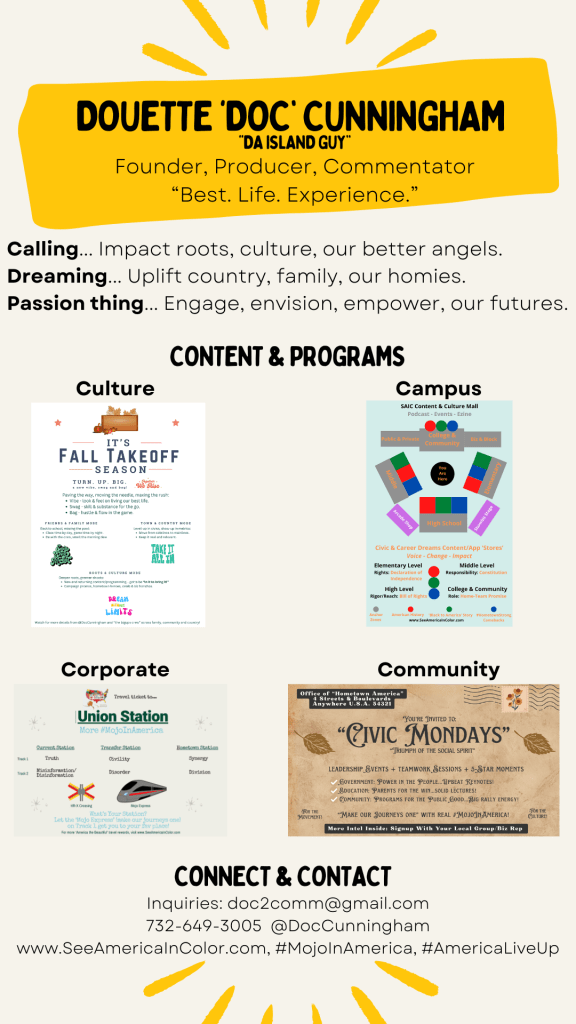
    Chime-in on impacting Democracy & Public Good, Education & Community or Entrepreneurship & American Dream, ‘Civic Mondays’ events or Civics & Community forums. Plus,you can “J.A.M. With Us” (join a movement) in civic engagement, social change and community life. Checkout the Signup Center below.

    Tracks: P!nk – What About Us – https://youtu.be/ClU3fctbGls?si=kF83Dml6T4Z4yh0x

    Chaka Khan – Keep Your Head Up – https://youtu.be/88DS-T7Ypa4?si=V5Art2MWV-7zFbLb

    Signup Center

    Roll Call 2025 For Here and Now: What Presidential Inauguration, Civics and American Values Should Mean During This Season of Makeover

    Not since 2005 had Christmas and the start of Hanukkah fallen on the same day. The significance of that coincidence happening this past holiday was not lost on many faith observers. Normally after Christmas the usual ‘small talk’ children have with others is “what did Santa get you?” While that question has been long answered by now, there’re some bigger questions that America needs to have front and center. There’s also the coincidence of Inauguration falling on MLK Day.

    What’s America Not Seeing?

    Since it’s the start of a new year to build on vision, there’re probably some action items you’re turning into goals. To make them a reality will take steady effort and maybe even probing insight. That’s where we find ourselves as a nation too as we ponder what presidential inauguration, civics and American values should mean during this season of D.C. makeover. There’s probably a steady effort underway to get folks in place. But what about the probing insight needed to make sure America rises to the occasion of the Constitution and its goals? Meanwhile, there’s a shake-up happening in social media and traditional media. Not enough time to get into it here, but for clues we gotta go back to America’s second President John Adams.

    Following the pre-amble’s first few words of “We the people in order to form a more perfect Union”, comes these two words: “establish justice”. As SAIC is known for, we’ve done a deep dive in American history, the ‘Black to America’ story, and #HometownStrong comebacks for some probing insight. The founders wanted to establish justice as a nation because there was a sense of unfairness from the British throne. But America’s history has also seen a focus on ‘social justice’ in response to those experiencing the feeling of denial. There’s been equality denial, voting rights denial, opportunity denial, climate change denial, and more recently, election denial as well as DEI & truth denial. Dr. King understood this social justice element when he said, “injustice anywhere is a threat to justice everywhere.”

    Just to recap, those ‘threads of denial’ led to different moments in history. They’ve played a role in America’s tug-of-war between two sides: life, liberty and happiness vs hate, grievance and divisiveness. Plus, throughout history we’ve had moments of major ‘public lies’ that caused Americans to make decisions based on deception and not destiny. These ‘lies’ included the three-fifths clause, Supreme Court decision on Dred Scott as well as Plessy vs Ferguson ruling on ‘separate but equal’, and more recently, disinformation about the 2020 election results. It’s important to share these not simply to cry foul, but to remind us that history is like a ‘civics bible’, the more we apply it the better we’ll handle life’s issues.

    “Civics Bible”

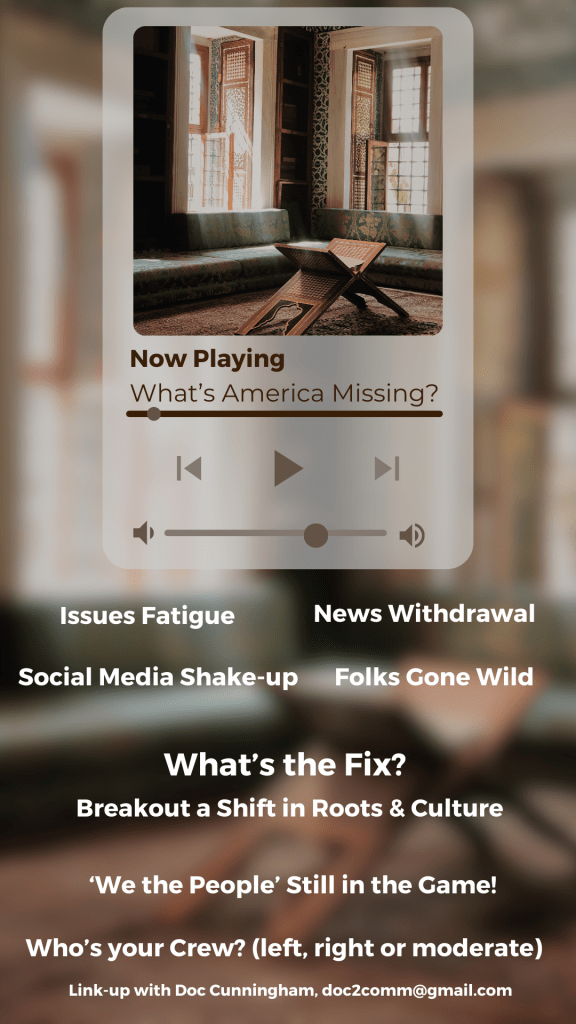
    Dr. King encouraged us as a nation to choose the path that led to a higher destiny of community in the same way that SAIC offers a path for a higher level of citizenship. When King wrote the book “Where Do We Go from Here: Chaos or Community?” there was a stretch between 1963 and 1968 that holds some relevance to the past five years. What could have caused him to go from his ‘I Have a Dream’ speech to his ‘Mountaintop’ speech five years later where he said, “The nation is sick. Trouble is in the land. Confusion all around.” Well, we might add a new subtext to King’s book title with the words “What’s America Missing?” If we had to interpret King’s dream and make it relevant to here and now, what might our 2025 goals (and beyond) as a nation look like? Maybe we should first revisit “Out of Many, One” and reset around how we “Empower Many, as One” to: 

    1. Build your Quad/Squad

      In the ‘here & now’ Dr. King could rattle off some quick points of concern. He might suggest that some parts of ‘The Church’ has lost their high ground. He might emphasize that we need a new social consciousness mindset with education and civic action as two sides of the coin of economic/social impact. His dream might point to a newer sense of urgency for how we build our quad/squad so that America’s unresolved trauma, unresolved truths and unresolved trust don’t spread even further like wildfire. As with computers, when truth is lost, we end up in an error condition or major system failure.    

      2. Build your Brand

      In the new year as companies announce that they’re rolling back certain initiatives, many are wondering, what does that mean for the ‘pace of change’? In civic life W.E.B. Dubois talked about us having a double consciousness of how we see America and how America sees us. Well in business there’s the idea of having a ‘double bottom line’ in how you make money and make a difference. Those in biz know that as you build your brand and attract customers, you’ve gotta do things even when it’s not ‘popular’. Similarly, to build success you gotta do some things that aren’t always convenient or ‘trending’ at the time.  

      Attracting Customers

      3. Build Your Block

      When “Out of Many, One” was adopted in the early days it served as a mantra in going from 13 colonies to become the United States of America. Back then there weren’t any political parties, just folks operating with the idea of “hearts & homes for America.” If we’re gonna “empower many, as one” we gotta empower many families as one, many communities as one, even ‘We the People’ as one. To get there, we’ve gotta put civics in the driver’s seat. With politics we tend to see a push/pull between money and power. With civics we get to be inspired by a push/pull between people and progress, between ideals and innovations.

      4. Build Your Cred

      What’s it gonna take to build more cred as a nation and level-up our Union? To begin answering the question “what’s America missing”? we need a model to connect the dots across history, civics and culture. Plus, maybe America needs a new mojo in our game, culture needs a new lingo to explain things and families need a new go-to for not repeating same-old-same. In sports, momentum rules the day. Teams can have similar records and somewhat equal talent, but it’s in how they bring juice, magic and charm that things click as mojo. Similarly, we can build our cred by how we deliver more #MojoInAmerica.      

      Mo-men-tum Building Efforts

      At Franklin Delano Roosevelt’s inauguration he said, “the only thing we have to fear is fear itself”. There’s a certain kinda fear that’s hovering over the nation in this season of political makeover. Dr. King as a Baptist preacher might use scripture to remind us that “God didn’t give us a spirit of fear. But of power, love and a sound mind”. In this new period of civic engagement, let’s build King’s dreams and our purpose in speaking truth to power, operating in love with one another and maintaining a sound mind. Every kinda people make the world go ‘round and ‘We the People’ keep America moving towards destiny.  

      Chime-in on impacting Democracy & Public Good, Education & Community or Entrepreneurship & American Dream, ‘Civic Mondays’ events or Civics & Community forums. Plus,you can “J.A.M. With Us” (join a movement) in civic engagement, social change and community life. Checkout the Signup Center below.

      Tracks: One Republic – Better Days – https://youtu.be/dbUI7JfHxLc?si=2BvAy-E-pbIILi7i

      NF – Hope – https://youtu.be/YUdkYx9WH9k?si=eHvA_Zf1LeENndCg

      Signup Center

      How Does America Explain Itself? (Part 2 of 2): A Wake-up Moment on the Reality of Our Times

      Doc Cunningham
      “Da Island Guy”
      Sounding Off Social

      The holiday line-up is in full swing! Things started to roll out before Thanksgiving with promos for Black Friday. It seems we’ve already shattered shopping records with more cash registers left to ring. Online sales continue to skyrocket as folks do more clicks than trips to the mall. Even in sports the line-up is set with twelve teams named for the new College Football Playoff (CFP) series. And of course, holiday lights are twinkling everywhere.

      Holiday Lights

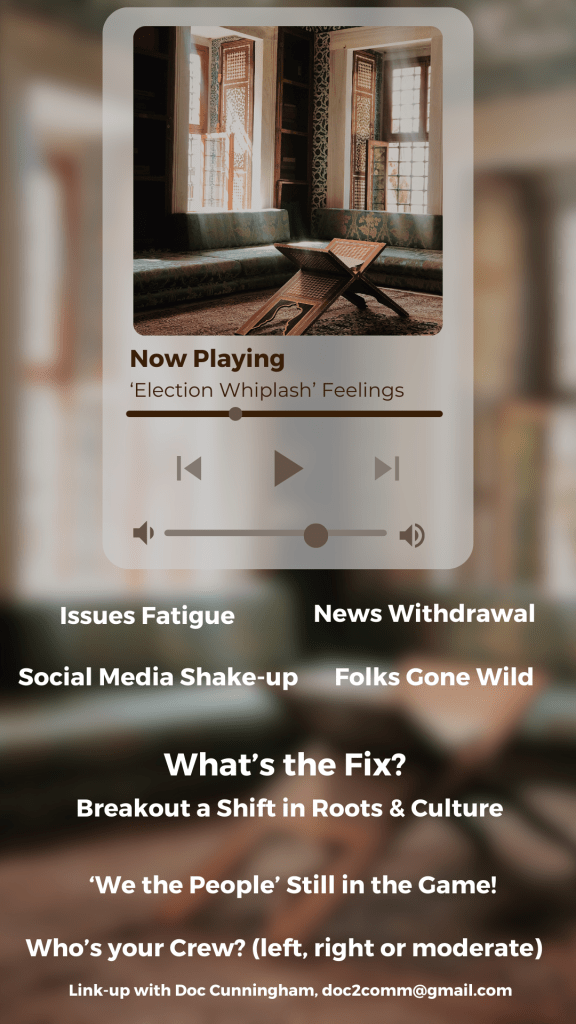
      Meanwhile, others are gearing-up for a changing of the guard in Washington. With the final count of election results being just about done, some wanna regroup. As with sports, it helps to ‘review the film’ to see what led to the loss at the party level. But another way to understanding the ‘L’ is in whether we’ve lost or way as a nation. For starters, we get to see the full picture by comparing America over the past 20 years, with the first 20 years of America’s founding and rollout.

      Interestingly, the first line in the Constitution is a statement of civics (“We the people in order to form a more perfect Union”). The rest of the Constitution comes with statements of politics. Similarly, the most quoted line at the beginning of the Declaration of Independence is a statement of civics (“We hold these truths…). The 27 grievances listed afterwards help us see how things can get caught up in politics. Maybe it’s not an accident that the motto E Pluribus Unum (Out of Many, One) happened in the first 20 years, when compared to America’s recent journey of ‘election whiplash’ over the last 20 years.

      You’ve heard it said that we live life forward but understand it backward. From our ongoing deep dive in American history, the ‘Black to America’ story and #HometownStrong comebacks, we’ve made the following notes that might serve as a wake-up call on the reality of our times, based on the last 20 years of presidential campaigns:

      • When politics get put in the driver’s seat, civics get put in the backseat (or even the trunk).
      • History and its lessons are often overlooked or dismissed, so unproductive things repeat themselves like a memory-loss patient.
      • There’re times when roots & culture get the side-eye from those in politics, biz/admin or pop culture, which can leave regular folks in the dark.
      • When people or public officials miss the mark, it takes a ‘We the People’ view to bounce back. When politics is used as a wedge, those folks are working with a ‘We the Privileged’ view.

      What you’ll see from looking at the first 20 years is that America has two ideological threads rooted in its political DNA: one based on enlightenment, the other tied to disenfranchisement. Taken a step further (or deeper), America’s journey has followed two threads: “Life Liberty & Happiness; Grievance, Hate and Divisiveness”. Moreover, whatever thread a campaign runs on, that’s likely how it will govern. With a closer look, you’ll discover three aspects in American history that help explain how these threads came to be. So as America tries to explain itself (to itself and the world), these threads shed light on who we say we are (ideals) versus who we show we are (identity).

      Connecting Ideas & Ideals

      In the next chapter in America’s story it’s important to connect the dots across history, civics and culture. Why? Well, we’d never allow in school, biz, sports or even family what we let happen in politics/civics. With the former arenas there’s some department that will sanction folks when they step out of line. In public affairs ‘We the People’ are the oversight body by how we vote. But we can’t sanction when we don’t understand the ideological threads of contradictions versus convictions. Like we saw in the first 20 years of America’s existence, it’s gonna take putting civics in the driver’s seat. This way we’ll know when the media finds its legs between reporting vs marketing, informing vs idolizing, and better understand the:  

      1. Stakes

        Our body does hundreds of operations each day to stay alive. We make lots of decisions to keep our lives on track. Not all decisions are high stakes. Some are just run-of-the-mill. Every so often, we get an alert or info that requires a high stakes decision. The first 20 years of America’s existence had high stakes decisions producing our founding documents. The last 20 years of our existence have been on a razor’s edge. We gotta pay attention to social alerts and historical info for better high stakes decision making. We gotta better balance screen time and learn time, not just making decisions as ‘reality entertainment’.    

        2. Stars

        Every industry has stars recognized at various awards. In culture, star-factor shifts and evolves with the times. What we’ve seen throughout history are folks who only want to celebrate others whose light shines white, versus folks who wanna celebrate others whose light shines in a multi-colored, multi-cultural way. In other words, there’re those who see ‘Whiteness as their wokeness, and otherness as your weakness”. The light folks shine on the inside, is the light they project on the outside. A black & white TV projects white light, but a smart TV’s beautiful picture projects colored light. That’s what SAIC brings to the party.

        3. Stats

        Stats Manager

        Every sport has its stats where analytics has become its own commodity. But so has happened in politics where lies, disinformation and distrust have become their own commodity that gets sold to the public. But Dr. King wanted us to avoid being sidetracked by bad stats. His hope during the civil rights movement was that it would help our nation achieve a higher destiny of citizenship. It’s not about one side trying to fool the other side or control the other side or turning culture wars into battles that fool the public. It’s about how we fulfill the ideals of America’s spirit and get back our ‘civic mojo’ to make our journeys one.

        4. Story

        Sometimes elections are like ‘baptism’. We get preached the ‘gospel of the parties’ then are all-in with the policy/programming. However, whether at graduation, a wedding day or baptism, that’s not a one-time thing but a lifetime journey of learning and growing. America, we got to do a better job after elections where it’s not just a one-time thing, but a lifetime journey of being informed, engaged and inspired citizens. After graduation we get to grow in skillset. After the wedding day we get to grow in marriage. After baptism we get to grow in faith. After elections, we gotta grow in the story of perfecting America.     

        World View

        Throughout history ‘We the People’ used civics to become more informed, engaged and empowered around the stakes, stars, stats and story. We’re at that moment where we need to not just be about ‘the show’ but also about ‘the know’. We must remind ourselves of what it means to be a democratic constitutional republic, not just a hodgepodge tribe of citizens. We’ve got to deploy a new world view, with history as a mirror to help us see who we are; civics as a map to see our way around; and culture as a motor to drive our way through to an America we desire and expect in our hearts and homes.  

        Chime-in on impacting Democracy & Public Good, Education & Community or Entrepreneurship & American Dream, ‘Civic Mondays’ events or Civics & Community forums. Plus,you can “J.A.M. With Us” (join a movement) in civic engagement, social change and community life. Checkout the Signup Center below.

        Tracks: Bob Marley – Wake Up and Live – https://youtu.be/dq-_js08tU0?si=911h24tdDvfUQI6t

        John Legend – Wake Up Everybody – https://youtu.be/iJgxJ6JrPkc?si=Rr7Y7mIFeXKzs9zn

        Signup Center

        How Does America Explain Itself? (Part 1 of 2): A Wake-up Moment on the Reality of Our Times

        Doc Cunningham
        “Da Island Guy”
        Sounding Off Social

        Well America, what just happened? A couple weeks ago the Yankees fell flat in the World Series. Over recent days in college football, we saw Georgia get beat by Ole Miss. Even soccer had its shocking result as Messi’s Inter-Miami squad got knocked out of the MLS playoffs by Atlanta United. Maybe the post-game analysts, sports radio pundits and podcast hosts are gonna make it make sense.

        Podcast Host

        Then came the presidential election. It’s going to take some time to have it all make sense, but we gotta avoid being stuck. After a disappointment like happens in a big game, the commentators might run through the season from start to finish to help connect the dots. Moreover, the analysis might look at the team’s past and present to consider their future options. We need to do the same to answer the question, “how does America explain itself?” Maybe one aspect is that folks see their vote like voting for contestants on a realty tv show. Plus, with around 6 million less folks voting for president compared to 2020, and the social hierarchy from history, looks like many had more dread than hope.

        Pendulum Swing

        But there’re lots of other factors to pull in when reviewing the reality of our current times, in terms of history and legacy. For example, during biblical days there was a pendulum swing over a 450-yr period between good Kings and bad Kings, where God at times had to step in to set things straight. But let’s make it make sense from SAIC’s ongoing deep dive in American history, the ‘Black to America’ story and #HometownStrong comebacks. We learned that throughout America’s almost 250-yr history, author Corey Brettschneider says we’ve seen a similar pendulum swing:

        • We’ve flipped back-and-forth between reckoning and recovering in the journey of America.
        • It was the efforts of ‘We the People’ that ensured America kept moving and growing.

        Reckoning had Democracy on edge, while recovery had it on elevate. Then, add-in thoughts Dr. King shared in 1967 from assessing the civil rights movement and race relations in his book “Where Do We Go From Here: Chaos or Community?”. He once said that “darkness cannot drive out darkness only light can do that. Hate cannot drive out hate, only love can do that.” SAIC’s footnote on King’s message is that “politics cannot drive out politics, have civics help do that.”  A cold hard truth is that love doesn’t spread hate, only self-hate does that. Light doesn’t spread darkness, only darkness does that. So for America to heal, how’re we gonna address the self-hate, the darkness, the hypocrisy?

        Bible History

        Furthermore, the presidential campaign revealed some things about trying to heal election wounds. No one with a wound goes out and keeps re-injuring the wound, expecting it to heal. It’ll heal when given treatment or surgery or time, as with athletes after a hard-fought game or injury. The problem we have is that sometimes politics keeps re-harming the wound. So we’ve gotto do some analysis to help America explain itself (to itself). For starters, there’s a void/disconnect in how we see America and each other in:    

        1. Humanity

        SAIC’s social-edge framework is built on the shift from black & white TV to color TV. Black & white TV beams a stream of ‘white light’, with varying shades of gray. Color TV beams three streams of ‘colored light’ (red, green, blue), when combined give the beautiful picture on our sets. America began with a single stream of ‘white light’. The nation’s journey towards a more perfect Union is shifting to a multi-stream ‘array of light’. The ever-present challenge in America is some mainly want to stream ‘white light’. This sadly plays out across humanity and the annals of time in a mindset of “whiteness over otherness.”

        2. Democracy

        Each time our democracy was on edge it was preceded by a stark ‘public debate’ or provable ‘lie’. Around the time of our founding and the subsequent abolition period, the debate was that Blacks were inferior (three-fifths clause). During the Antebellum period, a ‘debate conclusion’ led to Dred Scott being told he had no rights as a citizen (Supreme Court Ruling). More recently after the 2020 elections, things went off the rails. In each case, the wranglings led to seismic moments in American history. So, understanding modern elections and how we got here means connecting the dots across history, civics and culture.

        3. Party

        Political parties took shape around 1796 and more fully by the 1800 elections as Federalists and the Democratic-Republicans. Now, don’t get stuck on labels since party names have changed and ideology flipped between parties over time. The key thing to note is ideology flips between living in contradiction or living in conviction. An example of this from the early days was in slavery as a contradiction to the Declaration of Independence ideal of equality. These days the contradictions play out in election polling data and public policy info. Was the election really about the economy or other contradictory factors?

        Ideology Flip

        4. History

        It’s said that controversy sells, sex sells, celebrity sells. This election saw ‘bigotry sells’ surface in new ways. These were demeaning moments against different racial groups which have already begun to affect college campuses and Black voters. In the early/mid 1900s there were minstrel shows which often had folks in blackface as a gesture meant to be funny but was instead demeaning. Decades later there was Archie Bunker, who played the lead role in a sitcom serving up a similar mixture. What we just experienced and have seen in history felt like it came from the ‘political supermarket’ of old.   

        Maybe Dr. King would take a page from scripture or ‘Uncle Sam’ take a page from history in asking, “what does it profit a nation to lie to the whole world but lose its soul?” In early America we had one group of politicians pushing the Alien and Sedition Acts of 1798 while another group of NJ citizens were crafting the Township Act of 1798. Same year, two different realities. Since today looks like this is America, we can take a page from King’s work to “do something for country, keep moving with new energy.” The civil rights movement knew that it’s ‘We the People’ that keep us on the ‘life, liberty and happiness’ path.

        ‘Uncle Sam’

        Chime-in on impacting Democracy & Public Good, Education & Community or Entrepreneurship & American Dream, ‘Civic Mondays’ events or Civics & Community forums. Plus, you can “J.A.M. With Us” (join a movement) in civic engagement, social change and community life. Checkout the Signup Center below.

        Tracks: Jazmine Sullivan – Stand Up – https://youtu.be/X-6g7My_j14?si=XO1qpHiMVESZOWjr

        John Mayer – Waiting on the World to Change – https://youtu.be/oBIxScJ5rlY?si=VCVIxXoKolm8Pq4z

        Signup Center

        The Original Founders Playbook: How Their Novel Gameplan Helped Roll Out the Red Carpet for America

        Doc Cunningham
        Da Island Guy
        Sounding Off Social

        “Blue States are getting bluer and Red States are getting redder!” That was the jarring headline from a recent USA Today analysis of where we are as a nation. Their team of journalists did an extensive look-back on the evolution of politics and voting patterns over the past four decades. What they found sends warning flags about things that contribute to the partisan discord and social divides. What does that mean for the future of America? (hold that thought).

        Peace Out

        As Israel marked the one-year anniversary of the attack on its citizens, we see ongoing instability and rising tensions. There’s increasing concern that things could get out of hand and become a regional mess. But even closer to home, as the presidential campaign season rounds the corner towards the homestretch, some are wondering if we’ll have similar post-election drama as happened in 2020. It seems both situations need a new language to describe things, while walking in the shoes of history.

        In the case of the Middle East, U.S. policy supports a two-state solution. With the situation as horrific as it is, maybe that new language for moving things along might include as a mantra, “Shared Peace Lifestyle”. Furthermore, with the U.S. social/civic climate, a similar step might apply. That’s the inspiration behind SAIC, as a novel concept around civic/social issues for a higher level of citizenship, having coined the term, #MojoInAmerica (MOJO – Make Our Journeys One).

        Pivot Points

        Remember, SAIC was born out of a deep dive in American history, the ‘Black to America’ story and #HometownStrong comebacks. From those lessons, we found some key ‘pivot points’ along the way. There was the Declaration of Independence in 1776; the adoption of E Pluribus Unum (Out of Many, One) in 1782. The release of the Constitution to the States for review in 1787. Then there was the Federalist Papers being published on October 27, 1787. It’s why Oct 27th is observed as National Civics Day. Of course, there’s that moment between Benjamin Franklin and a female bystander who posed the question, “What do we have, a monarchy or republic?”

        While that question lands loudly within the current political climate, there’s a subtext that resounds even louder, kinda connecting from back then to now. Think of it in the ‘What do we have’ terms today:

        • Is it just about politics or also civics?
        • It is just protecting turf or uniting people?
        • Is it just the ‘horse race’ of running for a constituency or the ‘voice race’ of empowering citizenry?
        • Is it just promoting the policy or perfecting the Union?

        With the choice at hand in the upcoming election, we can take a page from the founders’ playbook in rolling out the red carpet for America. The model left by them is one of turning the Constitutional Convention into civic mobilization that appealed to ‘hearts & homes for America’, otherwise known as ‘We the People’. Political parties didn’t arrive on the scene initially until 1796, and more established in 1800. What made the red carpet rollout special is that it was:        

        1. News Breaking

          Newspaper Stories

          The three main writers of the Federalist Papers were James Madison, Alexander Hamilton and John Jay. According to the online History Channel, when the first essay appeared in the Independent Journal, Hamilton argued that the debate facing the nation was not only over ratification of the proposed Constitution, but over the question of “whether societies of men are really capable or not of establishing good government from reflection and choice, or whether they are forever destined to depend for their political constitutions on accident and force.” These days, what’s news breaking is more ‘shock & awe’.

          2. Crowd Sourcing

          As the founders returned to their States, they had the chance to share ‘meeting notes from the Convention, release notes from the Constitution.’ There was that bystander question that got the ball rolling, as Franklin left the Convention Hall. When they arrived home, their focus was to engage residents in the benefits of being part of the Union. In other words, independence was the first step in democracy and republic, but to get to Union they did ‘crowd sourcing’ instead of ‘crown sourcing’. It’s like when a potential candidate announces a listening tour, they’re trying to fine-tune and maybe foretell their plans.

          3. Mojo Building

          National Civics Day

          The founders and citizens knew the stakes of ratifying the Constitution. Clearly, there was some ‘mojo building’ at play. The National Anthem hadn’t yet been written so ‘E Pluribus Unum’ and the Federalist Papers were the tools. One helped to rally the social climate, the other was paramount for forging the civic climate. But something else happened, like what immigrants get to experience in becoming naturalized citizens. As with public officials, we take an oath to “support and defend the Constitution against all enemies foreign and domestic.” That’s tied to some ‘life, liberty and happiness’ patriotism.  

          4. Shift Making

          The first three States to ratify the Constitution were Delaware, Pennsylvania and New Jersey, with ‘shift making’ across the land. SAIC as a social-edge campaign works to embrace civics and bridge divides. Example, in consumer tech we went from black & white to color TV; same box, different technology. With civic/social issues, SAIC helps highlight that we’re “same box (flesh & blood), but different cultures”. With TV, we went from same source (channels) to different streams/smarts. Similarly, with the issues we go from the same ‘isms & schisms’ then and now to viewing things through SAIC’s ‘smart prism’ as a nation.    

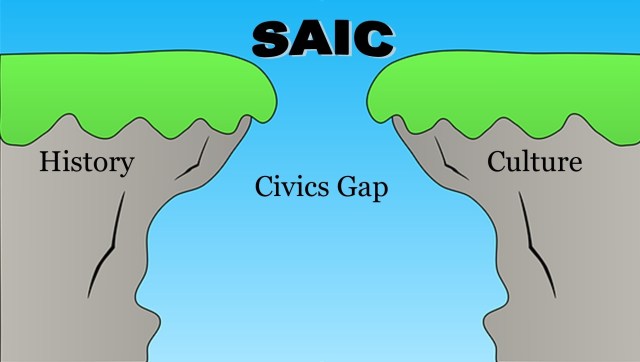
          Before there was ‘we the democrats’ or ‘we the republicans’ there simply was ‘we the people’. With red States becoming redder and Blue State becoming bluer, we can deploy ‘See America In Color’ to bridge the civics gap and partisan divides. As the red carpet got rolled out in the early days, all the founders had to work with was appealing to ‘hearts & homes for America’. In part, that’s the inspiration behind SAIC’s latest efforts to rally around civic engagement, civics education and social impact. This means taking a page from the founders, built around news breaking, crowd sourcing, mojo building and shift making.  

          Bridging the Civics Gap

          Chime-in on impacting Democracy & Public Good, Education & Community or Entrepreneurship & American Dream, ‘Civic Mondays’ events or Civics & Community forums. Plus,you can “J.A.M. With Us” (join a movement) in civic engagement, social change and community life. Checkout the Signup Center below.

          Tracks: Rag’n’Bone Man – Human – https://youtu.be/L3wKzyIN1yk?si=rT6qK9HaifvTkN-d

          Tems – Higher – https://youtu.be/Qa1IaUywiO8?si=DQ5eUwgqMk-D-bd4

          Signup Center

          Turning the Corner on Constitution Avenue: How America’s Story Might Get a Course Correction Through Social Capital Reinvention

          Doc Cunningham
          “Da Island Guy”
          Sounding Off Social

          Folks are excited about ‘opening season’ kickoff time of year! With Fall temps getting a little cooler, here’s hoping that the same can be said about our political discourse. As the campaign season hits the road after Labor Day, with candidate debates and television ads on tap, there’s something eye-opening that’s sure to go down.

          Eye-Opening World View

          This time of year might be seen in two ways: a ‘roots & culture’ takeoff and a ‘back to school’ jump-off. There’s a new season of returning programs and new specials to hit the small screen. We also have the hustle & bustle of daily life returning to regular programming. But there’s also the fact that cooler temps mean deeper ‘roots development’ with grass and trees. That’s what landscaping experts say. But what if this were also a great metaphor for the deeper ‘roots & culture’ development we might do as a nation?

          SAIC spent the past few months during the lead-up to the Conventions season, making observations around two groups: those excited about the ‘politics of things’ and others excited about ‘the civics of things’. One of the ‘aha moments’ is that it’s much easier to monetize around politics than to mobilize around civics (let that sink in a bit). Said another way, it’s much easier to monetize candy than it is to monetize broccoli, but that doesn’t mean broccoli is less important.

          Candy vs Broccoli?

          With the Conventions over, some wonder what next? One of the takeaways from the 2024 presidential campaign trail is the idea that the next chapter of America’s story will be tied to matters of heart & home. In one sense, there’s a direct tie-in to family. But in a larger sense it’s about how we the human family operate with the same zeal for public good as folks do for elective office. Moreover, as everyday citizens, it’s about how we might “do something for country, keep moving for victory.” History reveals that victory is in how we “guard democracy, affirm the republic and save the Union.”

          The next few months will likely be fast & furious in the political world. In addition, depending on our civic engagement, the next few years might be a chance for turning the corner on Constitution Ave through social capital reinvention, leading-up to the 250th anniversary of America’s independence in 2026. We’ve got a shot at making a course correction, like planes do while flying on auto pilot. Sometimes it drifts a bit off the desired path but gets back on track due to the ‘smarts’ tied to airplane technology. Similarly, the ‘smarts’ in SAIC’s ‘social technology’, made possible by a deep dive in American history, the ‘black to America’ story and #HometownStrong comebacks, offers a similar course correction to Union Station for:

          Union Station

          1. People (hopes & hurts)

            America’s Declaration of Independence is a forward-looking statement based on self-evident truths around life, liberty and the pursuit of happiness. That’s the ‘hopes’ part of America. But it also shares a list of grievances (hurts) that led to the spin-off from the British empire. What the Constitution then tries to do is forge our collective interests as ‘we the people’ to form a more perfect Union. It seems for our social capital reinvention, we gotta look at what matters most for the hopes of the nation and the hurts of the next generation to reach new heights and move past senseless tragedies.

            2. Family (hearts & homes)

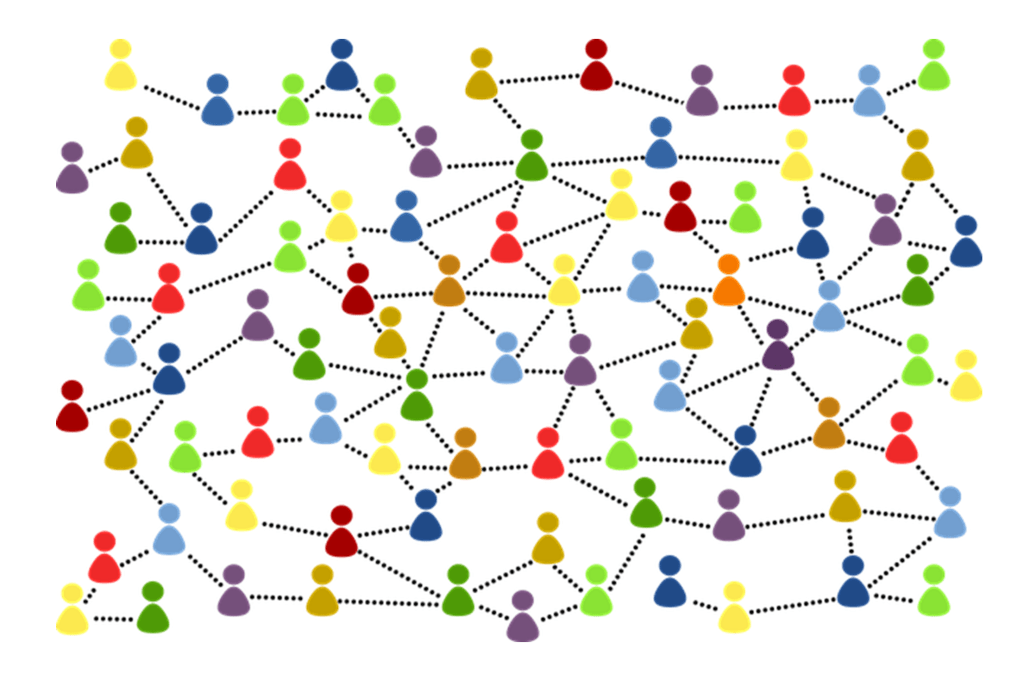
            When the nation was founded, there weren’t any political parties. It was just a group of regular citizens committed to governing their affairs. All they had was their ability to appeal to hearts & homes. That’s why a group of ‘friends of SAIC’ got together under the umbrella of ‘Hearts & Homes for America’. We’ve gotta do more around civics education to help break the hate in hearts. We’ve gotta do more around civic engagement to build more hope in homes. We’ve gotta do better around family to deal with possible pockets of pain and shortfall of purpose. We’ve gotta do more as a human family for the public good.

            Hearts & Homes for America

            3. Community (towns & teams)

            The upcoming season-opener for ‘Dancing with the Stars’ was announced. Some of the celebs who’ll be strutting their stuff include familiar names and those who recently made a name for themselves. There’re athletes from the recent Olympics to name a few. In Hollywood we get to see ‘showbiz as the star’ with all the celebs that go with it. At the recent Conventions we got to see ‘politics as the star’ with all the public officials that go with it. What would happen if we’d make ‘civics as the stars’ with all the regular citizens to go with it? Well reality check… there’re more regular citizens than celebs and public officials combined.

            4. Country (democracy & diplomacy) 

            America as a constitutional republic, tries to balance the people aspect of democracy and the power aspect of diplomacy. We’re a democracy that’s for the people, of the people and by the people. We’re a republic through voting for those who’ll represent our wishes in Congress, made up of a House and Senate. We model diplomacy by how we allow freedoms to prevail inside our country and beyond our shores. It’s that delicate balance of democracy and diplomacy that signals who we are as a country amongst ourselves and who we are as a nation beyond ourselves.    

            Social Capital Network

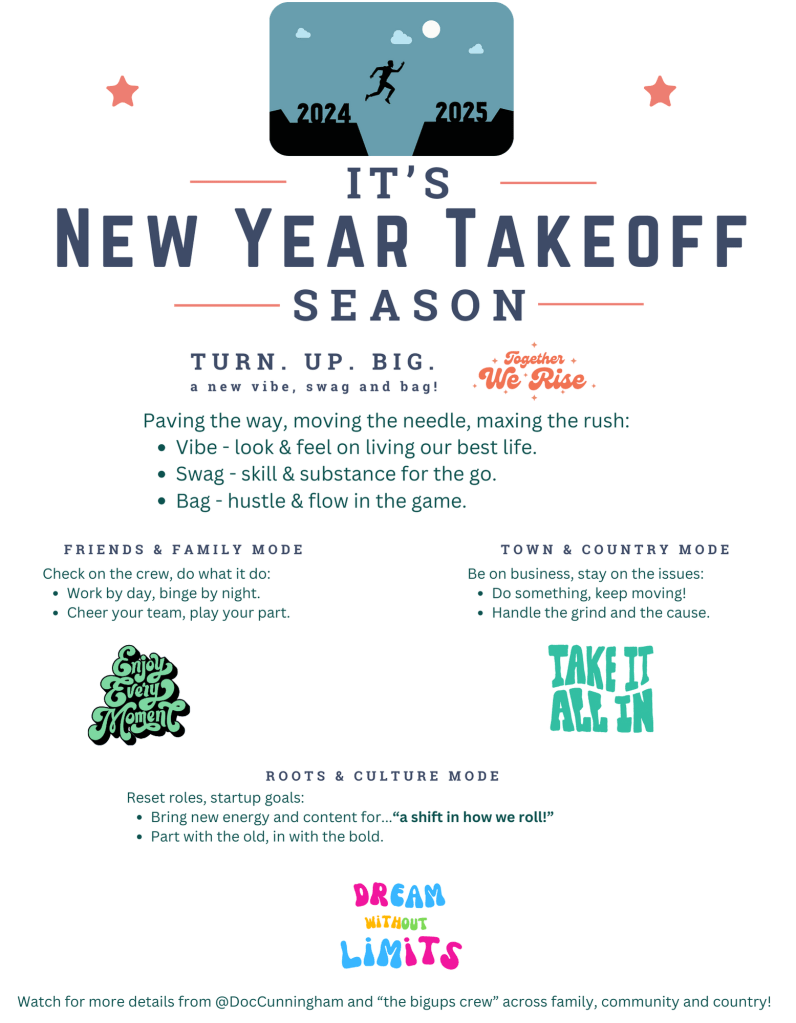
            So SAIC delivers content and programming to engage and empower. It’s got new ‘social technology’ to deal with hate, hurt and depleted hope, by how we ‘see America in color’, not just in black & white. There’s a Bob Marley song with the words, “Lively up yourself and don’t be no drag; lively up yourself, ‘cause reggae is another bag”. Well, as we look to “Turn. Up. Big.” in roots & culture, let’s shake-off the things that are a drag in family, community and country. And, whether you live on MLK Blvd or work on Constitution Ave, we’re ready to level-up civics and social capital like a new ‘bag’ (as young folks say).    

            Chime-in on impacting Democracy & Public Good, Education & Community or Entrepreneurship & American Dream, ‘Civic Mondays’ events or Civics & Community forums. Plus,you can “J.A.M. With Us” (join a movement) in civic engagement, social change and community life. Checkout the Signup Center below.

            Tracks: H.E.R. – Journey – https://youtu.be/bTWftRNdU3w?si=NCc2SnNRSZKg61Ro

            Protoje (Ft Jesse Royal) – Family – https://youtu.be/258_PV8K634?si=P-WeaAsefowElVno

            Signup Center

            The Hottest Convention Season of Modern Times: What Democracy, Republic, Union Mean for America’s Great Expectations

            Doc Cunningham
            “Da Island Guy”
            Sounding Off Social

            It was one of the hottest stories in sports and media circles at the Olympics. The women gymnasts led by Simone Biles took home the team gold. It was a kinda redemption story after winning silver in Tokyo. There’s even been some after-effect with the drama around Jordan Chiles’ bronze medal. But in between that, was the Adidas brand’s new ad campaign that stirred-up bad memories from the 1972 Munich Olympics where members of the Israeli delegation were killed. The ad featured runway model Bella Hadid who is of Palestinian descent. She issued a statement condemning violence and apologized for being caught-up in this unfortunate promo.

            Olympic Rings

            That was some of the talk in pop culture, but there were other stories where the sense was things were feeling ‘hot hot hot.’ This past July has gone down as the hottest day on record, both literally and figuratively. It was reported by European Climate Services that global earth temperature, based on the averages of land and sea, hit a new high. On a Sunday in July a new record was set, then broken the next day.  

            Now, when it comes to the presidential campaign, the recent earth-shattering announcement and events during this Convention season left many folks stunned. A different candidate at the top of the ticket has brought new life politically and buzz socially. With this series of stories dominating news coverage, it leaves open the chance that we can have the summer of 2024 mirror the summer of 1787. Back then, the founders met to take initial steps of crafting a roadmap that would be tied to perfecting the nation.

            Founding Fathers

            Meanwhile, it feels like this might be the hottest convention season of modern times. Since the days of our founding and the journey of our making, we’ve had moments of crisis and crossroads, where we had to guard democracy, affirm the republic and save the union. On those occasions, George Washington, Benjamin Franklin and Abraham Lincoln left us with examples that were as meaningful then as they are now. You might remember these from:

            • Washington’s declaration in his farewell speech to watch-out for political factions and despotic leaders that might wanna veer from the founding ideals.
            • Franklin’s warning at the end of the Constitutional Convention that “we have a republic, if we can keep it”.
            • Lincoln’s courage during the civil war of issuing the Emancipation Proclamation to save the union.

            In the current climate we can build on their example while taking a page from business circles. There’s this idea called SWOT (strengths, weaknesses, opportunities, threats) that’s used as a strategy for staying on the cutting edge in the marketplace. Well, in civic & social issues we might use that mindset to rally around a gameplan to get us through the election season and the make-or-break times in America’s story. One thing we might do is make ‘civics as the star’ by how we walk in the shoes of history. We the people can engage a Civics Convention as an updated template of what the founders had in mind. This’ll help set the stage as folks consider the:

            1. Choice

              Mirror Image Madness

              It seems some are bored/mad with the founders’ design on things, in wanting a ‘divorce’ from democracy towards a Christian Nationalist image. That’s one track being offered for America. The other track builds on the founding ideals in a more inclusive way. It’s like SAIC’s model of social/civic reinvention, which mirrors the shift from ‘black & white TV’ to ‘color TV’. It’s a more inclusive framework that’s not just about projecting ‘white light’ but combines elements of ‘colored light’ through American history, the ‘Black to America’ story and #HometownStrong comebacks. This mirrors who we are and want to be as a nation.     

              2. Course

              As the founders met in the summer of 1787, their efforts charted a course for the new nation. The guiding purpose has always been about perfecting the union. What might that look like in the 21st century? When World War II ended, the NATO alliance was formed to bolster solidarity and synergy of European nations around democracy. We need a similar strategy now to foster synergy and solidarity on making ‘civics as the star’. During the Harlem Renaissance, Ralph Waldo Emerson believed that “intellect and artistic production could help overcome prejudice”. A public/private alliance having a similar role is needed today.   

              3. Courage

              Lincoln issued the Emancipation Proclamation to free the slaves during the Civil War. The push for freedom by abolitionists was heard in social and political circles. But there was the dilemma of blacks joining the Union Army without further inflaming border states that hadn’t yet joined the Confederacy. The courage it took to form the union in 1776 and to save the union in 1865, might be understood in words from Thomas Jefferson: “Whenever the people are informed, they can be trusted with their own government.” A public/private alliance and informed nation gives rise to more courage, less distrust.

              French Theologian and Philosopher

              4. Common Good 

              You’ve heard SAIC’s message before that “civics is to country as hygiene is to humanity. Without it things can get funky”. There’s no law to manage hygiene, it’s just something we do as self-care during life’s ins & outs, and as a common good for human interactions. That’s what this public/private alliance would mean in terms of nation-care. The founders gave us a roadmap for working and growing as a nation. It’s been updated over the years to better reflect the times. But it’s important to not lose sight of the common good so that social/civic interactions don’t devolve into a situation where things get funky.   

              Party Conventions have become a way to make ‘politics as the star’. But back in the day when parties didn’t exist, the founders were about making ‘civics as the star’. In a few months we’ll be choosing the direction for our country, which will drive the course we take. With that in mind, noted philosopher Reinold Niebuhr one said, “man’s capacity for justice makes democracy possible, but man’s inclination to injustice makes democracy necessary.” We gotta have the courage to guard democracy, affirm the republic and save the union. To continue as a beacon of hope, land of the free, home of the brave, we gotta be on the worthy side of history. So, let’s meet the moment of America’s great expectations.  

              The Great Seal of the U.S.A.

              Chime-in on impacting Democracy & Public Good, Education & Community or Entrepreneurship & American Dream, ‘Civic Mondays’ events or Civics & Community forums. Plus,you can “J.A.M. With Us” (join a movement) in civic engagement, social change and community life. Checkout the Signup Center below.

              Tracks: Pharrell Williams – Freedom – https://youtu.be/LlY90lG_Fuw?si=60X3tOqB4FVISmYc

              Sara Bareilles – Brave – https://youtu.be/QUQsqBqxoR4?si=Bqs0TenSajKxVaab

              Signup Center

              The Story of New Beginnings: Hey America, Who Are We as a People, and What Are We Made of as a Nation?

              Doc Cunningham
              “Da Island Guy”
              Sounding Off Social

              Did you catch recent news stories that hit like fireworks? In the sports world, we learned Lebron James opted out of his contract, but then signed a new contract not long after with a no-trade clause. Seems like he’s gonna be a Laker for the rest of his playing days. Add to that, word of his son (Junior) getting drafted by the Lakers, and then signed in a matter of days. This news was all over in pop culture.

              Shark Sighting

              Politics is right up there too, especially after the uproar and unease following the last presidential debate. There’re those who’re like sharks going for blood or like citizens wanting to see new blood in higher office. The life & times we see today in the summer of 2024 might take us back to the summer of 1787. As the founders met during the Constitutional Convention, they had to choose a leader at the proceedings. Then following that, they had to vote who would become the nation’s first president.

              Be a fly on the wall then, a cricket on the floor now and a diviner of public sentiment, you’ll soon get some of what’s causing all this angst. These days America is trying to write the story of new beginnings, as well as to answer the question, “who are we as a people, what are we made of as a nation?” Some of the struggles among voters point to the fact that America still has a leaning to having two white men as the nominees from each party running for president. There’s also the factor of telling other countries when their leaders need to step aside to usher in new leadership, but we’re having a tough time doing that here as it relates to both candidates.

              George Washington, who became the first President had some other concerns then that might even apply today. He was worried about factions driving policy and law. He was chosen during a time when the struggle was around the battlefield of war and democracy. These days, we’re on the battlefield of democracy as well as law/social order, especially with recent Supreme Court rulings. The person we choose to lead us in this next phase of America should have those points top-of-mind or close to heart. Back in 1787 they chose Washington based on four key criteria:

              • Little/no embarrassment to country.
              • Greater competence for duty.
              • Stronger character for synergy.
              • Better vision for democracy.
              Civic Duty

              In sports, great athletes are often seen as making the right play at the right time. They’re good at ‘making the right read’ at pivotal moments in the game. Can that idea or the above 4-pronged criteria be helpful today with paving the way for the next chapter in America’s story? With all things being equal, one might choose a candidate based on party loyalty, personal liking or media savvy. But this time is different. Plus, the struggles seem to also be between regular voters vs big-money donors, left-wing vs right-wing, hope vs hubris, age vs autocratic-leaning. So, we gotta look at what else the founders had in mind when they rolled out the red carpet to America’s Independence. They wanted life, liberty and the pursuit of happiness through the inner workings of:

              1. People

              A key phrase in the Constitution reminds us that the nation was founded around new beginnings in self-determination as ‘we the people’. The challenge in America is making sure the will of the many isn’t trampled on by the wishes of the fewer or the civil rights of the fewer isn’t squashed by the many. The challenge we have is that politics and sports play a significant role in culture, with civics having a smaller lane. In the same way that the founders came together and laid out plans for our democratic republic, we gotta revisit that period to highlight ideals that will get us through this moment of Civic Revolution.      

              ‘Civic Revolution: Issues Soup’

              2. Power

              As States came on-board in the Union, folks did more to have ‘we the people’ be a bedrock at other levels of government. Across the country there was the founding of local municipalities/townships that officially recognized everyday citizens who were committed to handling their civic affairs. We know them today as legislatures, mayors, council members, etc. It wasn’t just about serving in high office but also formalizing other parts of self-government. These days we need a kinda regeneration in civic engagement and public good, where folks aren’t in it just for public grandstanding, but for better policy making.   

              3. Promise

              What might regeneration look like? Consider injuries to the body and how it’s designed to heal itself by growing new cells, new flesh, new skin. We even see this in nature when branches get pruned and shaped, there’s a regrowth that occurs. The promise of America can serve as that regenerative force. But we gotta cut back from our body politic the things that are like dead weight that serve as a resource drain in the system. We gotta prune and shape some leaves/branches to give birth to new ideas. We gotta ‘set off’ the ideal of turning promise into dreams, like canisters into fireworks.    

              4. Process 

              Metamorphosis in Progress

              America has gone through 7 phases in its history: Settlement, Slavery, Independence, Civil War, Reconstruction, Segregation, Civil Rights. Now we’re in the throes of a new phase, let’s call it Reinvention. When seen like the caterpillar/butterfly metamorphosis, we can move forward and become a butterfly of our better angels or revert to a cold nature and become ‘dead shell’ as a country. Metamorphosis is a transition from an immature form to an adult form. So, for this next phase, SAIC has crafted a Public Interest Proposal across country, community and culture as a public/private initiative.  

              Whoever is chosen at the Conventions will be one step closer to pulling the levers of America’s power. Right now, a battle for the soul of America is among gatekeepers, content producers, culture makers and power brokers. In getting to ‘Union Station’, there’s track 1 based on alliance in truth & civility. Then there’s track 2 based on alliance in grim and grievance. But we can’t wait for ‘Project 2025’ as roadmap. We gotta set-it-off now with ‘Project 2024’. The path we take to Reinvention will depend on the degree of ‘esprit de corps’ (good vibes, swag & bag) we muster for a more perfect union, to level-up as a nation.

              Chime-in on impacting Democracy & Public Good, Education & Community or Entrepreneurship & American Dream, ‘Civic Mondays’ events or Civics & Community forums. Plus,you can “J.A.M. With Us” (join a movement) in civic engagement, social change and community life. Checkout the Signup Center below.

              Tracks: Mickey Guyton – All American – https://youtu.be/0AtnvO2_Ijc?si=1y0O3gHbQ8UND3Bb

              YG Marley – Praise Jah in the Moonlight – https://youtu.be/Kgh9TVm4X8s?si=69ztLk9Azt6zv3rh

              Signup Center

              The New Social Puzzle in America: How an Updated Version of the Lost Cause Wants to Take Us from Jim Crow to Joe Tribe

              Doc Cunningham
              “Da Island Guy”
              Sounding Off Social

              The summer season is here with lots of ways to get out and enjoy the outdoors. For many, it’s a time for beach life, family reunions, group conventions and vacation travel. With the happenings on the beach or the block, there’re events that bring us together around good times, good life or social impact.

              Summer Season

              Meantime, the NBA season’s gonna wrap with the naming of a champion after a hard-fought series and long season. As the baseball pastime settles in, the WNBA season finds its groove around rookies and veterans. Whether Caitlin Clark buzz dies-down or not, the lead-up to the summer Olympics in Paris is already having stories of triumph and heartbreak. Ever wondered with all these sports events, you never hear athletes saying they’ll protest if they lose or that they’re being set up to fail by league/sports officials?

              Well, the same can’t be said about some in the political world. Since the last presidential election, there’s been a puzzling aspect to how things played out. One way to help solve this puzzle which has become the new social enigma in America, is to take a step back and review the record. As many folks know, that’s how See America In Color (SAIC) came to be. After a series of national news story, a deep dive began into American history, the ‘Black to America’ story, and #HometownStrong comebacks. This led to creating a social-edge campaign/platform that’s about having a better handle of hot-button issues, by how we see America in color, not just black & white.

              What’s happening today is an updated version of the Lost Cause trying to take us back. Remember after the civil war, the Lost Cause mindset tried to explain-away why the Confederates lost to the Union. That message grew into a force that contributed to the Reconstruction backlash, since some weren’t happy as Blacks made headway. The disruptive Lost Cause voice grew louder into what later became known as Jim Crow, a period of restrictive and destructive policies/laws. So, when some (who should know better) say that the Jim Crow period was a boom for Blacks, they’re clearly lost or loose with the facts because of what they overlook. It’s as if they wanna take us back, by going from Jim Crow to Joe Tribe.

              Civil War

              History reveals many were caught-up in the Lost Cause as a response to losing the civil war’s fight over slavery. In a sense, they wanted to re-insert practices of white supremacy. Furthermore, there were splinter efforts that might be thought of as ‘loose cause’, which like a loose tooth, weren’t fully rooted in substance, but were often conspiracy-based. The enigma we see today mirrors that period. In today’s version, the context involves a switch from slave plantation to duped-tribe plantation. But for SAIC, what we’re trying to do during this period is go from ‘beloved community’ (as Dr. King often described the civil rights movement), to ‘mojo posse’ in efforts to make our journeys one (mojo). To do that we gotta understand current times with the backdrop of:    

              1. Hate

                Nine years ago, a South Carolina community was rocked by tragedy at the Mother Emanuel AME Church. The victims were all church members at Bible Study. The person who carried out this heinous act was someone consumed by hate. This corrosive mindset has different degrees of victimhood, sometimes due to lack of self-love. But it also shows up in those who’re indoctrinated and radicalized by messages that sell ‘whiteness in the context of darkness’, thus being duped. That happened after the civil war as the Lost Cause mindset infected others who got caught up in KKK-thinking, like seen with the church shooter.         

                2. Harm

                The Lost Cause wasn’t the only form of victimhood and hate. As Blacks made gains in public service and personal achievement, there was a backlash which led to a growing acceptance of and occurrences in lynchings. This intimidation became a kinda spectator sport as ‘loose cause’ not rooted in substance, but in conspiracies about Blacks. We’ve heard about the Imposter Syndrome where folks feel like they don’t belong. Well, what we see in ‘duped-tribe circles’ across some sectors of society is the ‘Nobody Syndrome’, where due to poor sense of self, folks offer their less-self instead of their best self.   

                3. Stigma

                Hate and harm during Jim Crow caused social stigma, like signs that said, ‘whites only’. Even in Hollywood back then, some black artists couldn’t stay in the same hotel after performing in the hotel’s ballroom. Think about the days of black & white tv, sometimes the picture would be a bit fuzzy. You couldn’t enjoy the program as much. These days some argue the fuzziness will be made better by being colorblind, by not seeing others in color. SAIC is less about colorblind and more about having a color-mind by not being stuck on black & white tv. But to see things better in color of ‘no hate’ for a fuller life.  

                Stomp Hate

                4. Dogma 

                The Civil Rights Movement helped bring an end to Jim Crow. Folks were tired of the hate, harm and stigma that prevailed. A major turning point was the Montgomery Bus Boycott which was inspired by Rosa Park’s courage to no longer ride at the back of the bus. She and others had had enough of the dogma tied to second-class status. Being told you don’t belong or that you gotta take a backseat could have caused some to experience low/lost hope. But instead of those emotions being turned into ‘lost cause’, the people rallied and turned them into one of the greatest modern-day movements in social change.   

                To close, the Lost Cause was about explaining away the Confederates losing the civil war. These days folks try to explain away a candidate having lost the 2020 Presidential elections. The ‘loose cause’ back then led to a backlash due to conspiracy theories around Blacks. The ‘loose cause’ today is seen in a backlash to DEI and other efforts in social progress. We’ve gone from fighting to protest and eliminate the slave plantation to fighting to inform and elucidate the ‘duped-tribe plantation’. There’s even a ‘loose cause’ in how some rap artists and public figures explain their political views. So, making social change happen means scrapping the ‘fake stage show’, if folks only wanna sell their less-self, not their best self.

                Debate Forum

                Chime-in on impacting Democracy & Public Good, Education & Community or Entrepreneurship & American Dream, ‘Civic Mondays’ events or Civics & Community forums. Plus, you can “J.A.M. With Us” (join a movement) in civic engagement, social change and community life. Checkout the Signup Center below.

                Tracks: Lil Duval – Smile (Living My Best Life) – https://youtu.be/BekGQqRJfWo?si=qXesN9McYv73l6Ej

                Alicia Keys & Maleah Joi Moon – Kaleidoscope – https://youtu.be/uOaMqC8ymig?si=RJR5GTxa8yWRsDUa

                Signup Center

                Summer Takeoff Season

                The American Project on Impacting Change: A People’s History of Calling-out What is and Calling-in What Can Be

                Doc Cunningham
                Da Island Guy
                Sounding Off Social

                A debate has been brewing in America on two battle fronts. While not everyone has the same level of interest or intensity, the battles have caught the attention of die-hard fans and rabble-rousers. Some have been following the ‘diss track battle’ between Drake and Kendrick. The rap feud has got raw overtones with some fans scratching their heads while others treat it like solving a puzzle.

                Puzzle Solvers

                Then there’s a battle on the other front that has dominated the evening news. It’s been a tense few weeks across college campuses at home and abroad. The ongoing middle east turmoil between Israel and Hamas has the ‘now generation’ in a tizzy. Some wanna know why one side seems ‘favored’ over the other side, when famine and unnecessary destruction are the stories of disaster. The other side is fed-up about feeling as if they shouldn’t exist. For either side it’s kinda the same message, just different context.

                In a sense, current social protests are like what happened in the 60s and 70s. Back then folks were fighting to dismantle ‘Jim Crow’, advocating for civil rights and warning about nuclear war and the dragged-out Vietnam war. These days the burning consequential issues revolve around the culture wars and the ‘isms and schisms’ that have plagued us throughout history. Back then we dealt with sit-ins at lunch counters. Nowadays it’s encampments on college plazas. Are we missing something?

                As SAIC draws-on its research in American history, the ‘Black to America’ story and #HometownStrong comebacks, you’ll find some common elements to the success of efforts that moved us from protest towards perfecting our Union. They include:

                • “Calling-out what is, calling-in what can be”.
                • Change as part of a social framework within an intellectual setting or with spiritual fervor.
                • People finding their voice and taking a stand.
                • A new ‘order of things’ from having rattled the conscience of America.

                Folks would call out what’s wrong, or not working or weakening our values or just plain old wicked. The movements that helped bring change did so within an enlightenment push. Plus, a key lesson for today’s activists and agitators is in knowing that a ’poverty of vision’ results in making noise without making moves. Moreover, remember that “an overdone steak is burnt, while a well-done steak is flavorful”. In other words, we’ve gotta go from encampment to empowerment and ensure that the energy and passion displayed doesn’t dissipate like smoke after a fire.

                Campus Encampment

                If we look back to events of the past that made a difference with living in America, you’ll find a shift occurred in the culture. For example, a shift from spreading racial animosity to pursuing racial equity, from political maneuvering to vision building, from being limited to seeing America in black & white to seeing America in color. So, if we’re gonna go from encampment to empowerment, here’s what might help turn the mess into a message across campus, main street and country with the help of:  

                1. Administration (upset or explain)

                  There’re times when a child misses the mark. How we handle the situation might vary on a case-by-case basis. Off-the-charts behavior might call for some serious punishment. A few choice words or slap might even show up out of nowhere. But sometimes, the situation requires that we do less to be upset by how we holla and scream and instead do more to explain how they live and learn. We’ve all had our own growing pains but eventually made a shift for the better. As the saying goes, “you live life forward and understand it backward”. At the end of the day, it’s about turning the situation into a teachable moment.   

                  2. Media (inflame or inform)

                  Consumer Eyeballs

                  For media outlets, it’s often about ratings. What’s the number of eyeballs they can attract/keep with their programming. But there’re other forces at work since the shift from free-tv to pay-tv. With free-tv the competition was based on how well they informed the public. The more in-touch folks felt about the happenings at home and abroad, the more loyalty to a station. Plus, there were fewer channels then. Since pay-tv, the competition seems to be about how some inflame the public. It doesn’t take much to inflame (doesn’t take much to cause upset). But SAIC’s vision to inform and explain helps impact change.

                  3. Business (tune-out or level-up)

                  They say what happens in Vegas, stays in Vegas. For some when it comes to social issues, the sense is “what happens out there, stays out there”. That mindset bleeds into disinformation or decisions that lack foresight. After events of the past few years, some businesses made a shift to help employees level-up in civic engagement and social impact. Recent protests are reminders that issues hit close to home. Sports leagues have gone on record about doing more with players and fans so that it’s not just about the game but also about us as a nation. SAIC’s take is that it’s gotta be about bringing more #MojoInAmerica.

                  4. Community (exhale or engage) 

                  There’s a time to complain and be upset. But we can’t simply exhale without thinking about how we engage. That’s one reason for SAIC’s efforts at developing Campus Solidarity Day (aka Breakout Day). It takes a page from what we see in sports where Draft Day for athletes and execs is an exciting time for the brand and love of the game as an athlete/league (breakout the champagne, breakout the dreams). Well, Breakout Day for students and administrators will be an exciting time for social impact and love of the culture as a citizen/country (breakout the fun, breakout the teams).  

                  Campus Crew

                  Throughout history, the American project of impacting change has been about how we “call-out what is and call-in what can be.” That’s no different in these days of street protests and college encampments. It can ruffle feathers to call out what’s wrong or not working or weakening our values or just wicked. But to make shifts happen we’ve gotta look at how we explain vs exclaim, inform vs inflame, level-up vs tune-out and engage vs exhale. In the words of James Brown on ‘Living in America’, we gotta work “hand in hand, across the nation…yeah we got to have a celebration.” It’s a matter of truth or dare.

                  Chime-in on impacting Democracy & Public Good, Education & Community or Entrepreneurship & American Dream, ‘Civic Mondays’ events or Civics & Community forums. Plus, you can “J.A.M. With Us” (join a movement) in civic engagement, social change and community life. Checkout the Signup Center below.

                  Tracks: James Brown – Living in America – https://youtu.be/c5BL4RNFr58?si=CRKp1i5pno1HF9UV

                  Tyla – Truth or Dare – https://youtu.be/boOWyGnGYxs?si=_iO9CKygHUIyo0ZC

                  Signup Center