A Path for Shake-up or Breakout (Part 2 of 2): Joining the Trailblazers from Our Nation’s Past with the Changemakers of our Present Day

Preview Summary –

  • Flashback to the past and we’ve got two music history moments in songs ‘Imagine’ and ‘Born to Run’ that led to a cultural breakout for both artists who dropped an empowering message.
  • A ‘new & improved’ gameplan in civic fanfare will involve managing hometown frustrations as seen in the lead-up to Independence and rallying civic engagement as seen after the Convention.
  • We can raise our mojo around impact and public good not by the old school approach of ‘racism agitation’ by some new school techniques for how we ‘make our journeys one!’

Signup Center –

Follow @SeeAmericaInColor on FB & IG for podcast episodes and events!

Main Content –
Doc Cunningham
“Da Island Guy”
Sounding Off Social

There’re two music history moments from 50+ years ago that helped shape advocacy and activism in America. First, on September 9th, 1971, John Lennon released the album with title track ‘Imagine’. The message pointed to a better future in daily life on earth as well as the here-after. Roughly four years later, on August 25th, 1975, Bruce Springsteen released the album with title track “Born to Run”. These music projects were breakout moments for both artists in how they dropped an empowering message.

Music History

With the recent 50-year anniversary celebration at Monmouth University in NJ for Springsteen’s album, folks might wonder whether their artistry offers a potential breakout moment in today’s social environment. Lennon’s take on ‘Imagine’ in some ways reflects what our days past as well as life-skills experts today suggest; begin with the end-results in mind. Remember that during our nation’s founding, two social impact tracks were front and center (the lead-up to Independence, rollout from the Convention). Over the years, those impact tracks have influenced abolitionists, civil rights and other suffrage movements. In a sense, they were in-line with a ‘Crusade for Civics, Anthem for Action’.

Furthermore, as mentioned previously, there was Paul Revere whose life’s work led to forging a new nation through the exchange of ideas and ideals, one community at a time. When you think about SAIC’s backstory and framework, it represents a similar mindset too, built around how we see America in color, not just in black & white. Pull that all together as happened in ‘imagine and run’. A path will emerge for shake-up or breakout by joining the trailblazers of our nation’s past with the changemakers of our present day. Why would taking a page from ‘old days’ make sense today?

Well, think about a time with a wayward child at home, teenager in school or young adult in the community. Parents, administrators and authorities might try different things to get them on track. Some might go with an ‘old school’ approach while others might employ ‘new school’ techniques. In some cases, both aspects might make sense. In the long run, that person will look back and probably see a moment that helped to create a shift in their attitude. As the saying goes, “its attitude that determines your altitude.” Maybe America needs an old-school attitude shift as well.

Dominoes Dots

But what about a ‘new school’ approach for America? With SAIC, it’s about how we connect the dots in a fun way like dominoes, across history, civics and culture. This also means having a new & improved version of a ‘Crusade for Civics, Anthem for Action’ that engages Gen X, Millennials and Gen Z since they represent the future of our republic. Plus, the gameplan requires having ‘boots on the ground’ not for warfare but for civic fanfare by:

  1. Managing hometown frustrations like seen during the lead-up to the Declaration of Independence.
  2. Rallying civic engagement like seen during the rollout after the Constitutional Convention.

The objective is to foster a mindset about being the ‘Civics Capital of the World’ starting in Central Jersey, by how we level-up our nation’s focus in:   

1. Education

    Did you know before the Constitution was in place or political parties were in a race, the first 25 colleges were already founded? Harvard was founded in 1636 and others that followed were founded in the New England and Mid-Atlantic regions. There were some in the south too since that’s how the population centers spread. Those areas were the birthplace of settlements in America after the White Lion ship landed in Virginia with 20+ Africans, and pilgrims on the Mayflower landed in Plymouth Massachusetts. It’s also where Paul Revere had lonely-road horseback rides to exchange notes and spread civic ideals.                

    2. Awareness

    Revere’s trips were important with shaping the emerging nation. This involved building awareness around sovereignty, hope, excellence and goodwill. While that worked in the lead-up to Independence and the rollout after the Constitution, the 21st century needs a new level of awareness in response to the issues of today. There’s an opportunity we have between Constitution Day, National Civics Day and America’s 250th birthday in July 2026, to raise a new level of awareness around those ‘old school’ ideals as well as some next-gen aspects of 21st century education in academics, athletics, arts and advocacy.         

    3. Consciousness

    Whenever America made moves in fulfilling its ideals, there was a shift in consciousness, one community at a time. Psychology experts will tell you that consciousness works in tandem with the subconscious. It’s like in sports there’s practice to develop muscle memory. You’re not always thinking specifically about how you’re gonna make the play. It just happens in the moment based on having practiced the skill over time. Well America, maybe there’re some civic skills for which we’ve lost our mojo that need practice. We need to work on having ‘civic muscle memory’ and not be fooled by ‘slick talk’.   

    4. Purpose

    Football Tricks

    What makes change hard to come by in the civic/social space? In part, it’s because some folks have more to lose than others. Plus, as the saying goes, “it’s hard to teach an old dog new tricks.” That’s why they’re trained in the early stages. Similarly in life, younger folks have less to lose when it comes to rallying around change. They have less pride, money, ego, etc, to lose than adults. So how do you make up for that dilemma? You build change around a unifying sense of purpose. This way you’ll attract young people looking to define a sense of purpose and older folks looking to live with a higher sense of purpose.

    Is there a consciousness missing in culture, based on ‘clicks and clout’? Take the internet out the picture and go old school, you’ll see that the nation’s founding was influenced by the Enlightenment Age. So, who are the civic soothsayers today like back in the early days (as opposed to the smooth sayers now)?  For those like Lennon who did it through music in the 60s & 70s, you find these lyrics from ‘Imagine’: “you may say I’m a dreamer; but I’m not the only one; Hope some day you’ll join us; And the world will be as one.”  We’ll raise our mojo not by ‘racism agitation’ but by a conscious effort to ‘make our journeys one!’

    Smart Device

    Chime-in on impacting Democracy & Public Good, Education & Community or Entrepreneurship & American Dream, ‘Civic Mondays’ events or Civics & Community forums. Plus,you can “J.A.M. With Us” (join a movement) in civic engagement, social change and community life. Checkout the Signup Center below.

    Tracks: Third World – Sense of Purpose – https://youtu.be/4z4yuSvQPa8?si=94h25eU1UqlnctSV

    Mary J Blige & Busta Rhymes – You will Never Find Another Me – https://youtu.be/XKwmuRT2VOI?si=zoXy0kCtKPcCYV3P

    A Path for Shake-up or Breakout (Part 1 of 2): Joining the Trailblazers from Our Nation’s Past with the Changemakers of our Present Day

    Preview Summary –

    • Flash flood warnings are meant to get our attention, so we can make a note and take heed. Is America in such a moment in our history that requires a new level of awareness?
    • As our new nation was unfolding in 1775 there wasn’t time for pomp and pageantry as folks were focused not only on winning the battle but also creating a shift in consciousness.
    • While politics of the day might raise concerns about warfare now, it’s gonna take boots on the ground in civics, enlightenment and healing for a shift in consciousness in our present day.

    Signup Center –

    Main Content –

    Doc Cunningham
    “Da Island Guy”
    Sounding Off Social

    This summer saw flash flood warnings get our attention and cause tragedy from Texas to New Jersey. Normally folks would make a note but not really be concerned. But after being taken by storm from recent downpours, it requires a new level of awareness from getting those alerts. In a sense, America might find itself in a similar place. Things are happening by storm, as there’s a new battle brewing in the nation with less than a year going into the 250th anniversary of America’s independence, otherwise known as the Semiquincentennial. Maybe we need a new level of awareness to make a note or take heed.

    Flash Flood

    Travel back in time to the days of our founding and there were aspects at play then as we see now. Many had become exhausted by British Monarchy rule. This included frustration with numerous taxes. Things got so bad that some started to look for a path for shake-up or breakout to move beyond the madness. Interestingly, concerned citizens then were deeply influenced by the Enlightenment period, which helped to forge a shift in consciousness with ideas like ‘natural rights’, or what the founders eventually called unalienable (inalienable) rights. Meantime, a little over a year ago we learned from a Pew Research poll that 65% of folks are exhausted when they think of politics. Plus, in terms of our social climate, who’s bringing the enlightenment, since many are more focused on clicks & clout.  

    Knowing the thread that runs through the cloth of America helps us with joining the trailblazers from our nation’s past with changemakers of our present day. The battle/divide during our founding was between loyalist vs patriots. During the civil war it was between confederates and unionists. Now it seems things have evolved to a battle between ‘Mecca States’ vs ‘Massa States’ (like those that initially seceded). We see this playing out in the recent push around redistricting. But the common thread whether during revolution, civil war or current times, is in those who seem/feel celebrated (viewed as insiders) vs the other side who seem/feel slighted (viewed as outsiders). You can also tell the different sides based on whether they’re about ‘we the people’ or mostly about money and power.

    Thread Thru America

    In the coming months there’ll be events of pomp and pageantry in the lead-up to July 2026. But as our new nation was unfolding in 1775 there wasn’t time for that as folks were focused not only on winning the battle but also creating a shift in consciousness. That happened through efforts like:

    • Committees of Correspondence with hometown voices in unity of purpose and other civic ends.
    • Paul Revere’s work in New England and Mid-Atlantic regions to spread awareness.
    •  Rallying around a ‘big standing’ with the Declaration of Independence as a new nation.

    One of the benefits of the Enlightenment period was that it brough a new language for describing the issues around life, liberty and the pursuit of happiness. This helped to shape a new structure for governing, as well as focus for going from colonies to the United States of America. These days it seems the structure (Constitution) is under attack, and the focus is less communal and more confrontational. The period after the Revolution gave root to the American experiment. The period after the civil war gave root to what’s known as America’s second founding. Some hoped the period after the civil rights movement would be a kinda post-racial era. But here we are knocking on the door of our 250th birthday, asking ourselves what’s it gonna take to create a new shift in consciousness as a nation. Maybe folks like Paul Revere, Samuel Adams and John Hancock can help us with a word or strategy around:    

    1. Leadership

      Back in the early days, leadership wasn’t dependent on political parties. It came out of hometown voices focused on unity of purpose and other civic ends. In 1772, Samual Adams and John Hancock were key players in forming Boston’s Committee of Correspondence. Long before the New York Times or cable news networks, these committees began to spring up locally and across the colonies. It was their way of breaking news and providing leadership as the colonies asserted new democratic willpower. Of course, we now know those names are among the signers of the Declaration of Independence.               

      2. Mission-ship

      Horseback Rider

      Many remember the story of Paul Revere’s horseback ride into Lexington to warn the patriots that “the British are coming.” But there’re other aspects to his life that give context for mission-ship. Long before there was Fedex, there was the ‘pony express’. Revere would take long rides to the New England and Mid-Atlantic regions to share updates on what was happening across the colonies. The ‘mission packages’ didn’t get there overnight, as Revere had lonely-road travels through backwoods. But it’s the sharing of insights and stories from regular folks that helped to fuel his sense of purpose and mission.           

      3. Allyship

      As a teenager, Revere was a bell ringer. In those days, bell ringing was how they shared birth, wedding, death and other announcements. He was among a small group of young boys who took that responsibility seriously which eventually led to shaping their life’s work. As an adult, Revere became a silversmith with part of his work done in making bells. It’s as if he was the Mark Zuckerberg of his time, providing the community with ways to ‘post’ messages via bell ringing. Some of those he worked with as a young bell ringer in his hometown became confidantes and strong allies in his life’s work as a regular citizen.      

      4. Citizenship

      When it comes to impacting, serving and servicing the marketplace, many industry leaders know about B2B (business to business) and B2C (business to consumer) for having strong earnings/value. These marketing strategies help open lanes of commerce and streams of income. What’s needed in the 21st century on our journey to a more perfect union is the concept of B2CE (business to civic ends). That new model will help open lanes of engagement and streams of public good. It will provide a framework to guide efforts on impacting, serving and servicing the marketplace for having ‘strong citizens.’

      Stream of Income

      The Revolution battle was over taxes and self-determination, the civil war over slavery and the cotton enterprise. The civil rights battle came out of exhaustion with segregation and discrimination. Today’s slow-boil battle seems to be with redistricting. It took boots on the ground in warfare to fight some previous battles. But there was more involved in creating a shift in consciousness as a nation, one community at a time. While politics of the day might raise concerns about warfare, it’ll take boots on the ground in civics, enlightenment and healing if we’re gonna ‘take a walk’ towards a shift in consciousness.   

      Chime-in on impacting Democracy & Public Good, Education & Community or Entrepreneurship & American Dream, ‘Civic Mondays’ events or Civics & Community forums. Plus,you can “J.A.M. With Us” (join a movement) in civic engagement, social change and community life. Checkout the Signup Center below.

      Tracks: Jamal Roberts – Heal – https://youtu.be/6rccyIFqIPI?si=lizFb2NIwVcRVk-W

      Passion Pit – Take a Walk – https://youtu.be/dZX6Q-Bj_xg?si=DpfMviNirPL2Vthc

      Independence Day, 249th Anniversary and Counting! The Big Reveal on What We’ve Learned About America from the Old Days to Present Times

      Preview Summary –

      • America’s national anthem isn’t just a patriotic melody, while Independence Day isn’t just about parades, cookouts and music festivals.
      • When the anthem reaches its crescendo or the nation rises to the occasion, there’s a shift in consciousness that happens in lyrics and legacy.
      • For the 65% of Americans who feel exhausted when they think about politics, there’s a combo of civics and empowerment (like an ‘Empowerade’ booster) to raise the consciousness of the nation.

      Signup Center –

      Main Content:

      Doc Cunningham
      “Da Island Guy”
      Sounding Off Social

      America’s national anthem, aka the “Star-Spangled Banner”, has become a fixture at sporting events, including Olympic medal or other championship ceremonies. It’s also an obvious go-to at patriotic occasions like those celebrated around Independence Day. The full anthem isn’t sung or played on most occasions. But the last sentence is repeated in all the four verses. Those words appear as a question at the end of the first verse. Then a shift occurs when those same words appear as a statement in the remaining verses, as in “O’er the land of the free and the home of the brave.”

      Fireworks Show

      The significance of Independence Day for any nation represents a time when freedom became more real in a legal, political and civic sense. It’s when residents began to have a greater role in self-determination and public affairs. There’s a much deeper meaning though as for some groups the milestone fell short. Their freedoms came as a later struggle towards a more perfect Union. In other words, Independence Day is more than just parades, cookouts and music festivals. It also symbolizes an ‘awakening’ in the consciousness of a nation.  

      What if the consciousness of the nation, based on awareness of oneself in the civic/social space and broader world was approached with the same passion as we do with AI in the tech space? These days AI is playing an increasing role in society. But before there was social media, the consciousness of the nation took shape around social impact and public-good factors. In one sense, that’s a big reveal on what we’ve learned about America from the old days to present times. Our nation’s journey had a shift in consciousness from asking the question, “O’er the land of the free and the home of the brave?”, to stating it as an affirmation.

      Package Delivery Driver

      In business, Fred Smith, the late founder of FedEx comes to mind. His journey was of getting past questions folks had on whether his company would be profitable. Some industry players thought his idea, while understandable, wasn’t doable. At times he had to ask staff to wait a week to cash their checks. His story of revisiting a college term paper and turning questions into a commercial enterprise is a business version of what others have achieved through social movements. Beyond Dr. King as figurehead for the civil rights movement, there’s Gregory Watson who led the charge for the 27th Amendment; Stevie Wonder who fought for the MLK Holiday; and Dr. Opal Lee who advocated for the Juneteenth holiday.

      Here we are at another moment in time where we can add to history and legacy. Based on the current social climate and crosswinds in public policy, maybe we’re at a similar point, as folks question the next phase of America’s journey. With Independence Day, 249th anniversary and counting, we gotta look at the things we question that are ‘out-of-pocket’ or unacceptable or unequal or represent an injustice. Let’s figure out how we turn those questions into action statements. To make that happen we gotta rollout a Civic Revolution that isn’t about sticks & stones or cannons and bombs, but instead about:          

      1. An Upshift in Consciousness

        If you follow the story from 1776 to present, on the road to a more perfect Union, our nation’s journey has advanced based on Independence that came through a shift in consciousness. Folks no longer wanted to be ruled by a king but preferred a route of self-determination. Unfortunately, blacks and others were left out of that formula so there were missing elements to those newfound freedoms. Other more inclusive opportunities came about later through what might be called an upshift in consciousness. Folks had to kick-in the ‘turbo’ factor to help America understand why the racial status quo wasn’t acceptable.             

        2. A Boost in Hope

        An important ingredient to survival is hope. When hope isn’t lost, there’s a chance of rising again. One of the legacy aspects of Independence was in the hope folks had for a new nation. They began to see new possibilities and explore new frontiers. But a related ingredient to survival is change. It’s been said that the only constant in life is change. The seasons change year in, year out. There’s the constant in what we expect from the seasons and there’s the change that comes with each season. In America, there’s the constant that comes with daily life. But there’s change required for each round of making progress.      

        3. A Jolt in Passion

        Passion at Work

        While it’s important to keep hope alive, that hasn’t been enough to get America to level up. That comes with a jolt in passion. The passion of a nation feeds off the consciousness of a nation, in the same way that passion in business might feed-off market awareness. Maybe what kept Fred Smith and FedEx going through those early years was the glimmer of hope that kept the lights on and the jolt of passion that kept the delivery truck wheels turning. That passion isn’t always about how much noise one makes in the marketplace or social space, but more about how much positive movement one creates through actions. 

        4. A Mark in History

        Some holidays provide one-size-fits-all meaning behind the occasion, while others might be more specific to certain groups. Independence Day has a more universal message. It represents a mark in history like a before-and-after view in weight loss, or a black & white then, but color picture now in tv technology. A high mark in history helps us savor the moment in time. But some low marks occurred when there was less conscience or consciousness in the nation. In other words, some marks in history show up as turning back the hands of time and others as moving the nation forward for the ages.

        Poll Question

        Are we progressing as a nation, or regressing in our politics? A Pew Research Poll from 2024 revealed that 65% of Americans feel exhausted when they think about politics. As with sports, work or other activities, when we’re exhausted, we’re likely to pull back or step away. Athletes often go to the sidelines and refresh with Gatorade or similar energy boosters. To provide the same relief for residents in the civic/social space, like those who’ve check-out from the issues or are wearing blinders, we need a combo of civics and empowerment (like an ‘Empowerade’ booster) to raise the consciousness of the nation.

        Chime-in on impacting Democracy & Public Good, Education & Community or Entrepreneurship & American Dream, ‘Civic Mondays’ events or Civics & Community forums. Plus,you can “J.A.M. With Us” (join a movement) in civic engagement, social change and community life. Checkout the Signup Center below.

        Tracks: Alicia Keys – Underdog – https://youtu.be/izyZLKIWGiA?si=z06J9zfo986CGFbj

        Jon Baptiste – Freedom – https://youtu.be/3YHVC1DcHmo?si=Q7mZLGgh6VsyvQJu

        Hometown Chronicles Cover Story: How We Got Here in this Moment as a Nation and Forging our Next Chapter in Civic Engagement

        Preview Summary –

        • Some wonder if America is going through bouts of hiccups in our public space or are we about to choke on something that’s gonna require the Heimlich maneuver to free the flow of hopes & dreams.
        • There’s something that’s been brewing in the south regarding ‘boots on the ground’. In a pop culture context, it’s a new line dance. In public affairs it might help us level up our social impact.
        • The problem we have these days is emotions of grievance, hate and divisiveness have been turned into personal animus as opposed to frustrations being turned into purposeful action.

        Signup Center –

        Main Content:

        Doc Cunningham
        “Da Island Guy”
        Sounding Off Social

        If there’s anything we know about showbiz, there’re certain events that sellout out quicky or are like must-see TV. Just this month alone, folks have the NBA, celebrating Broadway and music awards in LA. Take your pick, or for those who’re fans across the spectrum, then one or more of the above works for you. There’s sure to be a cover story or viral moment that has people talking and brand-attention rising. But these days some wonder if America is going through bouts of hiccups in our public space or are we about to choke on something that’s gonna require the Heimlich maneuver to free the flow of hopes & dreams.

        Hopes & Dreams

        What if we had to write the next hometown chronicles cover story to explain how we got here in this moment as a nation? What might be the theme in the chapter on civic engagement? On the west coast there’re clashes between immigration agents and residents. On the east coast there’s discussion around legislation that could set the path of America. We need elected officials to show leadership and deliver policies that showcase our nation as ‘light on a hill’, not ‘ash on a heap’. Meantime, there’s something that’s been brewing in the south regarding ‘boots on the ground’. In a pop culture context, it’s a new line dance. In public affairs it might help us level up our social impact.

        These days we need a fresh approach for how we respond to the frustrations of ‘we the people’. If we take a step back in time we can walk in the shoes of history. As our nation was coming into fruition, there were 70 delegates who were invited to attend the Constitutional Convention. Of the 70, there were 55 who made it to Philadelphia. Of the 55, there were 39 who signed the document. Of the 39 there were three who kept telling the story of America’s founding and future promise (that’s what we find in the Federalist Papers). Then, 10+ years or so into the young life of our republic, two stood tall in response to attacks on our democracy (they became future presidents). Since then, we’ve gone from 4 million to 325 million. How things played out at the national level gives clues for our next chapter in civic engagement.

        There was also action taken at the local level to forge more ‘boots on the ground’. Those steps involved newly incorporated municipalities as many were focused on life, liberty and happiness objectives. But in another sense, ever wondered why New York is considered the media/financial capital of the world, or why Los Angeles is considered the showbiz capital of the world? When it comes to government or biz, the capital has a sizable number of public servants or industry personnel, e.g. Washington DC as the nation’s capital. So, what would it mean to have the title of the “civics capital of the world?” We’d have more ‘boots on the ground’ with content to rally folks around civic engagement, and pop culture to rally folks around hometown empowerment.

        Press Conference & Rally

        The capital is often about location and how folks leverage resources at their fingertips. Let’s then connect the dots across history, civics and culture where the power of the people and the people in power come together in a major way. Our response must take into consideration that we got here because of grievance, hate and divisiveness. The problem we have is those emotions have been turned into personal animus as opposed to purposeful action. If we’re gonna move past animus and deploy action, we’ve gotta be operating as:

        1. Advocate

        There’s been a push across NJ and a couple of other States to allow students as young as 16 to vote in school board elections. The idea known as ‘Vote16NJ’ is that the earlier we get young folks involved in voting the better it will be for voter participation at all levels. There’re mixed feelings as to whether the public school system is the only avenue for civics education, since some fear the ‘politics of things’ might get in the way. There’s also a sense that while public education provides the initial facts and keyword-learning of civics, there’s a void in providing a broader mindset or fuller meaning of civic matters.            

        2. Syndicate

        If we wanted stronger citizens, we’d probably need to focus on building understanding about government, having them be more informed, engaged, inspired on issues as well as making gains in voter turnout and civic participation. Sometimes in showbiz, you’ll see a local personality move on to a national role on a network or syndicate. This allows for a wider reach as a group of individuals or companies pursue more commerce or promote some common interest. Civics can also help advance America as a syndicate across education, biz, government and community for more in commerce and common interest.    

        3. Administration

        Girls Soccer

        Consider how organized sports play a big part in student development. At an early age, students get to participate in P.E. for their mental and physical well-being. Some go on to other extracurricular or competitive formats. Based on the value of sports and artistic expression in culture, what would happen if there were an anti-talent vibe? The activity would lose its excitement and excellence. Similarly, when administrations consider our nation’s well-being if there’s an anti-knowledge or anti-civics vibe in some sectors then the importance to our culture will lose its excitement, excellence and essence.  

        4. Innovation

        How did we function before without a microwave in our kitchens? How did we find our way before without having GPS in our vehicles? How did we research a topic before without having the Internet? These innovations have changed the way we cook our meals, drive our cars and challenge our minds. Similarly, we need new innovations in how we make our way as a nation across family, culture, community and dreams. SAIC represents a campaign/platform for having a better handle of hot-button issues by how we see America in color, not just in black & white. As with that shift in TV, it’s about delivering smart civics.

        America’s going through a ‘microwave moment’ that might not be the best use of public affairs. It’s like putting foil in a microwave which causes sparks to fly. Lots of sparks are flying in our social space. After each use for heating, the microwave will beep to get our attention that the cycle is done. Well, we’re getting beeps too in our nation that should be getting our attention. Let’s open the door as advocate and syndicate in civic engagement. Let’s make new strides in administration and innovation for empowerment. Let’s not lose excitement, excellence and essence in an ordinary day to turn out some extraordinary play.  

        ‘Microwave Moment’

        Chime-in on impacting Democracy & Public Good, Education & Community or Entrepreneurship & American Dream, ‘Civic Mondays’ events or Civics & Community forums. Plus,you can “J.A.M. With Us” (join a movement) in civic engagement, social change and community life. Checkout the Signup Center below.

        Tracks: Alex Warren – Ordinary – https://youtu.be/u2ah9tWTkmk?si=0WV0TRqUTLiPgUwA

        Beyoncé – Be Alive – https://youtu.be/4aeDlZOD-B0?si=RpTXMUUnPasyjc4Z

        The Civic Revolution Gonna Be Televised! Or At Least Impact Culture Like Color TVs Did Back in the Day

        Preview Summary –

        • There’s been an outpouring of frustration at Townhalls across the country. Folks are upset with how things have unfolded over the past 100 days of public affairs.
        • These days we can’t just get caught up with the emotions of things. We gotta understand the evolution of things.
        • What if U.S.A. now stood for the United States of Authenticity? It might give us a new way of looking at how we address the issues with clarity.

        Signup Center –

        Main Content:

        Doc Cunningham
        “Da Island Guy”
        Sounding Off Social

        It was one of the most anticipated NFL Drafts in recent memory. Folks showed up in droves at the Packers stadium. Others tuned-in for the multi-day, hours-long coverage on cable and broadcast. The big question was, “would Shedeur Sanders get picked in the first round?” Well, he ended up being selected in the fifth round as the 144th pick overall. The experience of ‘dream delay, detour and disappointment’ is one that I can relate to in my own life’s work, as Sanders had in this process. Every sports analyst had their take on what went down or why he got picked so far down. Some wondered, “what kinda impact will he have in the league?”

        Packed Townhalls

        The answer to that question is gonna take some time to unwind, but we’ve got other issues at hand. Over the past few months there’s been an outpouring of frustration at Townhalls across the country. Folks are upset with how things have unfolded in public affairs over the past 100 days. So, we gotta respond correctly to the cries of the America people over the next 100 days. Those cries might be because, as Fannie Lou Hamer once said, some folks are “sick and tired of being sick and tired.” Some cries are because we keep going through the same cycles, where things need to change. Others cry out because they’re hungry for real information, not the misinformation and disinformation in some media spaces.

        These days we can’t just get caught up with the emotions of things. We gotta understand the evolution of things. Think about how we went from black & white TV to color TV back when. This shift happened because technology no longer relied on just projecting ‘white light’. Instead, it combined three streams of colored light, (red, green, blue). It’s those three streams that give us the beautiful picture on our color TV set. Furthermore, with B&W TV, if you turn up the brightness (whiteness) too high, it’s hard to enjoy watching. With color, if you take away red, green or blue, that’s sure gonna be a terrible picture.

        Maybe that’s some of what we’re dealing with, which is deeper than just what we see in the politics of the day. When folks wanna take away Black history from the American story, that makes the picture worse. When folks just want to turn up the brightness (whiteness) of the American movie trailer, then it’s hard to enjoy living in America or to advance the American Dream. We can use the campaign/platform of See America In Color (SAIC) for how we get a better picture of civic/social issues for a higher level of citizenship. This way we’ll impact culture, like color TVs did back in the day.

        Civic Revolution Televised (to your smartphone)

        That’s why the Civic Revolution gonna be televised. It’s time to ‘set it off’! Let’s break down the issues to breakout a shift in town and country. Folks will understand how we got here as a nation by looking at the U.S. presidencies of John Adams, Andrew Jackson and James Buchanan. Then, what if the power of the people and the people in power came together in a major way to shore up our democracy? We can take a page from 1798 and regular citizens at the local level, public officials across State Legislatures, as well as Thomas Jefferson and James Madison at the federal level. When we model these actions, our Civic Revolution will be on a fresh path of:

        1. Life

        The nation’s founders were influenced by the Enlightenment era. They brought that to life in the Declaration of Independence which says, “all men are created equal and are endowed by the Creator with certain inalienable rights”. What they might not have fully shared is that we’re also born to fulfill certain inner assets around mind, body and spirit. Living a full life isn’t just tied to those God-endowed rights, but also to how we make life ‘pop’, like music does for the culture. When we express these inalienable rights and inner assets, we live like an impact player that’s seen as a rock star.    

        2. Liberty

        For those inner assets to be fully expressed, we gotta have the liberty to think, do and act in ways that reveal our authentic self. It’s the real you that shines through. Otherwise, you’re living out of the ego self which is the made up you. America seems to be wrestling with that too. There’s the real America based on true liberty, and the made-up America based on grievance, hate and divisiveness. Living our best life is like listening to music. Those tracks are built around beats, hooks and bars which create flow. Our inalienable rights and hidden assets (e.g. calling, purpose, passion) can create flow too, a beautiful thing.        

        3. Happiness

        Unaware or Out-of-Touch?

        Why is it that some Americans seem so wound up about any and everything? Is it that they’re unaware or out of touch? Our happiness often comes from experiences we have around the good things in life. But there’s also an extended happiness of inner approval and outer awareness. When those carry over to our life’s work, we might find ways to stand on civics the same way we stand on business or stand on sports for our dollars or enjoyment. If that sounds like a stretch, just consider that the founders included happiness in the nation’s Declaration, which they used as a tool of enlightenment to lead with civics.  

        4. Witness

        The thousands who showed up at the NFL Draft can say, “they were there.” They were able to witness events in real time. In the Constitution there’re five objectives for guiding us in real time as a nation. One of them is found in these words: “secure the blessings of liberty to ourselves and our posterity.” That’s another way of saying we can be a ‘witness’ by being there as things happen and we can be a ‘witness’ in how we leave a legacy. It’s about walking in the shoes of history, connecting the dots across history, civics and culture to secure the blessings of liberty to ourselves and our posterity.

        What if U.S.A. now stood for the United States of Authenticity? It might give us a new way of looking at how we address the issues with clarity. There’re times we want politics to be a solution for things that are better solved through civics. With civics, we can build a crossover coalition in the spirit of what Dr. King called the ‘beloved community.’ It’s time for a new rising that reflects true enlightenment and puts us on a fresh path in life, liberty, the pursuit of happiness. We can be a witness in shoring-up our democracy. That’s the kind of impact we’ll make in securing the blessing of liberty, prosperity and posterity.

        Great Seal of New Jersey

        Chime-in on impacting Democracy & Public Good, Education & Community or Entrepreneurship & American Dream, ‘Civic Mondays’ events or Civics & Community forums. Plus, you can “J.A.M. With Us” (join a movement) in civic engagement, social change and community life. Checkout the Signup Center below.

        Tracks: Jac Ross – A Change is Gonna Come – https://youtu.be/ik1_D0Z0qv4?si=HsRuoo_3yef-cbdb

        Bruce Springsteen – The Rising – https://youtu.be/P5pNqBhz8uI?si=-YQsmDoZd-KxIadZ

        Do it ‘Boom’ for the Public Good! The Road to a Better America That’s Of, By and For the People

        Preview Summary –

        • Some pundits believe what Senator Booker did recently, beyond making history, might also be a game-changer in our social tempo.
        • Since history speaks for itself, the nation’s founding saw people coming together based on two social streams: civics & politics.
        • Making history isn’t so much about trying to break records but trying to make a difference. However, some in public service have lost their moral/political will to be decent human beings.

        Signup Center –

        Main Content:

        Doc Cunningham
        “Da Island Guy”
        Sounding Off Social

        Another NCAA March Madness is in the books! Three weeks of intense competition led to the Final Four playoffs on the men’s and women’s sides. The UConn woman took the crown through the rounds as the big three of Sarah Strong, Azzi Fudd and Paige Bueckers racked up points like an April showers downpour. On the men’s side Florida came out on top against Houston, after a gutsy rally from 12 points down. The last time all four #1 men’s seeds made it to the Final Four was in 2008. Even though that happened again this year like basketball heaven, fans still had busted brackets.

        Basketball Heaven

        These days we’ve got a different kinda busted brackets to deal with in public affairs. As economic policy gets rolled out, the stock market and many biz leaders have gotten roiled-up. Things have taken a nosedive with investor fears setting in about the global economy. Meanwhile, in Washington we saw something bold happen on Capitol Hill recently. NJ’s senior Senator Cory Booker, spoke on the Senate floor for 25 hours and 5 mins, breaking the previous record held by noted segregationist Senator Strom Thurmond. That 68-year-old record is no more, but making history is more than breaking records.

        It seems Senator Booker decided to do it ‘boom’ for the public good. He realized that by the end of April, we’ll have lived through 100 days of a new Administration in Washington. It has been a rollout driven by politics, politics, politics. Now, politics is an aspect of public service that involves carrying out the policies of governing. As Abraham Lincoln once said, “government of, by and for the people shall not perish from the earth”. But what if the government is being run by factions of self-interest? Maybe it’s because some folks have lost sight of the purpose of public service as seen in:

        • The five objectives of the republic: social justice, domestic tranquility, common defense, general welfare, liberty & posterity.
        • The five pillars of democracy: voting access/safeguards, shared power, human freedoms, social equality, rule of law.
        • The five perspectives for making #HometownStrong comebacks: faith, fear, firsts, fight, face.

        Some pundits think what Senator Booker did, beyond making history, might also be a game-changer in our social tempo. He said these first 100 days haven’t been normal and shouldn’t be seen as such. He challenged his colleagues to do better. He used John Lewis as inspiration, like many used Fannie Lou Hamer’s Boston speech in 1968 as inspiration, imploring Americans to wake-up for “good trouble”. That’s like SAIC’s ‘Operation Mojo’ to make our journeys one by how we empower many as one. It’s a chance to rekindle our ideals and virtues. One concern is some have lost the moral/political will to be decent human beings. In the past, when civics got lost or leaders lost their decency (e.g. slavery), politics did too. As we’re seeing now, some folks then make bias, bigotry and bombastic views, fashionable.

        Road of America’s Founding

        One author said the road of America’s founding wasn’t necessarily an ‘immaculate conception’. Plus, since then there’ve been times of contradictions, complications and complicity. But even with those past moments, the road to a better America can be one that rallies around a quote Senator Booker shared in his speech: “The power of the people is greater than the people in power.” History shows that ‘money as power’ has played a role in public policy decisions than put self-interest over public good. While there’s nothing wrong with wealth, there’re some wealthy folks who see themselves among ‘we the people’ and others who see themselves above ‘we the people’. So, what if the power of the people and the people in power came together in a major way? It might lead to a new sense of civic engagement in our:  

        1. Mindset

          UConn player Azzi Fudd was asked at half-time of the game against UCLA, “How is it that you started the game so strong?” Paraphrasing, she said when you get to this level, it’s about having a ‘breakout mindset’ as a team. Everybody’s got to be locked in. Similarly, as things unfold today, we gotta be aware of the stakes. When players are locked in it raises their performance as individuals and as a team. Moreover, it helps raise fan engagement which can impact the outcome of the game. These days in our nation call for a ‘breakout mindset’ that raises our awareness and civic engagement.

          2. Mojo

          Social Change Movements

          During the civil rights movement local marches got folks’ juices flowing. They’d often gather in black churches to strategize, synchronize and galvanize their mojo. In the 21st century, what’s it gonna take to bring fresh mojo to the movement? Last time we mentioned that when consumers complained about the early PCs, tech heads came up with an innovative solution. This gave us Windows with a ‘point & click’ interface. SAIC uses that model for doing the same in our social discourse, by how we ‘point’ to the more perfect union we seek, and connect the dots across history, civics and culture to make things click.

          3. Mission

          Some of the nation’s founders and bold citizens back in the day might relate to SAIC’s “mission to educate, vision to empower”. Consider this sequence: Independence declared, 1776; E Pluribus Unum adopted, 1782; Constitution ratified, 1788; NJ’s ‘Township Act’ incorporated 100+ municipalities of citizens governing their public affairs, 1798; national political parties in elections, 1800. Folks led with civics before politics, in life, liberty and pursuit of happiness. That’s why SAIC’s civic rollout includes introducing a Resolution that helps folks rally around answering the question, “What’s America Missing?”

          4. Millennials

          The U.S. Bureau of Labor reveals that millennials will become the largest population block in the workforce by 2029. Folks in their late 20s to mid-40s will hold key positions of influence and authority in the foreseeable future. We’ve gotta make sure they’re on-board as we influence family, impact culture, invite community and inspire dreams. They’ll bring ‘#MojoOfMillennials energy’ that connects with these words Senator Booker said in his marathon speech: “Moments like these require us to be more creative, more imaginative or just more persistent and dogged and determined.”

          Boom Deck

          So, how do we ‘point & click’ for a better America? How might we do it ‘boom’ for the public good? Our nation’s early days had people come together around two social streams: civics & politics. Civics spoke to our common good and shared humanity. They evolved with politics by outlining citizen concerns (grievances) and developing a template for governing as a democracy. We can use those examples for how we do the same towards life, liberty and the pursuit of happiness in 21st century America. Folks, this is your invitation to our ‘conscious party’ as “J.A.M. Sessions with the People”. Let’s push to start!

          Chime-in on impacting Democracy & Public Good, Education & Community or Entrepreneurship & American Dream, ‘Civic Mondays’ events or Civics & Community forums. Plus,you can “J.A.M. With Us” (join a movement) in civic engagement, social change and community life. Checkout the Signup Center below.

          Tracks: Ziggy Marley – Conscious Party – https://youtu.be/RSfQ4oE9W9I?si=6Mzfe4xqFLruGEvP

          Tyla – Push to Start – https://youtu.be/2WU5pK3ZIQI?si=ws-l4ORUa3SuLZnM

          Stop the Press and the Madness! Are Folks Ready to Meet the Moment Across ‘Three Lanes of Activism’ in America?

          By now we know that twice a year we get to make time change. Each year those moments seem to just pop up on us even though we know they happen like clockwork. In the Spring, we move the time forward by an hour, which means we lose an hour of sleep. In the Fall, we move the time back an hour which means we gain an hour’s sleep. Some folks have mixed feelings about the time change, while others have strong feelings about our current times.

          Change the Times!

          What if we not just make time change but also make the current times change? Well first, let’s go back to when America was trying to do that by getting its footing. After the Declaration of Independence and the American Revolution, folks were trying to figure out whether they wanted to be a ‘collaboration of colonies or a confederation of States’. To meet the moment, they drafted Articles of Confederation. But after a couple of years things weren’t working as they wished, so they had to figure out whether they wanted to be a ‘confederation of States or union of States.’ They revamped the Articles of Confederation to create a U.S. Constitution as a democratic republic. That document has stood the test of time.

          These days some folks want to turn things upside down, by hinting at suspending the Constitution. It’s as if they’re pushing for the rebirth of the Confederacy or coming at DEI like a new Revolution. Furthermore, some companies want to use DEI to flaunt their street cred in ‘name, image and likeness’ but chose to drop DEI from their ‘name, image and likeness’ of in-house programs. They seem to forget that the first ‘call to action’ of the Constitution is ‘to form a more perfect Union’, not a more white or more racist or more divisive union. Maybe we gotta stop the press and the madness and ask who’s ready to meet the moment? History shows that when we arrived at a similar crossroads, we deployed ‘three lanes of activism’ as is happening now:

          • Blockade: Using our dollars as economic leverage through boycott and buy-in.
          • Broadcast: Rallying/mobilizing around black voices in mainstream media or independent black media.
          • Best Life: Charting a course to overcome the struggle, get a breakthrough and build excellence through education.

          The Montgomery Bus Boycott was an early catalyst in the civil rights movement. In addition, black media played a key role in keeping the community informed and on point. Back then, folks like Rev. James Farmer were key with training the masses on non-violent protest. Those efforts have always been about how we upgrade America. Instead, some want to keep repeating the cycle of America of ‘advancement, reversal, reconstruction, resistance’. This self-defeating, self-sabotaging cycle might remind us of those times when personal computers first arrived on the product scene. It was somewhat cumbersome to use in having to remember direct commands and wait for the response. Then things were upgraded to what we have nowadays in ‘point & click’. The tech heads heard the frustrations/complaints of consumers and came up with a better way to address those feelings.

          Point & Click

          While blockade and broadcast are important areas of activism, SAIC also realized that we could take a page from the tech heads and develop a strategy around a platform with content, programs and events that run on top of the platform like apps. This is like the OS model that tech devices use today. This way the three lanes of activism don’t end up building ‘loose cannons’ as idols & imposters in as much as building ‘civic strong’ people… ‘we the people’. Then, a bonus is that SAIC brings AI capabilities (automatic intelligence as opposed to automatic ignorance) by connecting data points across history, civics and culture. With all that said, if we’re gonna have #AmericaLiveUp to its ideals and best life, as we saw with the founders and tech heads, we gotta breakout a shift in:

          1. Sword & Shield

            Humanity has always produced change, and tech heads have always delivered upgrades by how things went from primitive to innovative. There was a time when the weapons of choice were swords & shields in combat. But the fight cannot go on forever. So, for every next-level solution, a shift occurs that involves diplomacy or innovation. Think of the days of the American Revolution to our current point, we went from collaboration to confederation to constitution. Folks then asked the question, What’s America missing? The answer led them to the motto “Out of Many, One” as well as legislation in American ideals/values.

            2. Hearts & Homes

            Hearts & Homes for America

            At first, political parties didn’t exist. Efforts in citizenship and leadership were guided by civic virtue of ‘hearts & homes for America’. Even James Madison in Federalist Paper #14 seems to confirm that by saying, “Hearken not to the unnatural voice which tells you that the people of America, knit together as they are by so many cords of affection, can no longer live together as members of the same family; can no longer continue the mutual guardians of their mutual happiness; can no longer be fellow citizens of one great respectable and flourishing empire.” But what we see much of today is mere virtue signaling.

            3. Campus & Community

            Our journey to a more perfect union has gone through upgrades in representation. Think of us starting out as ‘Community 1.0’ with education institutions training a new nation in self-government, while abolitionists focused on ending slavery. After the civil war more institutions came on board, including HBCUs. A shift to ‘Community 2.0’ occurred with industrialization training, while activists sounded the alarm on lynchings. As segregation took hold, a shift to ‘Community 3.0’ saw citizens trained in non-violent protest, and there was a rise in information-tech. Now there’s STEAM in education as we ask, “What’s America missing?”

            4. Town & Country

            With the initial Articles of Confederation, the founders soon realized some gaps. There was a problem with handling ‘common defense’ of the colonies. After the words “We the people in order to form a more perfect union”, you’ll see five areas they felt the new U.S. Constitution would address: establish justice, ensure domestic tranquility, provide for the common defense, promote the general welfare, and secure the blessings of liberty to ourselves and our posterity. SAIC sees an opportunity to begin answering the question “what’s America missing” like the founders did in their approach to those five areas.

            What’s America Missing?

            So, let’s go from primitive to innovative in America’s next chapter, as opposed to the reverse or just being about lining your pocket while the market tumbles. Join us in answering the question, “what’s America missing?” Plus, SAIC is looking at new ways to deliver content, programs and events where folks have a better handle of hot-button issues, by how they see America in color, not just in black & white. What do you do when you want a rebirth of the Confederacy? Maybe you go to the dark ages. What do you do for an upgrade to America’s story? Change the times and make our journeys one with more #MojoInAmerica!     

            Chime-in on impacting Democracy & Public Good, Education & Community or Entrepreneurship & American Dream, ‘Civic Mondays’ events or Civics & Community forums. Plus,you can “J.A.M. With Us” (join a movement) in civic engagement, social change and community life. Checkout the Signup Center below.

            Tracks: Armin Van Buuren – Turn It Up – https://youtu.be/kivuDS-6HbQ?si=6CKI5wTMklTe1IFy

            Dwayne Wiggins – What’s Really Going On – https://youtu.be/0GIFY7NI-OI?si=VnzYEF97vDeVkHel

            Signup Center

            The Repeating Cycle of America: It’s Time for Us to Grow-up as a Nation and Stop Being Stuck in The Past of Our Old Ways

            Doc Cunningham
            “Da Island Guy”
            Sounding Off Social

            Artistic genius at its best! That’s how many have been describing the Superbowl halftime performance by Kendrick Lamar. As one friend wrote on social media, “he used hip-hop bars to deliver symbolism and messaging over entertainment.” There’re a bunch of clips about the subtext and subliminal lessons in the performance. Not everybody saw it that way though as some felt the show didn’t have enough razzmatazz. But maybe the current social climate called for a different way to view the rhymes. Ever wondered how folks made it through crazy times of the past? Well, we’re living in such a moment.

            Social Media Options

            To understand where we are in time, let’s look back to the period of Reconstruction. This ties-in with the phase of America’s story after the civil war that saw a ‘rollback’ (sorry biz leaders) in civil rights gains. Back then, when blacks were promised 40 acres and a mule, there was a rollback. When black folks started to win elected office, there was a rollback in ballot access. After voting rights and citizenship laws were passed, there was a rollback to what became known as Segregation. In our current season of backlash to Black History Month and anti-DEI sentiment there’s basically a rollback in fulfilling America’s ideals.

            The problem is that Black history has always been a catalyst for change against the bogeyman, sometimes known as a ‘white supremacy’ mindset. Said another way, whenever America makes headway towards a more perfect Union, there’re forces that operate around:

            • Denial of truth: Self-evident truths turn into ‘social truth’ like sometimes happens at a bar.
            • Withdrawal of trust: As America withdraws from neighbors/agreements, denial is to autocracy as withdrawal is to hypocrisy.
            • Tyrannical in task: There’s so much angst due to knee-jerk decisions and faulty explanations.

            In the past, this has led to citizens getting bamboozled by a skewed reality as leaders chose to unwind progress under the pretense of trying to upgrade policy. Plus, in some circles these days, patriotism seems to be more about a ‘race to riches’ than a service to the common good as a nation. It’s interesting, last time we talked about the words ‘establish justice’ appearing in the Constitution. Well, another objective listed after the preamble of ‘We the people in order to form a more perfect Union,’ is found in ‘general welfare’. Some in America have lost their way on ‘general welfare’ and handling of grievances.

            Headline Rapper

            Well, like Lamar’s halftime show, SAIC’s efforts as a social-edge campaign/platform bring symbolism and messaging with uplift entertainment. A new phase of our rollout (as opposed to rollback) is in ‘Operation Mojo’ where community partners join forces to ‘make our journeys one’. Not enough time to get into how this relates to history, but moments in our past have had wake-up calls. Those times in history were followed by two scenarios: (1) Boycotts, (2) ‘Social Moonshots’. In other words, there were upshift steps in civic engagement, social consciousness and programs to level-up our game. An important note is that America seems to have a repeating cycle. So, it’s time we choose to grow up and stop being stuck in the past of our old ways. We’ve got to learn from those past moments by how we:    

            1. Influence Family

              People often say Black history is American history. One way to understand this is when white folks can take to social media and read between the lines of Lamar’s symbolism and messaging. This means his performance wasn’t just a ‘black history’ performance. There’re some ‘common good’ aspects to black history that have significance beyond black people. We know that’s true from Dr. King’s message about building a ‘beloved community’. Yea, he was rooted in Black America based on genealogy. But his message was the ultimate example of diversity, equity and inclusion as a family line or American family.    

              2. Impact Culture

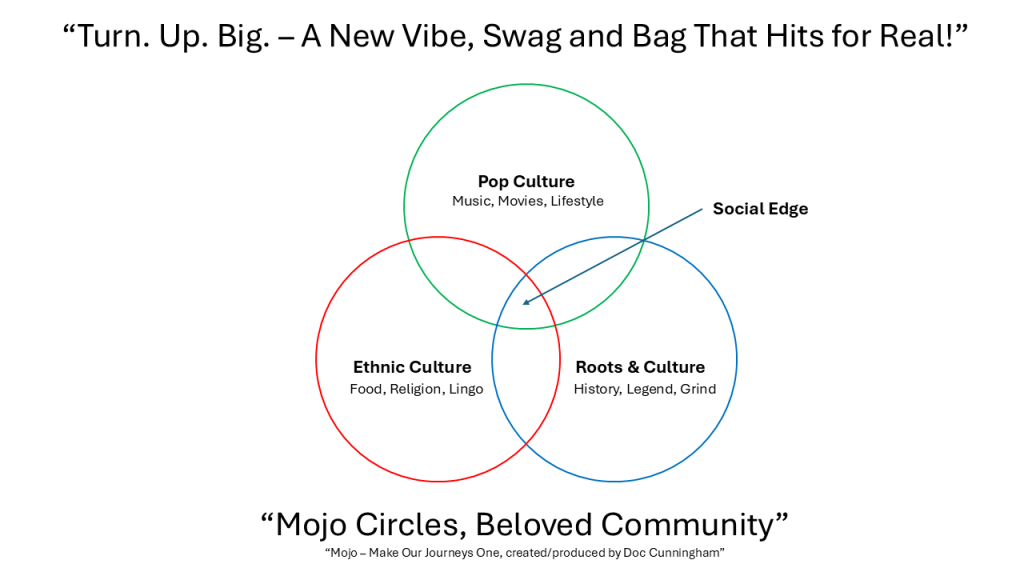
              One of the ways folks tried to impact culture back in the day was through intimidation. The KKK became a thing after Reconstruction because folks wanted to reset the narrative about the civil war. They also did that through ‘denial of truth’ by saying the civil war was about ‘State’s Rights’ when it really was about trying to hold on to slavery. We can impact culture today by how we relate King’s ‘beloved community’ with SAIC’s ‘mojo circles’. What if we could show folks another way to ‘slice & dice’ the craziness of our times through civics, the way Lamar gave us a new way to get the message across through his lyrics?     

              “Operation Mojo”

              3. Invite Community

              Think about how smart TV’s have made streaming apps and multi-media features possible? We can watch Internet broadcasts on our TV sets and ‘mirror’ content from our phones to our family room big screen. Well, think about what ‘smart civics’ might do to raise our civic engagement and social consciousness. SAIC’s expertise in this area is about connecting the dots across history, civics and culture. This way we’ll achieve ‘informed living, homeland rising’ with EASE: Educational, Aspirational, Social, Entrepreneurial. Ready to get on board our Friday Night Flights to a higher destiny of community?

              4. Inspire Dreams

              It’s hard to believe that next year will be 40 years since we’ve been honoring the MLK Holiday. It was signed into law on November 2,1983 and first observed as a holiday on January 20, 1986. That should be enough for us to see it’s time we grow up as a nation. Also, next year we’ll have the 250th anniversary of America’s Independence. Let’s put it this way…America’s independence inspired dreams of a new nation built around democracy as a republic. Moreover, Dr. King’s dream was built around the idea of making diversity, equity and inclusion meaningful in our journey. How are those dreams looking these days?      

              Life Dreams

              At a civil rights movement transition point in April 1968, Dr King said these words: “The nation is sick. Trouble is in the land. Confusion all around.” By Summer ‘68, Fannie Lou Hamer at a Boston speech said America must “wake up.” Are we at a similar point now? Well, Dr. King outlined two high-level steps: (1) Fierce urgency of now, (2) Do something for country, keep moving with new energy. So, does ‘Operation Mojo’ interest you or your group? Let’s get through the rumble & tumble moments by how we influence family, impact culture, invite community and inspire dreams in the next chapter of America’s story.    

              Chime-in on impacting Democracy & Public Good, Education & Community or Entrepreneurship & American Dream, ‘Civic Mondays’ events or Civics & Community forums. Plus,you can “J.A.M. With Us” (join a movement) in civic engagement, social change and community life. Checkout the Signup Center below.

              Tracks: P!nk – What About Us – https://youtu.be/ClU3fctbGls?si=kF83Dml6T4Z4yh0x

              Chaka Khan – Keep Your Head Up – https://youtu.be/88DS-T7Ypa4?si=V5Art2MWV-7zFbLb

              Signup Center

              Roll Call 2025 For Here and Now: What Presidential Inauguration, Civics and American Values Should Mean During This Season of Makeover

              Not since 2005 had Christmas and the start of Hanukkah fallen on the same day. The significance of that coincidence happening this past holiday was not lost on many faith observers. Normally after Christmas the usual ‘small talk’ children have with others is “what did Santa get you?” While that question has been long answered by now, there’re some bigger questions that America needs to have front and center. There’s also the coincidence of Inauguration falling on MLK Day.

              What’s America Not Seeing?

              Since it’s the start of a new year to build on vision, there’re probably some action items you’re turning into goals. To make them a reality will take steady effort and maybe even probing insight. That’s where we find ourselves as a nation too as we ponder what presidential inauguration, civics and American values should mean during this season of D.C. makeover. There’s probably a steady effort underway to get folks in place. But what about the probing insight needed to make sure America rises to the occasion of the Constitution and its goals? Meanwhile, there’s a shake-up happening in social media and traditional media. Not enough time to get into it here, but for clues we gotta go back to America’s second President John Adams.

              Following the pre-amble’s first few words of “We the people in order to form a more perfect Union”, comes these two words: “establish justice”. As SAIC is known for, we’ve done a deep dive in American history, the ‘Black to America’ story, and #HometownStrong comebacks for some probing insight. The founders wanted to establish justice as a nation because there was a sense of unfairness from the British throne. But America’s history has also seen a focus on ‘social justice’ in response to those experiencing the feeling of denial. There’s been equality denial, voting rights denial, opportunity denial, climate change denial, and more recently, election denial as well as DEI & truth denial. Dr. King understood this social justice element when he said, “injustice anywhere is a threat to justice everywhere.”

              Just to recap, those ‘threads of denial’ led to different moments in history. They’ve played a role in America’s tug-of-war between two sides: life, liberty and happiness vs hate, grievance and divisiveness. Plus, throughout history we’ve had moments of major ‘public lies’ that caused Americans to make decisions based on deception and not destiny. These ‘lies’ included the three-fifths clause, Supreme Court decision on Dred Scott as well as Plessy vs Ferguson ruling on ‘separate but equal’, and more recently, disinformation about the 2020 election results. It’s important to share these not simply to cry foul, but to remind us that history is like a ‘civics bible’, the more we apply it the better we’ll handle life’s issues.

              “Civics Bible”

              Dr. King encouraged us as a nation to choose the path that led to a higher destiny of community in the same way that SAIC offers a path for a higher level of citizenship. When King wrote the book “Where Do We Go from Here: Chaos or Community?” there was a stretch between 1963 and 1968 that holds some relevance to the past five years. What could have caused him to go from his ‘I Have a Dream’ speech to his ‘Mountaintop’ speech five years later where he said, “The nation is sick. Trouble is in the land. Confusion all around.” Well, we might add a new subtext to King’s book title with the words “What’s America Missing?” If we had to interpret King’s dream and make it relevant to here and now, what might our 2025 goals (and beyond) as a nation look like? Maybe we should first revisit “Out of Many, One” and reset around how we “Empower Many, as One” to: 

              1. Build your Quad/Squad

                In the ‘here & now’ Dr. King could rattle off some quick points of concern. He might suggest that some parts of ‘The Church’ has lost their high ground. He might emphasize that we need a new social consciousness mindset with education and civic action as two sides of the coin of economic/social impact. His dream might point to a newer sense of urgency for how we build our quad/squad so that America’s unresolved trauma, unresolved truths and unresolved trust don’t spread even further like wildfire. As with computers, when truth is lost, we end up in an error condition or major system failure.    

                2. Build your Brand

                In the new year as companies announce that they’re rolling back certain initiatives, many are wondering, what does that mean for the ‘pace of change’? In civic life W.E.B. Dubois talked about us having a double consciousness of how we see America and how America sees us. Well in business there’s the idea of having a ‘double bottom line’ in how you make money and make a difference. Those in biz know that as you build your brand and attract customers, you’ve gotta do things even when it’s not ‘popular’. Similarly, to build success you gotta do some things that aren’t always convenient or ‘trending’ at the time.  

                Attracting Customers

                3. Build Your Block

                When “Out of Many, One” was adopted in the early days it served as a mantra in going from 13 colonies to become the United States of America. Back then there weren’t any political parties, just folks operating with the idea of “hearts & homes for America.” If we’re gonna “empower many, as one” we gotta empower many families as one, many communities as one, even ‘We the People’ as one. To get there, we’ve gotta put civics in the driver’s seat. With politics we tend to see a push/pull between money and power. With civics we get to be inspired by a push/pull between people and progress, between ideals and innovations.

                4. Build Your Cred

                What’s it gonna take to build more cred as a nation and level-up our Union? To begin answering the question “what’s America missing”? we need a model to connect the dots across history, civics and culture. Plus, maybe America needs a new mojo in our game, culture needs a new lingo to explain things and families need a new go-to for not repeating same-old-same. In sports, momentum rules the day. Teams can have similar records and somewhat equal talent, but it’s in how they bring juice, magic and charm that things click as mojo. Similarly, we can build our cred by how we deliver more #MojoInAmerica.      

                Mo-men-tum Building Efforts

                At Franklin Delano Roosevelt’s inauguration he said, “the only thing we have to fear is fear itself”. There’s a certain kinda fear that’s hovering over the nation in this season of political makeover. Dr. King as a Baptist preacher might use scripture to remind us that “God didn’t give us a spirit of fear. But of power, love and a sound mind”. In this new period of civic engagement, let’s build King’s dreams and our purpose in speaking truth to power, operating in love with one another and maintaining a sound mind. Every kinda people make the world go ‘round and ‘We the People’ keep America moving towards destiny.  

                Chime-in on impacting Democracy & Public Good, Education & Community or Entrepreneurship & American Dream, ‘Civic Mondays’ events or Civics & Community forums. Plus,you can “J.A.M. With Us” (join a movement) in civic engagement, social change and community life. Checkout the Signup Center below.

                Tracks: One Republic – Better Days – https://youtu.be/dbUI7JfHxLc?si=2BvAy-E-pbIILi7i

                NF – Hope – https://youtu.be/YUdkYx9WH9k?si=eHvA_Zf1LeENndCg
                Signup Center

                Design a site like this with WordPress.com
                Get started