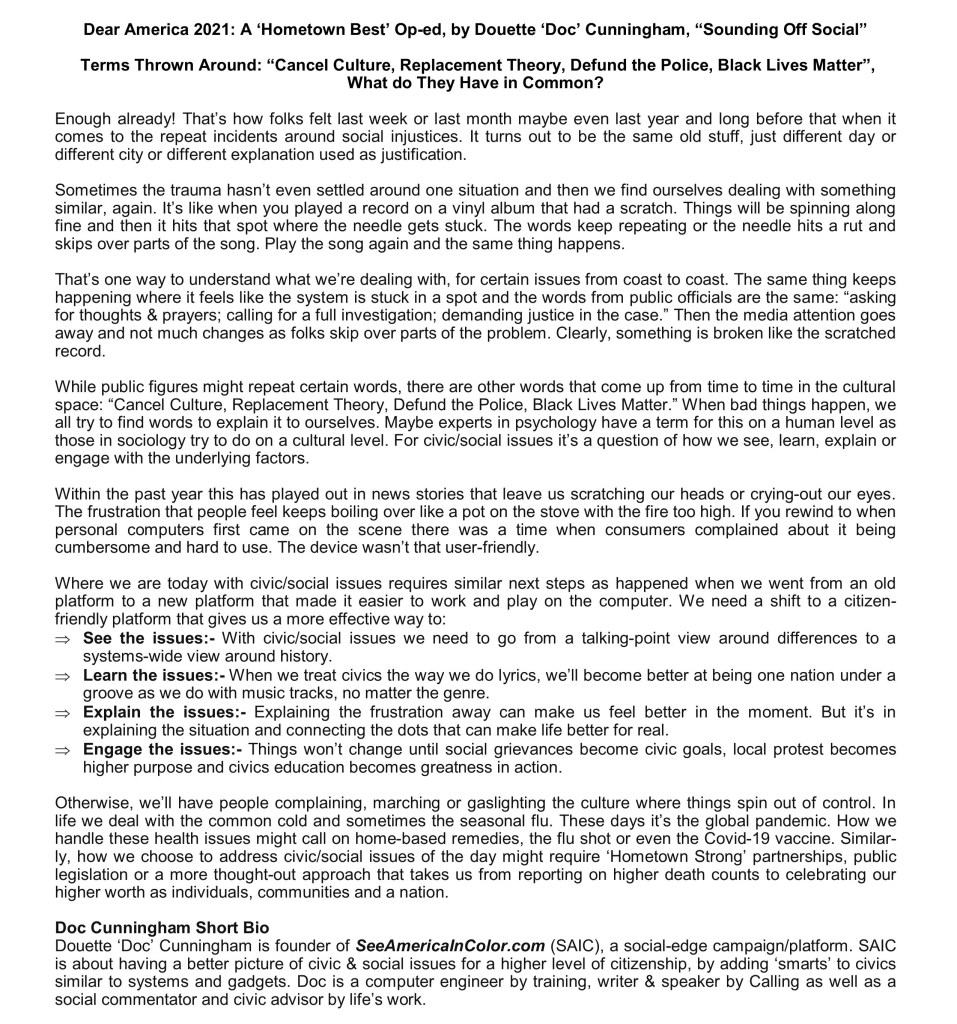
(Re)United by Civics in the Real World: With a Winning Spirit in Culture to Move Past Partisan Hang-ups and Social Flare-ups

Doc Cunningham
Sounding Off Social

Who’s ready to beat the virus? There’s growing concern that we’re not quite out the woods yet with Covid-19. The delta variant rate of spread is a cause for concern in many parts of the country. Why it’s become such a political football might take some time to unpack. But how about we focus on rallying around a solution as a team like they do at mission control?

Mission Control

That’s somewhat how the conversation went during the early founding of the nation when the question then was, “Who’s ready to beat the British?” A series of events had triggered a backlash to British rule which eventually led to the American Revolution. Patriot leaders like George Washington and Benjamin Franklin pulled together a gameplan for victory as a team and nation.

The plan was built around modest military strategy for sure, but they were also “united by civics.” Some concerns they had to manage resulted in critical decisions and civic actions:

  • They formed the Continental Congress and Continental Army as a “common good, shared defense” approach to the vast strength of the British forces.
  • They directed the creation of the “free press” in response to misinformation and disinformation that was in circulation.

The American patriots realized that if the colonies were divided and not on one accord, the British could undermine the weak link. They also had to contend with folks in neighboring Quebec Canada who were spreading bad info about the U.S. mission. Well, the Covid-19 virus is no joke and works by affecting the unvaccinated as the weak link. In addition, there’s no reason why media outlets today, born out of the idea of a “free press” should be spreading misinformation. Public leaders and everyday citizens should be ready to join a strategy to beat the virus, squash bad info and come together for the greater good.   

Space Race

If the patriots back then had the ‘smarts’ to be united by civics, what might it take for us to be (re)united by ‘smart civics’ in the real world, with a winning spirit? Well, maybe we can look to the new space race or the Olympics for clues. For the space race it’s about being united by science. The Olympic athletes and countries come together united by sports. So if we’re gonna beat the virus and return “back to life better” as a nation after Covid, social protests and post-election challenges, maybe we’ll need to copy what happens in sports during a timeout. That’s the idea behind SAICs “Operation J.U.M.P. for Joy.”

Normally during a timeout, there’re four things that happen between the last play and return-to-play when teams J.U.M.P. back into action. Well, Covid-19 forced a kinda timeout on regular life. Moving forward as we return to the workplace, school campus and other normal activities it might help to infuse those four things in our day-to-day living. Plus, Operation J.U.M.P. is about linking history and civics as we urge others to get a “shot of vaccine and boost of civics” and return back to life better with:

  1. Juice

On the sidelines during a timeout, athletes can be seen chugging their favorite sports drink. During play they lose lots of fluid and these drinks along with water, help to replenish them with electrolytes. This way they avoid getting weak from dehydration. Well, we can do the same to replenish some of what the Covid shutdown caused us to lose. For starters, it makes sense to get a shot of vaccine as our ‘juice’ to protect us from bad effects of the virus causing infection, exhaustion, dehydration and possible hospitalization.      

Vaccine Shot

2. Urgency

Players return to the field after a timeout pep-talk from the coaching staff. This might involve pointing out ways to overcome their opponent. In most cases you can see the sense of urgency they have back in the game. Similarly, where things are today with civic, social, cultural and Covid issues, we need to respond with a sense of urgency. Maybe words from Dr King fit here: “We are confronted with the fierce urgency of now. In this unfolding conundrum of life and history, there is such a thing as being too late. This is no time for apathy or complacency. This is a time for vigorous and positive action.”  

3. Moxie

Not only do athletes show-up with a sense of urgency, but they also bring some moxie. That means they gotta have a fighting spirit in the game. You often see this with ‘hustle’ plays where things start to bounce their way. Moxie might not always show up in the game stats but it often shows up in the team energy. That’s why we say SAIC isn’t about seeing others as a new enemy as much as it is about bringing a new energy to the civic/social playing field.    

Championship Stadium

4. Purpose

In an interview with famed basketball coaching legend John Wooden, he was once asked about the success he had at UCLA over his career. The reporter basically wanted to know how he got different players to come together as a team, even when they weren’t all 5-star athletes. Wooden’s response captured his coaching philosophy. He said, “Each player on the team must find a role for himself and a purpose beyond himself.” SAIC is built on a similar philosophy geared towards a higher level of citizenship.   

These days, some stir-up drama about whether Simone Biles lived up to her G.O.A.T. status at the Tokyo Olympics. Others spread bad info causing vaccine hesitancy. SAICs Operation J.U.M.P. wants us to focus more on being united by civics. So, we’ll need Juice for the Journey, Urgency to Up-level, Moxie to Matter and Purpose to Party! The idea of the Revolution as a time to “fight for freedom or die” gets used as an excuse to justify not taking the vaccine. Well, we can be like those in 1776 whose fight for freedom was to beat the British and begin a new nation. Today we fight for freedom to beat the virus and return back to life better with a new lease on life.  

Back to Life Better

You can join the conversation and support our efforts with SAICs “Dear America 2021” Letters and Impact Statement at the Facebook ‘Hometown Chat’ Page here http://www.Facebook.com/seeamericaincolor.    

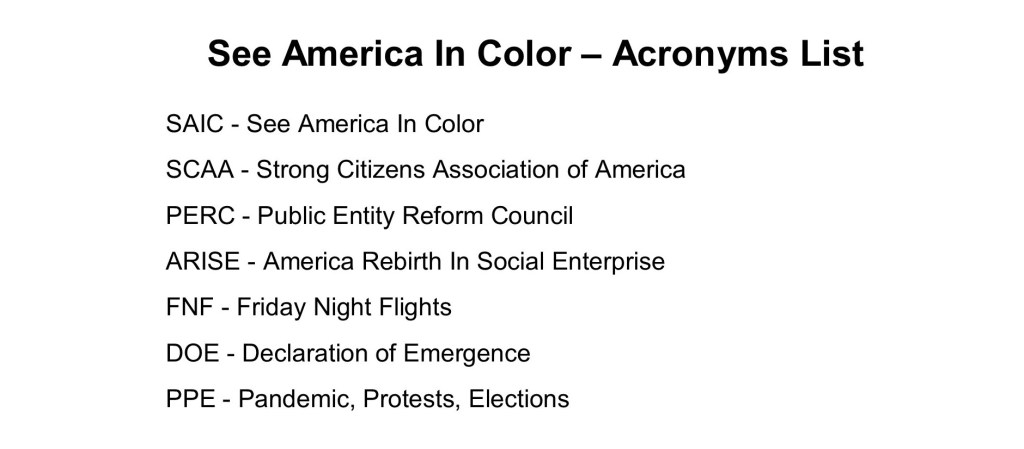
SAIC Acronyms List

Tracks: GAWVI ft LeCrae – Fight for Me – https://youtu.be/LYU9RWkvhwo 

Andy Grammer – Lease on Life – https://youtu.be/-SiifUgGqAs

When History Calls: How Moments in Time Became Movements of a People

Doc Cunningham
Sounding Off Social

Maybe where you are, it’s one of those lazy, hazy, crazy days of Summer. When the July 4th holiday rolls around you know that fireworks gonna be flying and temps gonna be soaring. When it’s behind us we’re in the dog days of hot weather. On those lazy days you just don’t feel like doing much. The hazy days might have you trying to stay cool to the point of chill. What about the crazy days?

Well, we can start with the drumbeat around civic and social issues. Whether it’s the cancel culture debate or the critical race theory backlash, there’re some who want to keep the grievance thing going. There’re also some public officials who seem to believe democracy is up for sale. Not to be overlooked are events around the isms and schisms of our era. These situations make you wanna flashback to a time and consider what to do when history calls.

Black & White Thinking

That flashback might reveal that the worst of America wants to be stuck on rage. While the best of America wants to reach a new stage. Throughout our history we’ve tried to balance how White America thinks and how Black America treads. It’s also been a balancing act of trying to do big things in the spirit of history and doing other things more like in the spirit of misery. So what do we see happening today?

From our founding to current we’ve had social change come about in waves. Whether that wave made a difference tells you something about how moments in time became movements of a people. A sports commentator might say a wave in the stands is a sign of boredom. A beachgoer might see a wave as a time for fun or relaxation, but a lifeguard knows it can also come with a dangerous undercurrent. So in terms of social issues, a wave might be an indication of being on the right side or wrong side of history, depending on whether it’s driven by boredom, a racial undercurrent or a higher sense of purpose.

Beach Side

See America In Color (SAIC) as a social edge campaign/platform reveals a fairly basic thing about the waves in American history. In the early days they started out being tied to two sets of colors, not simply black and white but also black and green. In 1607 when the first settlers arrived in Virginia it was in part about the ‘green’ of the Benjamins. They were looking for new export markets and many would eventually build their enterprise around the ‘black’ side of slavery. In 1620 there was a different group (known as pilgrims/puritans) who came on the Mayflower and landed at ‘Plymouth Rock’. They came in search of religious freedom. Where the two paths seem to meet is in suppressing and distorting the freedoms of Blacks (seems like a ‘freedom’ contradiction, right?). Since then, we’ve seen these waves play out in:            

  1. Revolution – Declaration of Independence

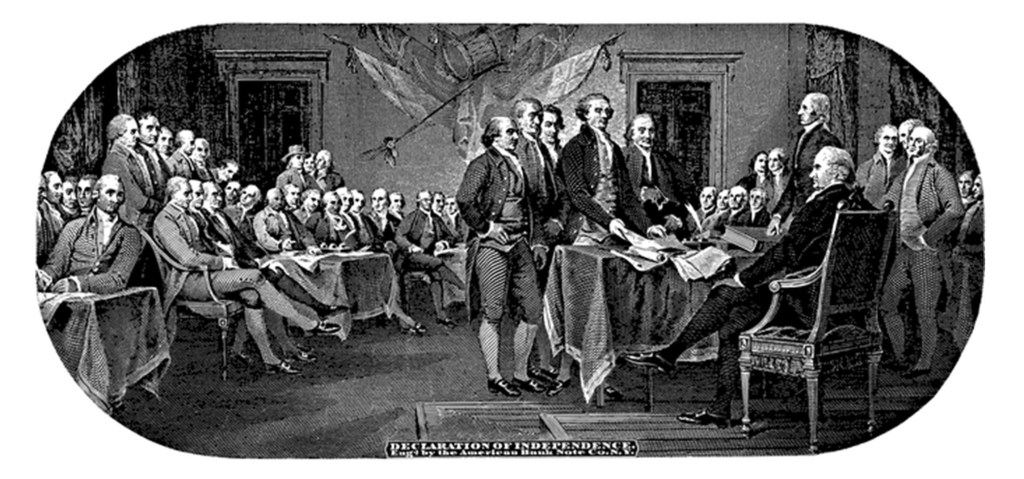
When it seemed like the freedom thing wasn’t quite working out for settlers, they eventual got to the point of revolution. This meant breaking away from England and forming a new country with a statement of purpose drafted as the Declaration of Independence. There was a ‘meeting of the minds’ around the notion of equality, which right off the bat fell short in practice. There was also a resolution to turn grievances into a set of ideals and principles which were put into the founding documents.   

2. Suffrage – Declaration of Sentiments

Women of the World

When women saw how the equality thing wasn’t working out, they got together to fight for suffrage and the right to participate in civic affairs. This led to the Declaration of Sentiments as a statement of purpose around duty to country and gender equality. Interestingly, the equality thing wasn’t working out for blacks either and for black women especially, it was a matter of feeling hidden or having their roles lessened. It’s important to note that there were men (including Frederick Douglass) who signed-on to this declaration to show support.

3. Secession – Declaration of Causes

The equality thing was still a struggle for blacks. This came to a head as the fight around slavery led to secession, the Declaration of Causes and eventually a civil war. This declaration was more a statement of animus than purpose because it was about maintaining the enterprise of slavery and protecting states’ rights. The 11 seceding states broke away from the union to be separate from the Federal government and to keep the dehumanizing function of slavery intact for economic reasons. Hundreds of thousands of lives were lost but eventually, the Emancipation Proclamation was the preview of a movement which continued towards civil rights.  

4. Destiny – Declaration of Emergence

GPS Tracking

So while the struggle has shifted over time from freedom to suffrage to slavery to civil rights, yet still the journey continues. Now we’re at a point where it’s about handling the truth. It’s as if the words “we hold these truths to be self-evident” are on a path to being eroded or erased. With GPS, you get to your destination with the truth-in-location that guides you to your destination. Similarly, with SAIC we can get to our best self individually and ‘a more perfect Union’ collectively as a nation with SAICs Declaration of Emergence and the truth that guides us to our destiny.

So if you’re wondering how some white people think, look at how America continues to struggle around issues of race, access, opportunity, duty. If you’re wondering how black people have had to tread, just look at the voting rights debate and other aspects of history that seem to be repeating themselves. We’ve seen different kinds of waves over the past 400+ years. Maybe after Independence Day we can think about a new wave in how we See America In Color to help ease the struggle around equality and move closer to our destiny. We shouldn’t be afraid to look truth in the eye and know our worth.

You can join the conversation and support our efforts with SAICs “Dear America 2021” Letters and Impact Statement at the Facebook ‘Hometown Chat’ Page here http://www.Facebook.com/seeamericaincolor.    

SAIC Acronyms List

Tracks: Nico & Vinz – Don’t be Afraid – https://youtu.be/U5k8d4oK45E 

Khalid – Know Your Worth – https://youtu.be/aEDULPGIwcg

Dear America 2021

Smart Civics 101 and We the People: Influencing Culture in the Classroom, at Work or Your Field of Dreams

Doc Cunningham
Sounding Off Social

The tassels and caps are flying! Whether it’s in middle school through college or trade school, many graduates are taking their last strolls before leaving campus. With Covid being less of a factor there’s room to laugh, hug and for some maybe even twerk their way to the next stage in learning, work and life.

Class of 2021

Others have an eye on the reopening of stadiums with more butts in the seats. Fans got a treat recently when Simone Biles did a jaw-dropping routine that’s never been done before by a female gymnast. Maybe in the same sports report on the evening news we heard about Phil Mikelson becoming the oldest player to win a PGA tournament at age 50.

While all that good stuff is happening, we’re still trying to figure out hot-button social issues. Sometimes it’s a gut-wrenching tragedy that makes no sense. Other times it’s head-scratching comments made by public officials. These make you wonder when things are gonna settle back to ‘normal’ after the pandemic, social protests and post-election drama showing up as voting audits with shady intentions.

It’s time for ‘Smart Civics 101’ and We the People to influence culture to the max in the classroom, at work or your field of dreams. It’s gonna take a new push in social intelligence. What’s that you ask? Well with current challenges around homeland security, we rely on national intelligence. Troop deployment and readiness rely on military intelligence. So, we can do more to better handle bias, hate and the culture war that’s at play. It’s why we need social intelligence more than ever before.

Hot Track

Remember those days as kids when we’d sing the words to a song but as we grew older, we realized we were singing the wrong words? Nowadays you can search the lyrics online and set yourself straight. That’s exactly how SAIC sees things from the point of view of civic/social issues. It’s about how we deliver not lyrics but civics so that you can see things straight with the issues of the day. This means bringing:

  1. Awareness

Folks from the deep south know about the Tulsa Massacre 100 years ago. The painful stories still bubble-up some anger today. There’re also stories of lynching that make your body coil. Consider the lynching cases or racial attacks in history that were often based on a lie? Someone is falsely accused of winking at a girl (e.g. Emmett Till), then a mob showed up to do damage. What do we see today, that’s repeating itself? Restrictive voting laws being passed based on a lie, which will disenfranchise people as a kinda lynching of democracy. We need more social intelligence to build knowledge.      

2. Knowledge

With American history, we learn about Settlement, Slavery, Independence, Civil War, Reconstruction, Segregation & Civil Rights. But did you know that throughout history there’s been this repeating back-and-forth between greater promise and power struggle? In the early days it was between “all men created equal” and abolishing slavery. What followed that was between Emancipation Proclamation and the fight to end segregation with civil rights. These days the back-and-forth is between multi-racial society and white nationalism wrapped-up with disinformation. We need more social intelligence to build smarts.

3. Smarts

Software Coder

During normal educational training we go from awareness to knowledge too. Then we arrive at a point of developing smarts. This way we can apply concepts in context to solve more difficult problems. If you’re working with software and writing code, the most basic instruction you learn to use is the ‘If’ clause. It’s a critical part of knowing whether a statement or system condition is true, before the next step. Otherwise, the system can get into a suspended or ‘hung’ state. That’s another reason why we need more social intelligence today to avoid being in a ‘hung-up’ state with civic/social issues and to build more hope.

4. Hope

Think about when you graduated to the next level? Getting to that point gave you hope for the future. But there seems to be a breakdown happening. How else do we explain the Tulsa Massacre then or recent mass casualty incidents now? It’s mental health, seething hate or lost hope where folks don’t see themselves contributing to society. Dr King ended his famous speech with the repeated refrain ‘I Have a Dream’. He hoped for a day when his children wouldn’t be judged by the color of their skin but by the content of their character. Well, we can build hope by raising the content of our character or the ‘smarts’ of our civics.     

This isn’t about ‘smart shaming’ people. It’s about adding ‘smarts’ to civics like with gadgets and building social intelligence. Throughout history we’ve gone from forming a nation with the Declaration of Independence. We’ve come through freeing a people with the Emancipation Proclamation. Then we had a phase of challenging a ‘separate but equal’ notion to achieve civil rights legislation. Now we’re at a point of up-leveling our citizenship by how we reboot civics education. That’s gotta be for us like fuel for today, hope for tomorrow and motivation to run on and experience personal power or higher achievement.

Medical Intern

You can join the conversation and support our efforts with SAICs “Dear America 2021” Letters and Impact Statement at the Facebook ‘Hometown Chat’ Page here http://www.Facebook.com/seeamericaincolor.    

SAIC Acronyms List

Tracks: One Republic – Run – https://youtu.be/TKkcsmvYTw4 

Coldplay – Higher Power – https://youtu.be/gXgf5smLEgQ

Friday Night Flights – Finale

6/4 Finale Event registration: https://us02web.zoom.us/meeting/register/tZYkf-6hrDkvHN05O9ehnqgNwGBiHsXSan-d

Voices of Change in Communities: Fresh Hope and Clear Vision for a New Day in Civic Engagement

Doc Cunningham
Sounding Off Social

It’s the verdict people were waiting for from coast to coast. Some 25 million watched to see where things would come down regarding the death of George Floyd. The jury turned in a guilty verdict for the case. As the judge read the counts which surprised many, folks wondered if it was justice or a first step at accountability.

Blindfolded Lady Justice

While that news story left many feeling hopeful, there was another event that brought a different kind of exhilaration. It was happening on Mars where NASA engineers made history with the first ever flight of an aircraft on the far-out planet. The plan was to have the helicopter (named Ingenuity) fly a little higher on each test flight.

Whether from a social change, American Dream or community empowerment perspective, See America In Color (SAIC) as a social-edge campaign/platform is focused on reaching new heights as well. With the launch of Friday Night Flights and a 7-part series of panels, each event has been like a ‘test flight’ in civic engagement, with one panel left to go.

A takeaway so far relates to this question: “Have we become a culture where we spend so much more money/energy on pushing social grievances than on pushing civic goals that help people better understand the issues?” A deep dive in American history, the ‘Black to America’ story and Hometown Strong comebacks reveals that cultural divide issues have always existed. They’ve been used to drum-up some economic or political advantage by one party over the other, at times with white supremacy as a backdrop. Examples include the Three-fifths Clause, Indian Removal Act and Chinese Exclusion Act.

Raging Waves

The cultural divide in today’s traditional and social media worlds has become such an undercurrent for raging waves of discontent, distrust and disinformation. We see it in restrictive voting laws being passed across the country. We see it with incidents of hate against Asian-Americans. We see it in police involved shootings in certain communities that leave more questions than answers. In some ways the cycle continues. So as we respond to post-election drama, the pandemic and social justice concerns, SAIC is readying a set of ‘Back to Life Better’ initiatives bringing fresh hope and clear vision for a new day where:    

  1. Social grievances become civic goals

Think back to that scene in the movie ‘A Few Good Men’ where Jack Nicholson’s character says to Tom Cruises’ character, “you can’t handle the truth.” Listen for another minute or so later in the clip and you’ll hear where Nicholson explains that statement by saying to Cruise, “I don’t care what you feel you’re entitled to.” Nowadays, the ‘social grievance brigade’ who are not interested in civic goals, are those with a bad sense of entitlement about civic/social issues. SAICs take on civic goals is to build on the idea of ‘We the People’ who can handle the truth.    

2. Local protests become higher purpose

Local Protest

What triggered America’s founding was later guided by a higher purpose. The Constitution’s preamble of “We the people in order to form a more perfect Union” gives the higher purpose. These days what we find is social grievance being used to feed the cultural divide as opposed turned into a higher purpose. How else do you explain the events of January 6th where a local rally morphed into attacking the Capitol of democracy and gaslighting America? With SAIC we’re using talents and gifting to achieve a higher level of citizenship. Alexander Hamilton used his gift of writing during the Revolution and after the Constitutional Convention. Harriet Tubman used her gift of discernment with the Underground Railroad.       

3. Civics education becomes greatness in action

Thomas Jefferson, even with his many contradictions seems to affirm the importance of civics education. He’s quoted as saying “I know of no safe depository of the ultimate power of the society than the people themselves; and if we think them not enlightened enough to exercise their control with wholesome discretion, the remedy is not to take it from them, but to inform their discretion through education. This is the true corrective of abuses of constitutional power.” The value of civics education helps to address constitutional abuses and cultural biases. Plus, as we make civics count, we help America’s greatness in action shine through the ultimate power in society as informed and engaged citizens.  

4. Recurring problems become better solutions

When our car has a flat, the first thing to do is change the tire. Most cars today come with a reduced-size spare tire called a ‘donut’. You’re allowed to run on the donut but at slower speed. You can drive for a while but not forever. The donut is an emergency fix to a problem. Eventually you have to replace the flat tire. With civic/social issues, have you ever wondered why when some things change, they seem to remain the same? Maybe the recurring problems need to go beyond an emergency fix. They need better solutions like SAIC has to offer, which is more than just a catchy name or marketing slogan.     

Court Gavel

Will you join us in the effort to make civics count? We’ll be stepping up our civic game by rolling out new initiatives at school, work and community. The verdict might be in, but the question is whether the fix is in. It will take ‘We the People’ using civic goals to operate with a higher purpose. For some, the thing that might hold us together could be a matter of faith or getting past some fear or striving to achieve certain firsts or just pressing on in the fight for equal justice under the law. So folks, speak now!  

You can join the conversation and support our efforts with SAICs “Dear America 2021” Letters and Impact Statement at the Facebook ‘Hometown Chat’ Page here http://www.Facebook.com/seeamericaincolor.    

Acronyms List

Tracks: H.E.R. & Tauren Wells – Hold Us Together – https://youtu.be/TwqU78VEmNc 

Leslie Odom Jr – Speak Now – https://youtu.be/ZvnPEMW1jj8

Dear America 2021

A Shift to Move Past Race, Gender and Equity Social Hangups that Will Have Us Thinking.. What a Change!

Doc Cunningham
Sounding Off Social

What a game (times 2)! First it was the NCAA men’s semi-final game that came down to three seconds and a buzzer beater from Gonzaga. Then it was the women’s championship game which also came down to a last second shot. But that time it didn’t drop in the basket. The thrill of victory and the hill of reaching higher with your play.

Cargo Ship

What a feat! That’s because of how those ship workers got the cargo vessel unstuck. This 220,000-ton behemoth ended up blocking the Suez Canal shipping lane for days. The ship might have been named the “Ever Given” but the mindset of those workers might be described as “Ever Sure.” They applied all their skills, equipment, resources, experience and sense of the possible to save the day.

What a change! Those are words folks might want to say when it comes to civic/social issues. It’s something we have as a goal of SAIC in order to go from See America In Color to Say America I Can. In one sense, the approach isn’t a David vs Goliath thing. It’s really David and the slingshot teaming up with Goliath and the arsenal to defeat inequalities, inequities and insecurities. Wouldn’t it be nice to also get past the culture wars?

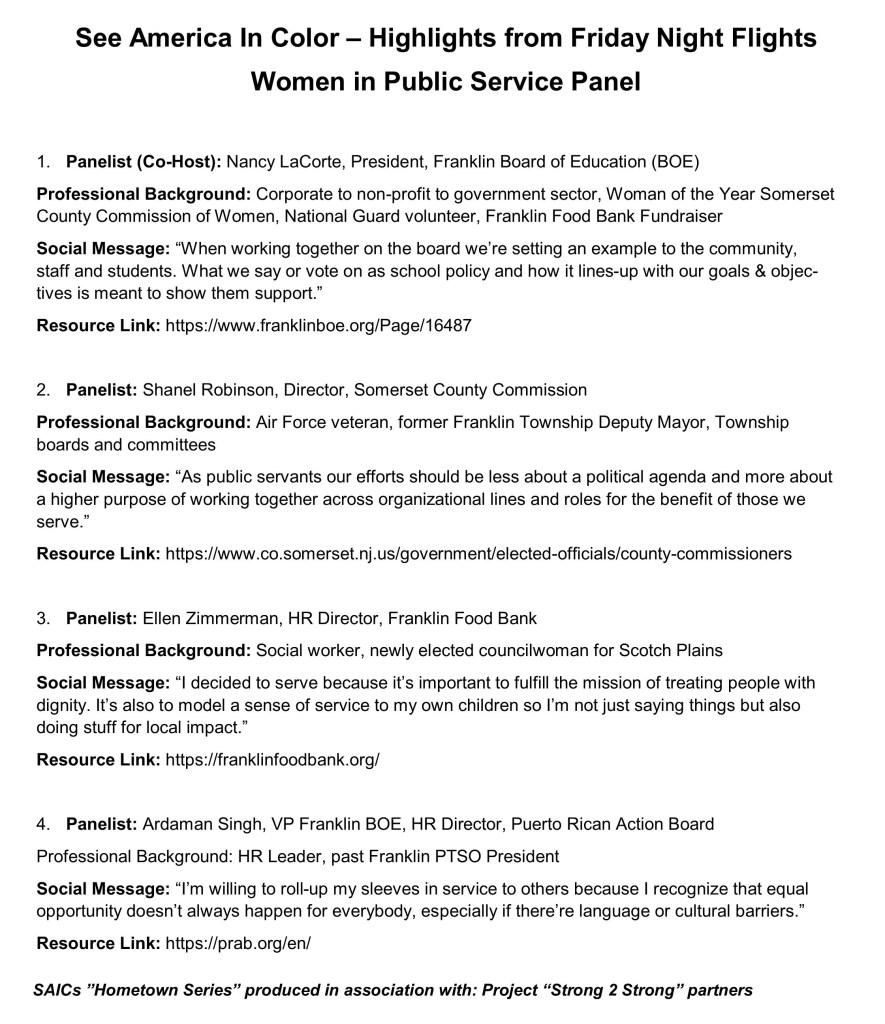
A shift to move past race, gender and equity social hangups might require an initial heavy-lift to forge #HometownStrong community partnerships in social change (see highlights at the end from SAICs Friday Night Flights and the Women in Public Service Panel). This involves change at the local level that’s less about a political agenda and more about a higher purpose of working together across organizational lines and roles for the benefit of those we serve.

#HometownStrong Partnerships

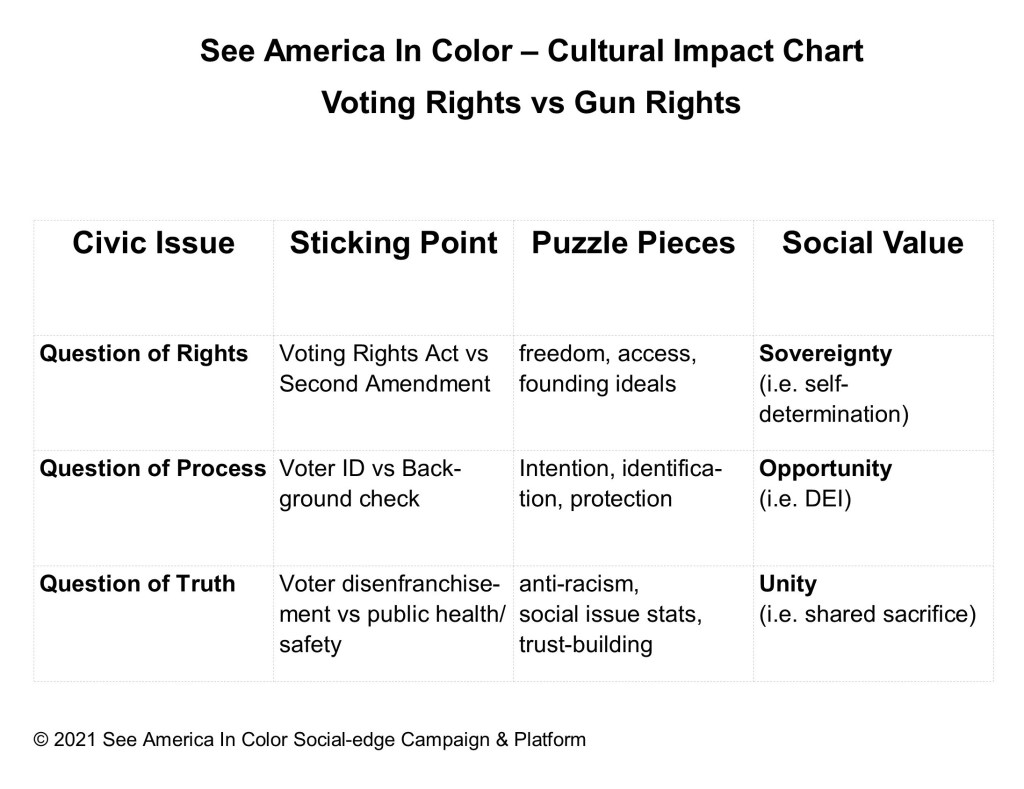
There’s also the need for change at the system level where things have become problematic. Whether it’s with a new approach to issues like the filibuster, voting rights, gun rights or other reforms, there comes a time when one has to reprogram the system. Think about how that might have happened in the telephone system when we were running out of ‘800 toll-free’ numbers. Biz/tech leaders came up with an expansion of the system with the addition of 877, 866, 855, etc.

Then they had to reprogram systems in the network to increase capabilities so the new numbers would work. SAIC helps us do just that by adding ‘smarts’ to civics the way biz/tech leaders do with systems and gadgets. But it’s also about how we pull together as a Dream Team, whether to beat a tough challenge, move a big obstacle or engage with a city of 2000, 220,000 or more people. According to the author of the book “Think Outside the Building,” we have to watchout for bureaucratic hurdles, ego roadblocks and process potholes that can cause things to derail or not prevail. Plus, from SAICs deep dive in American history, the ‘Black to America’ story and Hometown Strong comebacks, we found it also takes some:

City Birds-Eye View

1. Dreaming

This helps with “finding your fuel.” It’s how you power-thru those moments of fear, setbacks or when others might sell-you-out. Dr King understood this well because before he gave his famous March on Washington speech, he was already doing his part of ‘interpreting the dreams’ of Americans. That’s what his powerful refrain at the end of the speech was about. He had delivered bits and pieces in previous speeches. But it was Mahalia Jackson, who sang just before King spoke and later said to him “tell them about the Dream, Martin.” It’s the ‘I Have a Dream’ part of his speech that folks remember most.   

2. Hustling

Before Barack Obama became U.S. President he was an emerging author with the book “Dreams of My Father.” It’s been said that at his first book signing, only 10 people showed up. But he kept hustling his way to the top. Before Tyler Perry was the billionaire he is now, his first stage play was a disappointment where only a handful of people showed up. But he kept hustling his way to being a showbiz mogul today. Even a farmer knows that hustling is simply about sowing, watering and nurturing the seed and letting nature grant the increase. Well what SAIC has learned from Dr King and others in the game is that hustling is about sowing, watering and nurturing the concept and letting God grant the increase.     

Farm Hustling

3. Calling

With the David and Goliath story, Goliath had a combat assignment, but David had a calling. Long before we showed up in our work, we were given a calling. Think about how parents spend months coming up with the name for their child. It’s how that child will be ‘called’ by name and recognized. Well, that’s what your true calling means. It’s a way by which you’ll be ‘called’ by significance and recognized for valued service. Your calling might also give you ‘naming rights’ where you get to name stuff before they come into existence. SAIC represents a calling and as founder/creator, it comes with ‘naming rights.’

4. Impacting

We could list many names of those from history who expanded their capabilities and reprogrammed their skillset from assignment to calling. Some might not have realized at the time the impact they would have. Rosa Parks turned a bus seat into a movement. Harriet Tubman turned a social strategy into an underground railroad to freedom. They made an impact then to the point where we look back and say “what a change!” We can do our own impacting today to address voting rights or other areas of reform when we’re resolute in our conviction to the point of being “Ever Sure” as Parks and Tubman were.    

SAIC Cultural Impact Chart

So if you saw the NCAA basketball men’s semi-final or women’s final games you saw team play at its finest. If you read the story about the stuck ship you know that it took the coming together of the local workers to do something spectacular. Well, all this is possible when we up-tempo our diversity, equity, inclusion game and up-civics our campus, company and community. We get there by finding the fuel from dreaming, hustling, calling and impacting to the point where we feel it in our bones.  

You can join the conversation and support our efforts with SAICs “Dear America 2021” Impact Statement at the Facebook ‘Hometown Chat’ Page here http://www.Facebook.com/seeamericaincolor.    

SAIC Acronyms List

Tracks: Beyoncé – I was Here – https://youtu.be/i41qWJ6QjPI 

Cynthia Erivo – Stand Up – https://youtu.be/sn19xvfoXvk

What We Learn from the Founding Fathers that Might Help us Deal with Cancel Culture and the Cultural Divide

Doc Cunningham
Sounding Off Social

Well, Perseverance has landed! That’s one way to describe the news when the mars rover made it to the far-out planet. We saw a collective sigh of relief and at the same time exhilaration of accomplishment in the reaction of the mission control team. Ever wondered what that feeling must be like? Their work involves building a bridge to research and advances in life.

Mission Control

We had a taste of that with the recent launch of SAICs Friday Night Flights and the community panel. For that initial rollout it could also be said that perseverance has landed too. There’re other events planned in the series including a Business Panel, Education Panel, International Panel, Women in Public Service Panel, Hometown Best Panel and Super Citizens Panel. One way we’re hoping people see the strategy is like building a bridge to the future. That’s probably how the Founding Fathers approached the post Revolution period as they put in place some key documents for the republic.

The Declaration of Independence, Constitution and Bill of Rights served as that bridge. We know that some people didn’t get equal access to the privileges of that bridge. How else do you explain the fact that it was ok for some to be born free and others born to be sold? How do you explain the fact that some were treated as second-class while others seen as an afterthought? We have an opportunity to revisit lessons from the past to build a better bridge to the future. But we have to decide on whether it’s a bridge to “…life, liberty and the pursuit of happiness” or a bridge to “…life, liberty and the pursuit of conspiracy theories.”

Cultural Bridge

It’s why SAIC includes the Declaration of Emergence (DOE) as an added improvement to the original bridge. The DOE says, “We hold these truths to be self-evident that all are created equal and are endowed by the Creator with certain basic rights, civic values and hidden assets to live your best life.” These improvements to the original bridge are like what you find with construction work on physical bridges today. They’re improvements in street signs, road surface and guard rails. The DOE brings improvements in how we reach a higher level of citizenship through a better picture of civic/social issues.

The Founding Fathers might not have had a full view for how technology, partisanship and media proliferation would collide in the modern age. But they themselves took some cues about the underpinnings of the nation from the Greeks and Romans as well as the Enlightenment period of the 17th and 18th centuries. We might be in a different kind of period today that goes back and forth between enlightenment and entertainment. But there’re timeless civic values from the early Greco-Roman times that show the importance of:

1. Virtue

The familiar use of this word is often associated with how we treat and esteem women. That’s something that wasn’t necessarily at the forefront in America back then. However, the more lasting view of the word relates to having a sense of public-spiritedness and concern for the common good. Nowadays that can seem to be in short supply. How else do you explain when public officials approach their service as if it’s supposed to be like an R-rated movie with certain extremes as opposed to being AAA rated like a financial investment that has strong value over time?          

2. Temperance

Founding Fathers

This speaks to the importance of self-restraint in the public space and especially among public officials. We raise our children to avoid bullying which shows a lack of restraint and meanness. While there’re times for spirited discussions on a subject as happened among the founding fathers, temperance is needed to get past sticking points and roadblocks to serving the common good. In terms of a lack of temperance, how else do you explain when an official says another official needs to be removed from office before they’re even in office?

3. Fortitude

It took a lot of fortitude to prevail during the Revolution. Yes, there was military strategy as well but the grievance with the British throne was turned into a sense of purpose. Back then it took fortitude to defeat a power greater than themselves and most other countries. Today it takes fortitude (courage) to confront inequity, injustice and insecurity. The difference between then and now is in how some folks only want to pursue having a sense of grievance but not a sense of purpose. How else do you explain when people would rather pursue the spreading of conspiracy theories than the spreading of happiness?

4. Justice

There’s a cloud of falsehood that has hung over America throughout history. It might have started with the three-fifths clause then, but it has grown into something even worst and contributes to the post-election drama. The cloud has grown to the point of blocking the light and enlightenment. This helps to explain the cultural divide in one sense and today’s battle cries for justice in another. Someone once said, “justice will not be served until the unaffected are just as outraged as those who are.” Plus, as Dr King once said, “injustice anywhere is a threat to justice everywhere.”    

Cloud of Falsehood

So a response to the ‘cancel culture’ and cultural divide fervor these days might be found in civics education. Civics is to culture as truth is to the Declaration of Independence. Without ‘these truths’ things can go haywire which is where we find ourselves in some circles today. SAIC is here to switch it up by how we reboot civics education, refresh civic engagement, reset cultural messaging and revive social spirit. Civic/social virtues tend to feed off of truisms not ‘what-about-isms’. This way after the pandemic, protests and elections (PPE) we can not only be survivors, but we can also be deep-divers in civics education towards our future success individually and as a nation.  

You can join the conversation and support our efforts with SAICs “Dear America 2021” Impact Statement at the Facebook ‘Hometown Chat’ Page here http://www.Facebook.com/seeamericaincolor.    

Acronyms List

Tracks: Protoje Ft Koffee – Switch it Up – https://youtu.be/Z04PEg2QwNY

Skip Marley Ft Various Artists – Survival 76 Cypher – https://youtu.be/zTOYqfnSyuU

Getting to the Heart & Soul of Roots & Culture as a Nation

Doc Cunningham
Sounding Off Social

Ever heard music on the radio or in a TV commercial that you wanted to know, “what’s that song?” You heard the song a time or two before but didn’t know the name of the artist. Well, ask any college student, high school teen or middle school tween and they might say “you gotta Shazam the song.” That’s social media talk for having an app that listens to the music and then names the song, artist and other details.

Black History Groove

Sometimes as citizen we find ourselves in a similar situation when listening to public figures. We hear them say something and wished we knew whether the message was true or filled with disinformation. Wouldn’t it be nice to be able to ‘Shazam their words’ to see if the message was on point? Well, in a sense that’s how we got to creating See America In Color (SAIC) as a social-edge campaign/platform. It’s like being able to ‘Shazam in civics’ by getting to the heart & soul of roots & culture as a classroom, company, community and country.

So you might wonder, how does this work? SAIC came about from a deep dive in American history, the ‘Black to America’ story and Hometown Strong comebacks. It was realized that part of the problem these days with separating ‘fact from fake’ is that mainstream news comes in different forms: reporting, analysis, opinion and what’s called “brand editorial.” It’s as if sometimes we have to parse and decipher by separating truth from fluff, wheat from chaff, ads from journalism.

Wheat & Chaff

One way to think about how this has played-out in our history is to go back to the Declaration of Independence. When you break it down the way a master preacher like Dr King would, you might get something like this: (1) We; (2) hold these truths; (3) to be self-evident; (4) that all men are created equal. Over the years we see how this has been interpreted by people differently:

  1. We – What/who is your ‘We’? Are you on the side of white supremacy or the side of ‘one indivisible nation under God?’ Your ‘We’ says something about your ‘I’… Identity, Importance, Inspiration, Impact.
  2. Hold these truths – the universal truths including life, liberty and the pursuit of happiness. There’re those who ‘hold these lies’ and don’t think these truths should apply to everyone.
  3. To be self-evident – those obvious truths. For some people, truths may or may not be self-evident but they’re certainly not self-embraced. Folks build media ‘smoke screens’ around truth.
  4. That all men are created equal – in some corners this was taken literally to mean only (white) men. So blacks and women were initially left off the equality/equity train.    

When you break things down that way, it gives us a better way to ‘Shazam in civics’ from what we see, hear and learn. But SAIC doesn’t stop there. Since we were getting into the business of spreading the ‘see in color’ message, it made sense to appreciate what it’s like to ‘see in black & white.’ In other words, if this were a new business specializing in building/selling color TVs, it would make sense to know about the workings of black & white TVs, the shift to color and then ‘smart TV’. In so doing, we get a better picture for a higher level of citizenship as people who understand the:

Smart TV
  • Value Gap

According to Dr Eddie Glaude Jr, a Black Historian and Princeton University Chair of African-American Studies, the ‘value gap’ is where discrimination, dehumanization, and demonization all started. SAIC sees the ‘value gap’ like a spinoff from the Declaration of Independence, but as a ‘social issues flava’ to justify slavery. This flava went through updates which led to an ‘Imposter Syndrome’ dilemma in America, where some people are made to feel as if they don’t belong. Proclaiming ‘Black Lives Matter’ as a statement of truth then during the Three-fifths Clause debate and now during social protest marches, is a response to the value gap.          

  • Policy Gap

As the U.S. Constitution and Bill of Rights came about, America showed it was taking next steps beyond the Declaration of Independence. But what also happened in the law was an increasing policy gap. For example, the Fugitive Slave Act allowed those who were ‘plantation security’ to send out slave patrols to capture runaway slaves. After capture, some were tortured, like having toes cutoff as punishment. This second-class status was sealed into law with the 1857 Supreme Court ruling in the Dred Scott case which basically said black people didn’t have the rights of citizenship. It seems the Declaration of Independence took a backseat until we got to the 13th, 14th and 15th Amendments.              

Supreme Court
  • Equity Gap

Jump forward almost 100 years and we see how the policy gap evolved into the equity gap. When soldiers returned from World War II, the federal government passed a new law called the G.I. Bill. It gave veterans the chance to get new skills, access to capital, housing and job opportunities. But that wasn’t the case for returning black veterans. Then to add insult to injury later, there was the banking practice of ‘Redlining’ to intentionally suppress property values in black neighborhoods. Owning a home is a big way to build equity. But if it’s harder for some people to get a fair shot or increased property value then you get a widening equity gap.                  

  • Civics Gap

Today we find ourselves dealing with the civics gap. When history gets told, the truth sometimes depends on who’s doing the telling. The distortion or disinformation affects how we connect the dots between roots & culture. It’s why SAIC is focused on 4Rs for how we reboot civics education, refresh civic engagement, reset cultural messaging and revive social spirit. As we work on moving past the pandemic, social protests and post-elections drama, we have to find ways to make civics count if we want to return back to life better. Plus, if we can train ‘smart dogs’ to sniff-out Covid, don’t see why we can’t train the next generation by how we add ‘smarts’ to civics, to ‘sniff-out’ issues that feed the cultural divide.  

Fault Line

So who’s ready to ‘Shazam in civics’? Here’s a take-home assignment. Think about how geology helps with knowing the earth’s physical landscape, natural resources and hidden fault lines. Well, maybe SAICs approach to civics might be useful in how we nail down the social landscape, human resources/assets and ‘false lines’ in news, roots & culture. We make progress with equality and equity by how we operate in our greatness and treat one another with fairness. We must turn cultural despair built around 3Rs (racism, resentment, rage) into multi-cultural synergy built around universal truths of life, liberty and the pursuit of happiness.                

You can join the conversation and support our efforts with SAICs “Dear America 2021” Impact Statement at the Facebook ‘Hometown Chat’ Page here http://www.Facebook.com/seeamericaincolor.    

SAIC Acronyms

Tracks: K Ci & JoJo – Life – https://youtu.be/JMGgLgmfg2w 

Kid Cudi ft MGMT – Pursuit of Happiness – https://youtu.be/7xzU9Qqdqww

A Shot of Hope for Change to Get Past the Pandemic, Social Protests and Post-Election Drama!

Doc Cunningham
Sounding Off Social

Who’s ready to talk playoffs? Or maybe it’s the buzz around new TV shows that’s on some people’s minds? In college football the national championship game is set to be a kinda north vs south. In pro football, there’re a couple teams in the mix that hadn’t made the playoffs in years. Even with almost empty stadiums, die-hard fans will be cheering as players bring passion and mojo to the field.

Big Game

But there’s something else more pressing beyond first down and 10. It’s the rollout of the Covid-19 vaccines. As the new year unfolds folks from rural towns to big cities are waiting to get their doses. After all we’ve gone through as a nation these past months, the rollout is being described as a shot of hope for many.

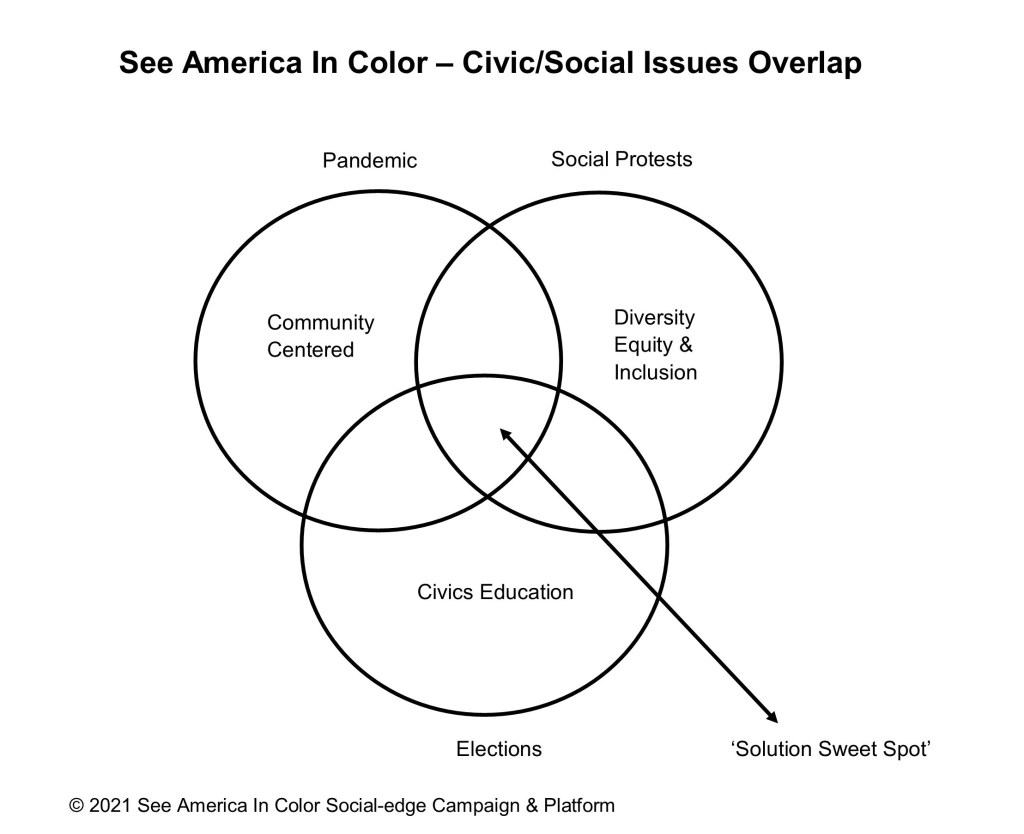
Covid-19 isn’t the only issue to have caused public alarm. We’ve basically had the triple-challenge of pandemic, social protests and the presidential elections. The overlap of these social/civic issues has tested our system of government, justice and healthcare. It’s why See America In Color (SAIC) represents a shot of hope for change to get past the pandemic, social protests and the post-election drama.

SAIC Solution Sweet Spot

As our public health officials ramp up messaging on the vaccines, we learn that it was made possible by years of research after the H1/N1 virus outbreak. The science behind the vaccines might not make sense to everybody, which is one reason people could hold doubts. Similarly, SAIC as a social-edge campaign/platform came out of a deep dive in American history, the ‘Black to America’ story and Hometown Strong comebacks. One way to make sense of it all is in SAICs snapshot of history.  

It was James Madison who, in describing the difference between the north and south said “the institution of slavery and its consequences formed the line of discrimination.” That was America’s original ‘fault line’ so to speak. As with the trauma of earthquakes and Tsunamis, our fault lines are where social grievances and political drama play out. So, with SAICs 2021 rollout and impact statement we say, “Dear America, it’s year 21 and century 21, which should mean a coming-of-age in how we respond to this triple-challenge.” It’ll take a model of civic excellence around equality, access, justice and unity:   

Snapshot of History

1. Equality

College football players have been wearing impact statements on their helmets. The ‘equality’ message connects with them when you consider the different types of surfaces they play on. Some stadiums have natural turf while others have artificial. In the case of artificial, those fields seem to come in different shades of green, grey, red and blue. But no matter the type of surface, the rules still provide for a ‘level playing field.’ In the same way, when it comes to the civic/social issues of our time, no matter what shades of color we are, equality should ensure a level playing field.           

Field of Dreams

2. Access

This year NJ changed its county office titles from Freeholder to County Commissioner. The old name was a holdover from when only the wealthy, those who owned property or those who were free got access to resources. Imagine if the nature gods decided to only allow some people access to oxygen (O2) based on wealth and the rest of us only got leftover oxygen as in one-part ‘O’ or none at all? In a sense that’s what happens when we limit access to resources based on a ‘grinch leader’ mentality. It’s been said that the most basic part of a democracy is access to voting. The ballot box is something to watch since in America’s history there’ve been repeated efforts at suppression and intimidation.           

3. Justice

Dr King once said, “The arc of the moral universe is long, but it bends towards justice.” James Baldwin is quoted as saying “Ignorance allied with power is the most ferocious enemy of justice.” These quotes remind us that justice should be fair-minded and ‘smarts’-building. A simple way to think of justice is in the ‘targeting’ call in football. To play smart and avoid injury, a player cannot use the crown of the head to make a tackle. If ‘targeting’ is confirmed after video review, then there’s a penalty. So, in terms of social injustices or wrongful loss of life whether with law enforcement or other entity, if ‘biased targeting’ is confirmed there should be a penalty.               

4. Unity

The first principle in the Kwanzaa tradition is unity. The first part of USA is tied to unity. With SAIC we can achieve unity through features built around content for smart curriculum, a campaign for change, a platform for closing the ‘civics gap’ and a bridge to crossover the cultural divide. Plus, we can achieve unity like what happens in a holiday light display. We string-together a series of wires and flip the switch to get a beautiful array of bright lights. Well, with a model of civic excellence we can produce #CitizenShining moments from coast to coast in the biz world and throughout communities.  

Streaming Channels

So the TV networks or streaming channels aren’t the only ones doing a rollout of new shows or new season of current shows. We’re also doing a 2021 rollout of SAICs Essay Contest and Friday Night Flights to meet the triple-challenge of the day. These past months have been tough in many respects. We’ve had to adjust to a different kind of normal. But with our rollout rooted in reality and focused on returning back to life better we hope that this year brings not just a turnaround but also a feeling like we belong as you hold SAIC close.             

You can join the conversation and support our efforts with SAICs “Dear America 2021” Impact Statement at the Facebook ‘Hometown Chat’ Page here http://www.Facebook.com/seeamericaincolor.    

SAIC Acronyms

Tracks: Ciara Ft Ester Dean – Rooted – https://youtu.be/bUAxPG3GYi8 

X Ambassadors – Belong – https://youtu.be/KH6MwwKdTqY

(Part 2) After We Vote: How We Move on From the Elections and Bring Change Whether Win, Lose or Flaws.

Doc Cunningham
Sounding Off Social

The holiday season is here! It’s usually a time of fun moments and festive cheer. But as the Covid-19 pandemic rages on, there’re shifts and changes we’ve had to make when compared to past years. This is also a time that the ‘Year-in-Review’ news programs get rolled out. Some of us will do our best to handle the mental/emotional stressors while trying to make sense of the 2020 blur.  

Hometown Huddle

In the workplace some might use this time for a job performance recap, while with students it might call for a school-wide virtual conversation. But in the interest of civic ‘team spirit’ for the See America In Color (SAIC) social-edge campaign/platform, we’ll use this moment as an ‘After We Vote’ review and reality check. Whether win, lose or flaws in the system, we can move on from the elections and bring change based on lessons of the past in American history, the ‘Black to America’ story and ‘Hometown Strong’ comebacks.

It’s been a few weeks since the presidential elections and what’s been happening can be summed-up from our history by actions of winners and losers. For example, the winners of the American Revolution spent time crafting an organizing document that begins with the words “We the people in order to form a more perfect union.” But history shows that with past losers in America’s unfolding story, they spent time doing three things: (1) Attacking democracy (2) Suppressing citizens’ rights and (3) Gaslighting social ills and the culture wars.

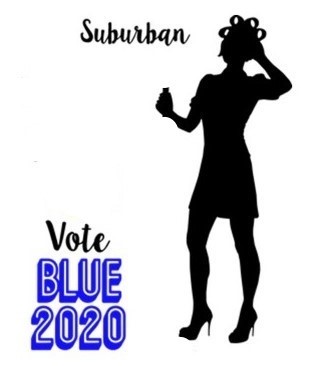
Suburban Voter

As a quick flashback following the Revolution, women and some blacks in New Jersey were allowed the right to vote. That was reversed in 1807 because one party felt it was losing the support of those groups and decided to disenfranchise them. They came up with a new push and then laws under the guise of “Fighting Fraud.” Another example is how after the Civil War the KKK was formed by six confederate war veterans who were college educated. They were supporters of the losing side who would intimidate, harass and then attack democracy which led to the Jim Crow era of culture wars. Sound familiar?

A better view of civic/social issues that is “powered by SAIC” might help to explain the following ideal: Celebrate a civic spirit in culture and community like a winning spirit in sports & biz. Think about the end of a football game when the coaches or the players meet in the middle of the field to shake hands. It’s not something they do as an executive order, but as a goodwill gesture after the game. Whether win, lose or draw, they move on and/or regroup for the next game or season. Moreover, when a player graduates from school or retires as a pro, they don’t try to hold their former teammates or the game hostage. So, taking a page from sports, we can do better as elected officials, public figures, media personalities, biz leaders and regular folks in ways that serve the country well by how we affect:                     

1. Civics

Between first and eight grades, students learn in science the difference between water as H2O and hydrogen peroxide as H2O2. Imagine during that time if little by little they’re led to believe that H2O2 is the same as H2O but is better for you because it has more oxygen? That would soon become a disaster in their health. Well, what we sometimes find in our public space can be similarly bad for issues beyond race. When people get fed a ‘drip drip drip’ of disinformation, over time they’re led to believe the wrong things. This might cause an addiction to disinformation, and as with most addictions, someone gets hurt. Plus, by the time they get to college and the real world, they’re likely to suffer with bouts of grievance, confusion and pain because they “lack information and are constantly liable to being misled.”          

2. Citizens

Organized Sports

From middle school through college, students can participate in the organized sport of their choosing. As they advance from the early stages maybe even through to the Olympics or pro ranks, practice sessions become harder and the goals steeper. As they grow in abilities and personal strengths the rewards are also greater. Well, that’s the mindset of SAICs Essay Contest and Friday Night Flights programs, in an effort to reboot civics education, refresh civic engagement, reset cultural messaging and revive social spirit. By the time we become voters or serve in other ways with a deeper sense of duty, we’ll all be working with a better picture of civic/social issues for a higher level of citizenship.        

3. Culture

Some of what we see today as ‘culture wars’ might be tied to a back-and-forth between White America and Black Culture. There’s even a spillover to other areas but it’s often experienced as ‘social humidity.’ It’s like those days when humidity in the air is heavy. The higher the humidity, the greater amount of water vapor is in the atmosphere. Things feel sticky, uncomfortable, maybe even unbearable as people try to find a ‘cool zone.’ Well when it comes to civic/social issues in America, we’ve always had to deal with social humidity due to ‘white supremacy vapors’ in the air making things uncomfortable. Plus, part of the culture wars might also be about whose ‘cool zone’ attracts more followers.              

4. Community

Some might remember the TV show from the 60s/70s called the ‘Mod Squad’ (Mod for modern). The theme was based around a group of young people who wanted to make a difference in the community. Their backgrounds could have caused them to be overlooked, but they came together to affect the social issues of their time. Maybe today across America we need a kind of ‘Pod Squad’ to help ‘protect our democracy’ or a ‘Civics Brigade’ to ‘put out disinformation’ hotspots that spread like wildfire. We kinda need parents, teachers, students and community members locked-in on a stronger, more secure future.

Hometown Recognition

If we want to “Make Team America an Awesome 10” we can look to sports as a guide. The players in the game learn to think ‘team’ before their own highlight ream. When you write the word aWEsoME, you gotta spell WE before ME. In the same way this might serve us well as we consider country, community and duty before political party, celebrity or cash money. It takes patriotic realism over selfish ambitions to achieve a greater good, higher purpose and bigger love that will have us all feeling good in the neighborhood throughout the holiday season and beyond. Then no one can top or stop us as a nation!              

You can join the conversation and support our efforts to “See America In Color: With 2020 Vision” at the Facebook ‘Hometown Chat’ Page here http://www.Facebook.com/seeamericaincolor.     

Tracks: Surfaces – Sunday Best – https://youtu.be/_83KqwEEGw4

 John Legend – Bigger Love – https://youtu.be/rAxdO1j6oQI

After We Vote: Where is History, Civics & Culture Gonna Take us As the U.S.A.?

Doc Cunningham
Sounding Off Social

How do you know if someone represents you or your issues? That’s the sort of question citizens face every time they vote. We’re trying to make a decision based on a combination of factors of person, party, platform and policy proposals. Sometimes a candidate might get support from celebs or other public figures to help attract voters.

Politics At-a-Glance

In some cases, you hear certain words used to criticize that support: sellout, hypocrite, traitor, opportunist. The 2020 Presidential election season was no different. A few unexpected folks came out publicly in support of their candidate. While the answer to the question of who people vote for isn’t always logical or scientific, there’re those who probably have some strong feelings.

Well, on the days after we vote we should at least be asking ourselves, “Where is history, civics and culture gonna take us as the U.S.A. – United States of America?” Think about what happens when a student attends graduation, whether from middle school, high school or college. As they walk on that stage to receive the diploma, there is a collective consensus around them going to the next level. Family members gather to support the graduate and to celebrate what life has in-store for them going forward.

Similarly, after we vote we should want to have a collective consensus about the ideals that can take us to the next level as a nation. This consensus, if viewed as the United Stage of America (USA), is one way to appreciate why the See America In Color (SAIC) social-edge campaign/platform believes civics education is the next social frontier in America. It’s why we deliver content for ‘smart curriculum and smart programming’. If you quiz people to choose between “dumb, dumber, smart or smart-arse” they’d likely want to have ‘smarts’ in civics the way biz/tech leaders do with gadgets and students do with academics.

Civics Quiz

Throughout America’s history we’ve seen evolution and revolution. We’ve also seen people overcome struggles, hardships and pain. In the 80s and 90s we had the period of crack cocaine addiction. In the 90s and early 2000s we dealt with opioid addiction. Over the years when our national identity or personal security was at stake, we responded with a “war on poverty” or “war on drugs” or “war on terror.” These days it seems we’re dealing with a growing “addiction to disinformation” that is consumed as hope. It’s as if we need a “War on D.A.H. – Disinformation as Hope.” So, to watch out for this rising danger of WMDs (weapons of mass disinformation) we need to go from:     

1. Talking points to takeoff points – because culture needs context

You often hear ‘talking points’ used to explain support for a political candidate. The problem is the message can get missed or muffled especially when used out of context. As an example, in the context of living with passion, some have heard the phrase “Do what you love and the money will follow.” Without the proper context, someone could hear that and believe “love money to live fully.” But with context, it really means “when you love what you do, money/reward will flow through you.” In the same way, culture needs history to provide context to make sure that the message doesn’t get missed or muffled.        

2. Voter education to civics education – because civics brings content

Voting Checklist

The Covid-19 pandemic threw the campaign season into a frustrating loop. There was confusion about absentee ballots versus vote-by-mail. There was concern among seniors about voting in person or working the polls. As such, there was even greater need for voter education through media and printed materials. Well after we vote, we should embrace the need for civics education to help get us past the ‘isms and schisms’, biases and prejudices, divisions and suppressions to meet and conquer that next frontier.       

3. Transaction to transformation – because citizens get conscious

In watching the campaign ads, it can sometimes feel like the process is more of a political transaction. The candidate asks for our vote in exchange for promises to make certain options/services available to the public. There’s often cynicism about the political process because voters feel some candidates forget about the people once they’re in office. With civics education, the process can be transformational as citizens get conscious about the ‘ins & outs’ of who’s serving the people and who’s serving their pockets.         

4. Candidate endorsement to civic empowerment – because better means change

Over the summer, pro athletes and other public figures showed us what can happen when citizens become conscious. There were civic engagement projects that weren’t focused on candidate endorsement. No matter which campaign ad was most convincing for folks, after we vote we can reach new heights with civic empowerment in the next frontier because better means change, whether personally, professionally or socially.   

Civic Pride

So after we vote, will we see a nation as good as its promise or as bad as its worst instincts? That’s a question we might ponder in the weeks and months ahead. These days we see slogans like “Stop Hate! or End Racism!” Maybe one day we can celebrate civics education as the United Stage of America in a National Civics Day. But in the meantime, from Miami to Minnesota, let’s meet the future with the words of President Lincoln, by living-out the “better angels” of our nature.          

You can join the conversation and support our efforts to “See America In Color: With 2020 Vision” at the Facebook ‘Hometown Chat’ Page here http://www.Facebook.com/seeamericaincolor.     

Tracks: John Legend & The Roots – Wake Up Everybody – https://youtu.be/iJgxJ6JrPkc 

Will Smith – Miami – https://youtu.be/IwBS6QGsH_4

Design a site like this with WordPress.com
Get started