What was the big reveal from this year’s Oscar Awards or Superbowl game? Well the Oscars is still dealing with fallout from not having a host for the show over recent years. This time they called on past hosts Steve Martin and Chris Rock to do an opening bit. It had some folks thinking…heck they might as well have hosted the whole show.
Concert Performance
With the Superbowl, fans were buzzing about the halftime performance of showing more skin while sports commentators were breaking down how the Kansas City Chiefs pulled out a win. Jennifer Lopez and Shakira were the first-ever latin pair to perform on the big stage. Since then, they’ve had over 100 million views of their performance on a Youtube channel.
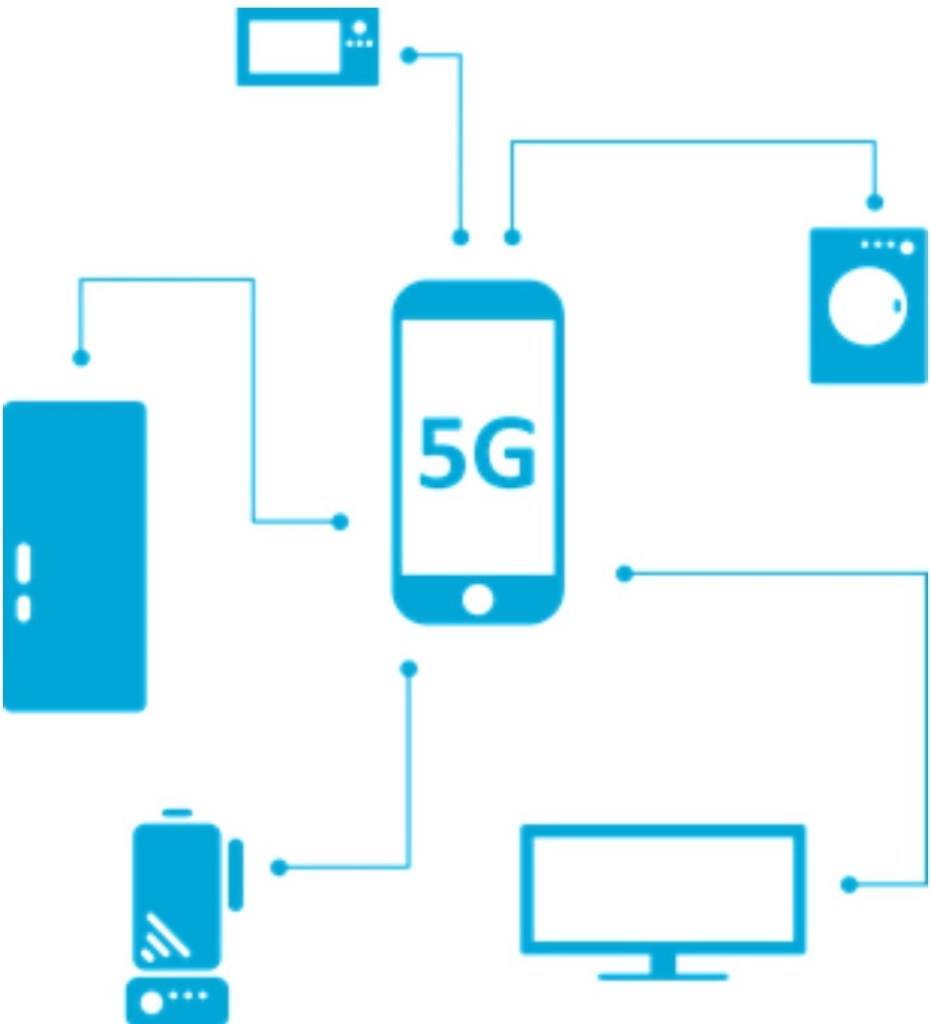
Maybe a takeaway from the game that’s just as big was about 5G phone networks coming to a boulevard near you. The wireless companies are all rolling out their version of 5G this year. The tech articles say that it’s a major speed boost for device-to-device communication. It’s also a plus for how gadgets will connect with each other over the Internet.
The See America In Color (SAIC) campaign is getting ready to make its 5G pitch at the upcoming Awards event. The Superbowl might have been a place for some firms to give theirs. Plus, by now we’ve had the State of the Game Report from the Commissioner. We’ve heard from public officials and biz execs with the State of the Union, State of the State, State of the City and State of the Brand. So with 5G on the minds of some regular citizens, who’s getting ready to give the State of the Culture Report?
5G Network
As we wait to see what 5G will mean for our social apps and digital maps, what will it mean for the next big thing in civic life? Will we choose between 5 Lanes of Grievance or 5 Lanes of Greatness? It’s like the old saying, ‘misery loves company.’ Well social division loves grievance. How we use 5G in civic life depends on whether we enrage or engage our citizen-to-citizen communication in business, media, education, government and community.
When we “See America In Color: With 2020 Vision” and with a Black History Moment view along 5 Lanes of Greatness, we’ll have a better picture for how privilege gets masked as fear. This happened during the lead-up to the Civil War. Some still question whether it was about economics or race. The record shows that secession (breaking away from the USA) was about slavery and slavery was about economics. The State of the Culture back then was fear of losing the privileged position others had from slavery, which brought States to war.
After the war ended the nation entered a phase of Reconstruction. It was a time of mixed feelings as some saw it as a chance to re-unite while others used it to incite. We’re seeing some of that in the State of the Culture today. It reminds us that there’re times when ignorance gets masked as cute. One example from back then was how name-calling occurred among public officials.
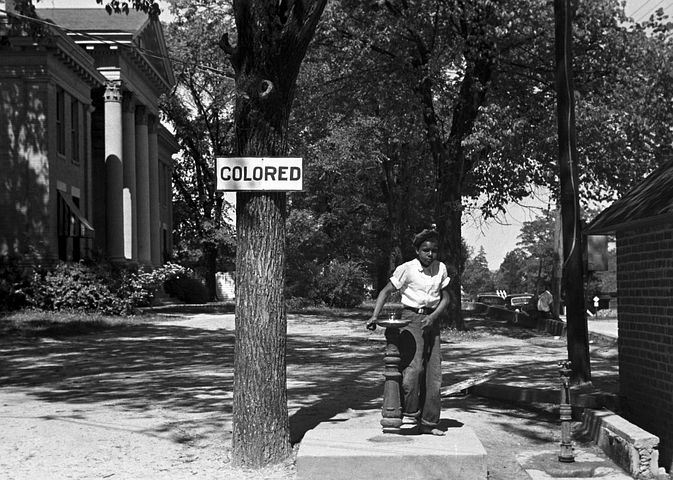
Segregation Sign
Words like “scalawags and carpetbaggers” were used by those wanting to maintain the privileged status-quo against those pushing for Emancipation reforms. We also saw during Segregation there were ‘Colored’ signs in towns and cities. In today’s State of the Culture, a different set of terms are being used where hate gets dressed up as personal/political conviction. This pollutes the social atmosphere and makes the civic environment toxic.
There’re different ways that hate might show-up on the hometown front. But the root of the matter is when prejudice gets dressed up as black & white. Some like to say they don’t see color. Upon further review, it’s really a question of whether we’re dealing with bias at the edges of the screen or racism at the core of the picture. When we See America In Color, we can move from being ‘color narrow’ to being ‘civic smart.’ That’s like what has happened in TVs going from black & white to ‘HD smart’.
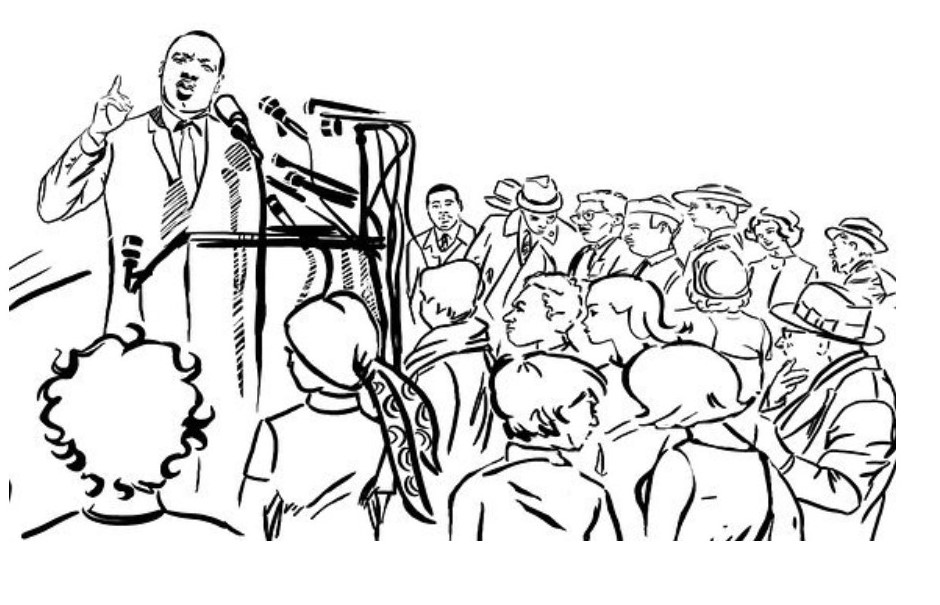
Civic Engagement Speech
With the SAIC essay contest and civics programs being rolled out, we’re not waiting for the next incident of bias/bullying, violence, hate or tragedy to be trending on social media for us to See America In Color. What if we waited for #BrushYourTeeth or #TakeABath or #BuyGasNow to be trending before doing what we should? We’d have lots of stopped cars on the road, missing teeth among friends and ‘smelly tragedies’ in public spaces. SAIC is where we believe that civics isn’t supposed to be political. It’s meant to be aspirational as citizens, workers and students connect with one another and get the ‘W’ for next-level goals and dreams.
Prince Harry and Duchess Meghan are getting ready to split! Not from each other but from their official role and Royal standing. After making the announcement, there were some interesting reactions from the Palace, media outlets and across social platforms. It seems the next steps are a little more ‘complicated’ than issuing a public statement.
Royal Duties
While the Queen has come out in full support of their decision, there’re some details yet to iron-out. The message is that Harry & Meghan are trying to forge a new sense of independence from the Royal family. They want to be clear-eyed in the decision on their future but still be civic-smart in their ongoing duty.
That isn’t exactly like the American story, but one can relate it with the split forged at our Independence. Here we are over 200+ years later and there’re still some issues for which things get ‘complicated.’ It’s as if the next best thing we need now is how we See America In Color With 2020 Vision to be more clear-eyed and civic-smart as citizens.
Thankfully we’re off to a nice start with the See America In Color (SAIC) Essay Contest that’s supported by New Jersey’s educators, administrators, students and public officials. As the contest prepares to hand-out awards and special recognition, the finalists have been narrowed down to frontrunners or “The Front Four” schools.
The Frontrunners
Beyond celebrating these schools/students, SAIC also has four reasonable goals for achieving “smart blocks, woke civics, strong citizens.” It starts by how we reboot civics education. After some recent troubling incidents of social conflict in the NY tri-state area, a public official said, “We can’t ‘police’ our way out of this problem.” That’s a point of agreement shared by SAIC which is why our focus is to help us ‘school’ our way out in a literal and cultural sense.
It takes spreading a message of understanding that moves our dialogue from the broken record of “Thoughts & Naysayers” to a 2020 vision of “Hope & Trailblazers.” What these current events teach our children in human relation terms gets carried forward into their lives as adults in the future. We prepare for what the next generation will do in sports performance, so why not in civics education. That’s why another SAIC goal is to focus on how we refresh civic engagement.
Windshield Wiper Effect
The cultural space can be a mixed-message mashup of opposing themes. The points of information go back and forth, from left to right, from clear to unclear, from truth to untruth. It’s like the windshield wiper effect. When visibility gets very bad during a rainstorm, we might pull off the road until the downpour eases. With our current social climate, the downpour of back-and-forth versions of a story might lead to such confusion causing citizens to pull-away from civic engagement.
This means we need to reset cultural messaging in the social space. Think about it this way: imagine if we were constantly arguing about the days of the week? Imagine if we couldn’t decide on whether Monday was Monday, or Wednesday was Wednesday? Since we operate on a standard calendar of days, weeks, months and year, we’re able to avoid such confusion. SAIC offers a new program standard for connecting the dots between history, family, culture, country and civic/social issues.
As a nation we’re at a point where we must consider what’s needed to revive social spirit. We can’t keep seeing stories of harm, injury, insult and sometimes hometown tragedy and think that’s the new normal. Take as an example when a player goes down on the football gridiron. The training staff might help them off the field into the pop-up medical tent on the sideline. Then depending on how the staff resolves the injury or revives the player, we’ll see their return to the game.
Football Gridiron
Well ‘SAIC 2020’ isn’t some magic fix for all the social challenges of our nation. But it is an effort to reboot civics education, refresh civic engagement, reset cultural messaging and revive social spirit. As with Duchess Meghan, sometimes we find ourselves feeling under pressure to certain traditions or outdated methods. In the case of Prince Harry, he may feel as if he wants a breakaway from Royals-controlled ‘city life’ to a more freestyle arrangement. In a sense, SAIC is about the things we do to return to the game to make an impression, an imprint or an impact towards a higher level of citizenship.
You can help tackle these issues or support SAIC’s part in a massive social response at our crowdfunding page herewww.gofundme.com/f/seeamericaincolor.
Long before we had color TVs with remote control and a DVR box there was the black & white picture tube. Those days we had to turn a knob on the TV to change channels. After a while things began to get shaky when turning the knob where the picture became fuzzy or had lines across the screen. You would soon need a new TV set.
Old-School TV
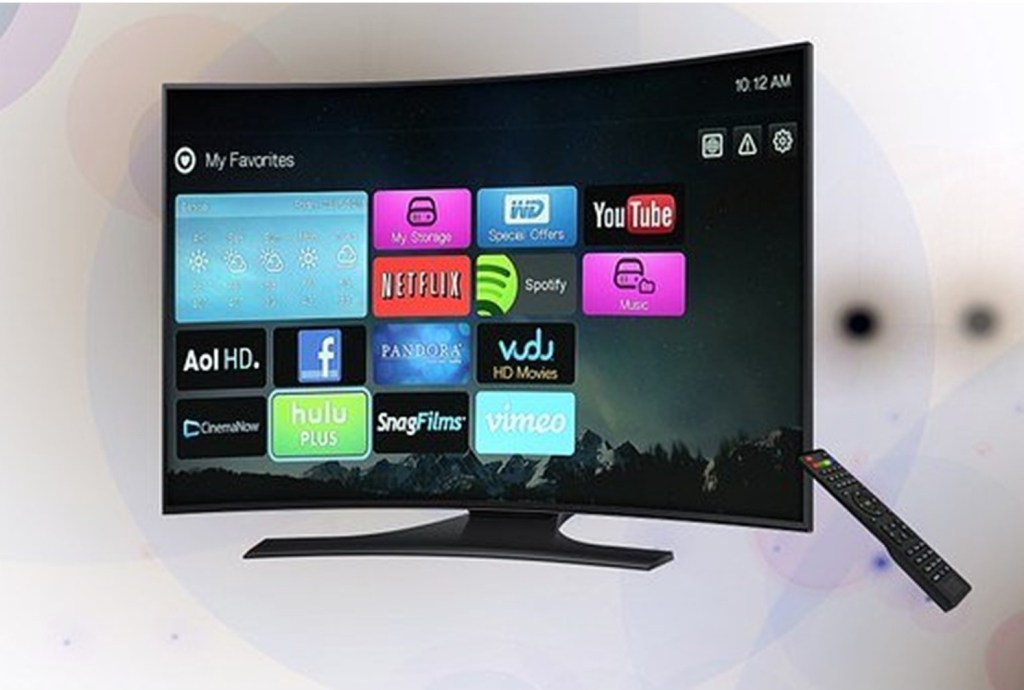
Those times are long gone in the age of handheld clickers and QLED sets. With the press of a button you can change channels and with the pre-installed factory settings you can select a picture view for different types of shows. That has become the new reality for how we experience in-home entertainment.
These days as we watch breaking news stories or trending hashtags on social media you may wonder what needs to change. One report might be about an incident of hate. Another revolves around an outburst of violence. And maybe even another points to issues of bias and bullying. In many cases, the events cause a massive police response or social media outburst.
Hey America, listen up! What we need as a response to these incidents might not be just another press conference or trending topic. It’s going to take a gameplan with a massive social response for us to see the problem, adjust the picture and update the set of social tools for a new reality. That’s the gameplan of the “See America In Color” (SAIC) essay contest and civic engagement campaign.
This massive social response needs to cover areas of purpose learning and civics education. As we prepare the next generation for the job skills of the marketplace, we must also prepare them with the life-smarts of the 21st century. When you read the ‘last notes’ or manifestos or social media footprint around some of these incidents, they send a message that’s less of a shoutout and more of a cry-out to America.
Civics Education
As it relates to civics education, we may have arrived at a point where some might prefer to vote for a reality show contestant than for a candidate running for public office. Nowadays it’s so much easier to be connected to your favorite singer than it is to be connected to a sense of civic duty.
There may even be a social disconnect that’s less about ‘likes & clicks’ and more about connecting history, family, culture, country and civic/social issues. In other words, we find ourselves needing a reboot in civics education so that citizens can download some new information for social awareness.
Civics Reboot
This would help to relieve the lost, lonely, leader-less feeling that drives people towards hate by default instead of towards hope by desire. In the old days when the TV picture became fuzzy, we’d jostle the knob or change the channel hoping things cleared-up. These days a ‘jostling solution’ might not be enough to improve the social picture. We’ll need to make some system-wide changes to create a better picture and better sense for living their best life.
When the Founders wrote the Declaration of Independence it spoke to a higher vision for the greatness of a nation. The pre-amble states “We holds these truths to be self-evident that all men are created equal, that they’re endowed by their Creator with certain unalienable rights, that among them are life, liberty and the pursuit of happiness.” Well the SAIC ‘Declaration of Emergence’ speaks to a kind of service vision for a higher level of citizenship.
A Better Picture
As we see the problem, adjust the picture and update the social tools with the help of SAIC we begin to restore light to America. We’ll begin to experience a ‘lights up’ (vs a flare up) feeling from the images we see. We’ll have a better picture of civic/social issues for greatness in service as citizens of the world. This might be the new way to be down, get down or step into the light of #CitizenShining moments.
You can help tackle these issues or support SAIC’s part in the massive social response at our crowdfunding page herewww.gofundme.com/f/seeamericaincolor.
These days
it seems as if singing competition shows are everywhere. There’s The
Voice and The Masked Singer that keep getting lots of buzz. There’s
even a new show around ‘Musical Family.’ During the judging phase of these
singing contests, fans have a chance to play along. They’ll vote for their favorite
act or share a comment about some aspect of the performance.
Singing Star
The SAIC campaign and Essay Contest is in a new phase doing something similar called the Culture Challenge. It’s a way to ‘play along’ before crowning the winners. It’s a response to the question: “What can friends, family & fans do as Hometown MVPs to blaze a trail in streets, towns and cities?”
So here’s the deal on the Culture Challenge and its main points around how we celebrate ‘smart blocks, woke civics, strong citizens:’
Brag:The social part with ‘humble brag’ posts on Twitter (Mondays 4-5pm).
It’s about posting pictures or social notes (using hashtag #CultureChallenge) on how we might See America In Color at school, work, in business and the community. You can put the spotlight on things you’re already doing to blaze a trail in Diversity, Equity & Inclusion. If you play along, it’s like being a ‘Culture Ambassador’ which adds to street cred.
Brains: The educational part as we learn about and talk about making things better.
Brain Power
Initially, Facebook was an idea for guys talking about the dating scene. Twitter was first about friends sharing notes on their ‘party’ status. The Internet started as an effort to have two computer systems talk to each other. With some brain power in the tech space we went from ‘dah to wow.’ Maybe SAIC can have a similar impact in the social space even if it didn’t set out to fix race relations. If our civics can be a ‘level playing field’ then how we learn about and talk about ‘roots & culture’ may help address a fractured nation.
Breakout: The developmental part as we ‘shake, rattle and roll’ our coins and dollars.
We plan to add Arts,
Science and Health features to the essay contest in the future. Your donations
to our Crowdfunding efforts will go a long way. You can participate as a
school, social organization, association or employee/corporation to earn points
and win. Folks, this is a chance to spread the word, breakout the checkbook,
click the money app and celebrate the score among friends, family and fans. You’ll
find more using Go-Fund-Me search keyword ‘seeamericaincolor.’ Wanna make a
difference? www.gofundme.com/f/seeamericaincolor
Money App
Whether you first got word about SAIC by text, email, one-on-one or social media post, this is not a ‘me’ project but a ‘we’ project. With as many people being a ‘gust of wind’ beneath the wings of this effort, we’ll work together for a larger purpose. The SAIC campaign is ready for a new level so we can’t stop the feeling now. Just gotta keep imagining and dancing because in sports playoffs there’s the ‘bracket challenge’ but in the social space there’s the Culture Challenge.
Every major sports league has a time in its schedule where things shift to a higher level of play. Oftentimes there’s more at stake and team chemistry is a must. For baseball, the game considered as America’s pastime, that point in the fall calendar starts with the playoffs and ends with the World Series.
Not to suggest that the See America In Color campaign is
on par with that kind of excitement, but we’re working with administrators,
teachers and parents to spotlight some breakout performances too. It’s the kind
where the essay contest will remind us that Kids Say the Deepest (and sometimes
Dopest) Things.
World Series Excitement
As the essay contest ramps up at the regional level before selecting statewide winners, it has its own ‘playoffs.’ There may even come a time as new features are added in the future where SAIC has its own Essay Contest World Series to deliver a better picture of civic/social issues for a higher level of citizenship.
How we get there represents the next big move in culture
where communities aren’t relying on national optics but building on hometown
civics. It’s where there’s a willingness to fight for the greater good. It’s
where ‘looking out only for #1’ isn’t seen as the social contract that drives
America’s cultural endgame.
A winning spirit in biz and sports reveals something about a civic
spirit in community and culture. Think about how teams enter the playoffs with the
goal to win the big prize. How they get there is by having a system of practice,
games and film study to improve their chances and raise their inner beliefs. Well
SAIC came out of a system and is inspired by a dream, some tragic events and
the study of modern history.
U.S. Constitution
So for SAIC to raise our inner beliefs and achieve its goals depends
on how we boost our civic faith. It’s in having a citizen’s vision
bigger than self where our ‘juices’ flow. Back in the 60s President John F.
Kennedy declared we’d put a man on the moon. This made ‘citizens juices’ flow
at all levels of society.
Go back even farther when the Founders described in the
Constitution’s Preamble “We the people of the United States, in order to form a
more perfect Union.” That was a statement of Ideals that paved the way for
having a civic purpose. It gave us a kind of social landmark and civic
reason for being.
These days we use GPS to get to new places or see historic landmarks. Sometimes the route is obvious, other times it takes ‘seeing ahead’ towards the destination. That’s how SAIC as a system is a civic guide for directions. If we miss a turn or go off track, we can count on the system for re-calculating.
SAIC Civic Guide
The magic of having a system in sports is it gives players a
framework for practice and games. The system also serves as a glue to keep the different
parts on the field working together as a team. With SAIC we hope it will be a kind
of civic glue as hometown teamwork makes the ‘I Have a Dream’ work.
So as the contest moves through its stages, we hope to select winners and plan a Campus Block Party. Some see SAIC as having a sort of ‘man on a mission’ vibe like in JFK’s time. But it’s possible there’re Hometown MVPs out there (Most Valuable Parents, Professionals, Pupils, People) who hold the keys to the kingdom in making SAIC bigger than just selfies.
The word is out after recent announcements to media and local e-broadcast channels. One is the new smart phone that has ‘pro’ in its name. The other is the See America In Color Essay Contest that has ‘smarts’ in its game. Folks are ready to put the new features to work in the classroom and the marketplace.
See America In Color in a Hometown Near You!
While not a tech gadget, the essay contest gives a glimpse
for how we might update and celebrate ‘smart blocks, woke civics and strong
citizens’ in the community. Take for example that more and more smartphone makers
have devices with three back-facing cameras. You can now take wide-angle selfies
and slow-motion video. When working with the app they deliver ‘triple-vision’
to the device.
The essay contest with the help of administrators, teachers and parents works with middle, high and college students. It will help deliver a 21st century vision to blaze a trail in roots and culture. It might be exciting to have three cameras in your phone or to engage students in the essay contest, but that’s not all to getting the most out of them in the classroom or the real world. A smart phone doesn’t work only as a phone. It has other important functions for the consumer.
Some people are old enough to remember ‘black & white’
TVs before color, or the DOS operating system before Windows, or flip phones
before smart phones. These technologies got us to where we are today with 5G
networks and 8K TVs. Along the way, steps were taken to update things in the
tech space where they operate. So how do we update our civics in the
social/cultural space?
Well, think about how smart devices get a new look, feel and
purpose. This gives a sense for how we update things the way tech firms do with
gadgets. With each new school year there are curriculum objectives and student
assignments. So, the first way we add ‘smarts’ to our Civics in the community, Social/American
Studies in the classroom or Social Issues in the public space is to educate
the present.
‘Read This First’
There’s often a 1-page sheet with new devices that says ‘read this first’ before using. Similarly, the See America In Color (SAIC) campaign and essay contest are about how we understand those ‘read this first’ aspects of American History, the Black to America story or Hometown Strong comebacks. We rarely read the whole manual of a new device or the full account of American history. But there’s some ‘read this first’ info from the campaign that help put the stories in context and connect the dots.
This campaign also has a kind of ‘throwback mode’ for looking to the past not to return to the past but to create the future. Consider some of the features in today’s cars like backup camera or blindspot alert. How did we function without them? We got by not having them but now they’re becoming a new standard. The campaign and essay contest offer a new standard in how we look back to create the future. Plus, there may be some ‘blindspot alerts’ that could get flagged in our civic/social space.
In the months ahead there’ll be many new and amazing picture/video
postings on social media. The three-camera feature will give views of people,
places and projects that are ‘out of this world.’ That’s the idea behind SAIC
and the essay contest. It’s a project for how we elevate the game in
civic/social issues for a higher level of citizenship. When we See America
In Color, we will better understand the ‘black & white’ issues that started
in the past and the multi-cultural view geared towards the future.
‘New Updates Available Now’
Lastly, this campaign is about how we update the now. Every
so often we get a message on our phone or computer that says, ‘new updates available
now.’ That usually means there are ‘bug’ fixes or improved features that have
been made to the system. When we select ‘yes’ the phone or computer goes
through some changes where it ‘updates the now.’ This gives us the latest
version of the ‘bells & whistles’ with the device functions. Similarly,
SAIC is about having the latest versions in ‘civic ideals & functions’ along
with some new & improved changes to the system. We’ll get to move even closer
to what the founding fathers called “a more perfect union.”
We all try to live our lives as ‘pros’ in some way. Whether in school, business, sports or civic duty we look to each new season or new device as a time to be better, do better and live better. SAIC and the essay contest aren’t just about how we See America In Color. They’re also about how we Do America In Color. More people will become a ‘believer’ as we reach higher for a better a nation and breath-in fresh ‘American Oxygen.’
It’s that
time of year again when kids return to their regular schedule as summer ends. It can be just as exciting
(and a relief) for parents when kids are back in school. For some parents it’s about
not having them get on their last nerve. For some kids it’s about not having parents
get…ok you get the point.
This time of the year isn’t only about school essentials. It’s also become a time for the new iPhone buzz. People get excited to hear what’s in, what’s out and what’s hot! Ever since smart phones came on the scene, techies and regular folks wait in long lines to get a hands-on look at devices billed as a ‘pocket gizmo’ or the ‘next big thing.’
Pocket Gizmo
So, what if we did with our civics the way tech firms have done with their gadgets? What would happen if we could add ‘smarts’ to our social/cultural space the way ‘smarts’ got added to these devices? We would likely get a rush of breakout stories that celebrate ‘hometown strong living’ and major community comebacks that’s for real.
It’s hard to give the full extent of American history in one session.
But a few points stand out as more than just coincidence. For example, take the
400-yr ‘Black to America’ story starting in 1619, it proved two things: They
were able to overcome the struggle to get their breakthrough. And they were able
to build excellence to live their best life. The collective story is one of
#CitizenShining moments achieved by ‘strong citizens.’
A different version of this are the community comeback stories across the country. Some are known as ‘Jersey Strong’ or ‘Boston Strong’ or ‘Parkland Strong’ or ‘Vegas Strong’ or ‘El Paso Strong.’ These sentiments came out of frustration turned into positive action, again by ‘strong citizens.’ But why does it have to take natural disaster, tragedy or hate-triggered events to celebrate a civic spirit in culture and community the way we celebrate a winning spirit in sports and biz?
Maybe if we could just find a way to add ‘smarts’ to our social/cultural
space, it would do for civics what happened to TVs and cell phones when ‘smarts’
got added to those devices. It’s also possible we would go from normal civics
to ‘woke civics.’ This would then help us see a better picture of the issues
for a higher level of citizenship.
That’s what will happen when we See America in Color
(SAIC) as with TVs and cell phones. The first ‘smarts’ added to TVs made us go
from seeing things only in ‘black & white’ to seeing them in color. SAIC will
cause us to see the issues of our time not simply in a two-tone way but in a
more colorful, multi-cultural way. Plus, to fully appreciate ‘people of color’
as well as have a ‘multi-color’ view, it makes sense to go back and see how those
‘black & white’ issues came about.
In the case of cell phones, the main ‘smarts’ added was an Operating System (OS) which made multi-function tasks possible. Similarly, SAIC represents a way to reboot, update or introduce a new OS to our civics. When we add ‘smarts’ to our civics, whether through social studies in education, social media or social issues in the public space, we’ll see things in a more new-school kind of way.
Smart Appliance
Here we are 50+ years since adding ‘smarts’ to TVs and we’ve seen the picture-quality improve in major ways. A TV is no longer just a ‘black & white’ box. It’s joined a group known as Smart Appliance. However, when it comes to civic/social issues we’re still trying to get a better picture or still trying to improve race relations in major ways. That’s why SAIC isn’t just about upgrading the optics, it’s also about game-changing the civics. It might not make us all rule the world as citizens, but it will certainly give more meaning to the phrase ‘We the People.’
So now that the next iPhone will soon be on sale, just think about how the device might have a new look, feel and smarts. These factor-in to how it helps us work better and look cool. The same is true as we begin to See America In Color. In one sense, SAIC might help us work better and look cool as citizens. But beyond that, it will function like an ‘OS’ to help us blaze a trail in roots and culture as we educate, create, elevate and update our civics.
Some days it feels like
the news of the day cries out “enough already, or WTH!” Every so often there’s an
off-the-rails story that not only grabs our attention, it almost commands it.
You listen or watch for ‘live’ updates, for an explanation that might make
sense. You follow the story as it moves from local news to the national stage.
That happened for many across the country in August 2017 in Charlottesville VA.
Events like these go
back to the 50s and 60s and maybe even earlier. We might as well go back to the
start of the ‘Black to America’ journey in 1619. It’s then we realize that August
2019 represents the 400th anniversary of a journey that is forever tied
to American history. So how should
we reminisce, reflect and recharge for the years ahead? What might we do about the
‘isms and schisms’ in America?
It was in the 1960s when
color TVs hit the scene and showed up in homes. A time when social issues were front
and center in the news. What we started to see on TV, in color, gave us a clearer
picture than we saw years before in black and white. Now, it’s 50+ years later and
we’re still trying to get a better picture of the social issues of the day.
Maybe it’s time for us to
‘See America in Color?’ Here we are at the
start of a new dawning, a new yearning, a new meaning. A time for us to celebrate
new #CitizenShining moments. A time for us “to reach higher for a better nation.” That’s what a growing list
of young and older ‘America in Color’ supporters believe and hope to achieve. We
have the chance to celebrate a civic spirit in culture and community like a
winning spirit in sports and biz.
Game Changers Village
We’ve seen change since
the 60s in many areas of life. We’ve watched automakers upgrade cars with
backup cameras, collision avoidance and blindspot alerts. We’ve seen mobile
technology go from flip phones to smart phones, from OG to Mo’ G. We’ve listened
as radio stations added HD sound to their AM/FM bands. We’ve even seen TVs go
from ‘No-K to 4K.’ So the question is “what are we doing to upgrade our civics?”
Hey folks, let’s get our hometown juices flowing! Bob Marley sang about the ‘isms and schisms’ back in his day, so what if we did something about them in America?’ Whether with the ‘See America in Color’ essay contest for high school and college students or other next-level efforts in civic leadership, social change and community development. It’s time we upgrade our ideals to see civic and social issues with a better picture quality for a higher level of citizenship. With the right spirit, the heavens just might bust open.
The ‘See America in
Color’ campaign is a lot like when we charge, update or upgrade our cell
phones. When it’s plugged-in, the backlight brightens up and a lightning-bolt symbol
appears in the status window. This means the phone is getting charged. After a
while a message might appear showing that one or more apps have been updated.
However, sometimes we get to a point in the life of the phone where it’s not
holding the charge like before. This usually means that we will have to upgrade
to a new device.
Well, the ‘See America in Color’ campaign is to
our civic life like the charger is to our phone life. It’s about ‘bringing a
charge’ to citizens as their civic power brightens things up with a lightning-bolt
symbol across the map. It’s about updating our civic roles with a new mindset
or approach to doing things. We might even get to a point in civic life where the
‘hometown charge’ is low and we need to upgrade our public profile or community
status. The ‘See America In Color’ campaign draws on the
civic ideals of John F. Kennedy and social justice efforts of Martin Luther
King Jr.
The campaign goal has three parts: educational, social and developmental.
It includes an organizing platform for the Strong
Citizens Association of America (SCAA). It will also explore the formation
of a citizens-based group called the Public Entity Reform Council (PERC)
to review some of the social/operational ‘blindspots’ in our governing system. These
efforts combine to inform, invoke and inspire a renewed ‘code of service’ standard
by citizens and elected officials. This will be a guide to a favorable #CitizenRating, not driven by unfair demands,
but for community at its best.
Want to know more about the essay contest or other breakout events with the campaign? Just send your ideas, thoughts and comments to @SeeUSAinColor on Twitter or our blog page at www.SeeAmericaInColor.com. Donations and other financial awards will go a long way so that this campaign moves from the early years of 2K and beyond, to having the best picture quality for a higher level of citizenship as a ‘Community 3.0’ nation.