4 Things to Unite us as a Nation: Taking a page from America’s Journey of ‘Hope & Change’ That’s Hard to Deny

Doc Cunningham
“Da Island Guy”
Sounding-Off Social

The Beyoncé buzz is spreading! With her latest album release, some say it’s got a throwback vibe. Others are connecting with the hip-hop flava while many love the club energy. And that’s just a drop in the bucket of what’s posted on social about her ‘Renaissance’ project. But there’s something else with queen Bey’s music that seems to hit home.

House Party

There’s a kinda ‘grow on you’ appeal it has with fans that brings them together. Maybe that’s a factor in how she deals as an artist. It’s certainly one of the ways See America In Color (SAIC) approaches its work as a social-edge campaign/platform. It’s in how we breakdown civic/social issues from our deep dive in American history, the ‘Black to America’ story and #HometownStrong comebacks. This new brand in civic engagement, social change and community life streams a better picture of hot-button issues by how we ‘see America in color’ not just in black & white.

Consider two other news stories that got a different kind of buzz. The first is that NASA announced a three-part plan to return to the moon. We’ve been there before so maybe it will offer new hope in what’s possible. Then there’s the alarming story of lake Mead, a major water supply source for western states that’s running lower in capacity. The concern is something’s gotta change in how we address climate issues before our supply lines run dry. So yes, there’s a hope & change feel in all those stories.

Moon Walk

Set aside Bey’s album or that the ‘hope & change’ slogan has been used before in a political campaign, and look closer at what we found from our deep dive when we asked the question, “what makes the United States of America, united?” The short answer is there’s a hope & change theme that runs throughout history. One thread has united many people around diversity. But there’s another thread that some latched-on to of ‘hate & chaos’ with those united around the notion of supremacy. So, one thread’s about stepping up our civic game, the other about rolling back the clock for reasons that are lame.

If Beyonce’s new project title means anything, we can have a civic renaissance of sorts by taking a page from America’s longstanding journey of hope & change that’s hard to deny. Some of this might mean America getting comfortable in its own skin. The challenge is whether folks are gonna spot what Dr King once called a “cancerous disease of disunity” that’s spreading from skin-to-skin in some quarters. Can SAIC be like a therapy treatment to stomp-out that spread or develop a kinda ‘unity scale’ that helps us gauge the chance of bridging divides in our nation? The answer might point to:    

1. Economics

Economic Growth

When the early settlers landed in the U.S. they were looking for new markets to expand their biz interests in selling more goods. Money was a driving force in their quest for hope & change. While there’s nothing wrong in those aims, the problem became having to choose between good economics and bad economics. The struggle with slavery and treating others as second-class was part of the problem. SAIC’s brand of civic economics is where we ‘lead in color.’ This creates new market value in roots & culture, like how growing a biz depends on serving/expanding your customer base.    

2. Mission/Purpose

The next round of settlers known as pilgrims were fleeing religious persecution and ventured on a mission filled with peril. Their hope & change theme was built on a sense of purpose with new spiritual expression and personal meaning. We’ve seen throughout history how trials and triumphs in revolution, abolition and desegregation have brought a similar push. That’s because money without purpose is like sight without vision. We fall short of our full potential being rich in wealth but poor in meaning. Our civic and historical icons might say a sense of mission/purpose helps us to ‘love in color.’          

3. Dreams

The ‘March on Washington’ is best known for Dr King’s ‘I Have a Dream’ speech. But as he said, that wasn’t simply about his dream. It was about his dream being rooted in the American dream. The Civil Rights Movement had its own hope & change theme of moving past the Jim Crow era of separate-class to the modern era of best-in-class. SAIC’s new push helps us to ‘dream in color.’ So those who’ve taken a leap of faith whether to emigrate to the U.S., pull-up roots and move to another state, leave a job, start a biz or launch an impact project (e.g. SAIC), are all hoping to have their slice of the American Dream.

4. Empowerment

Most people want to use their skills to make a living and use their life to make a difference. That’s one hope & change theme with empowerment. Another misplaced example involves those who want to make racism fashionable as a band of misfits. Maybe comedian Whitney Cummings gives us something to chew on in saying “the freshest, edgiest thing to do is to be positive and hopeful and find the silver lining because that’s what no one is doing.” Might seem corny but it’s true when you think about the excitement and success of Title IX from watching the WNBA all-star game. Empowerment helps us to ‘jam in color.’          

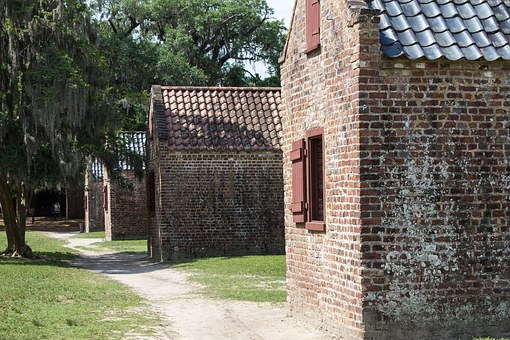
Slave Quarters

Dr King shared key hope & change points in his ‘I Have a Dream’ speech on economic evangelism, social activism and hope over skepticism. This might have new meaning with all the recession talk these days. Since our nation’s founding to the present time, the idea of diversity has come a long way from “keeping it white with a plot of plantation life” to what we have today. We’ve made it this far by not letting certain forces break our soul. Wanna pull-up and set sail on a journey of hope & change? Then “J.A.M. With Us” on sounding-off social and shaking-up culture around economics, purpose, dreams and empowerment.  

See our Upcoming Events below to find out more about how you can “J.A.M. With Us” or learn more about the K-12 Social Challenge Contests.

Tracks: Beyoncé – Break My Soul – https://youtu.be/iz1rIp1-b-Y

Koffee – Pull Up – https://youtu.be/rvp9E12E4hQ

Upcoming Events

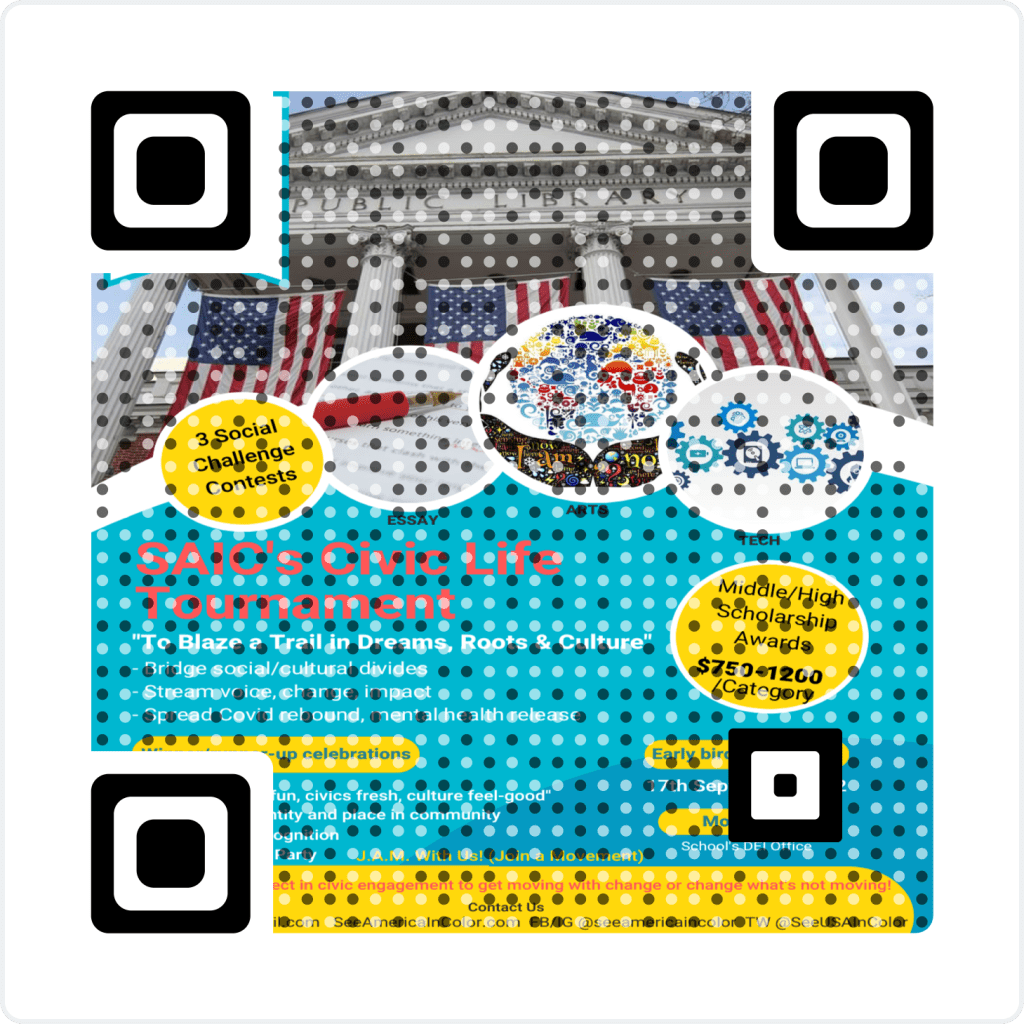
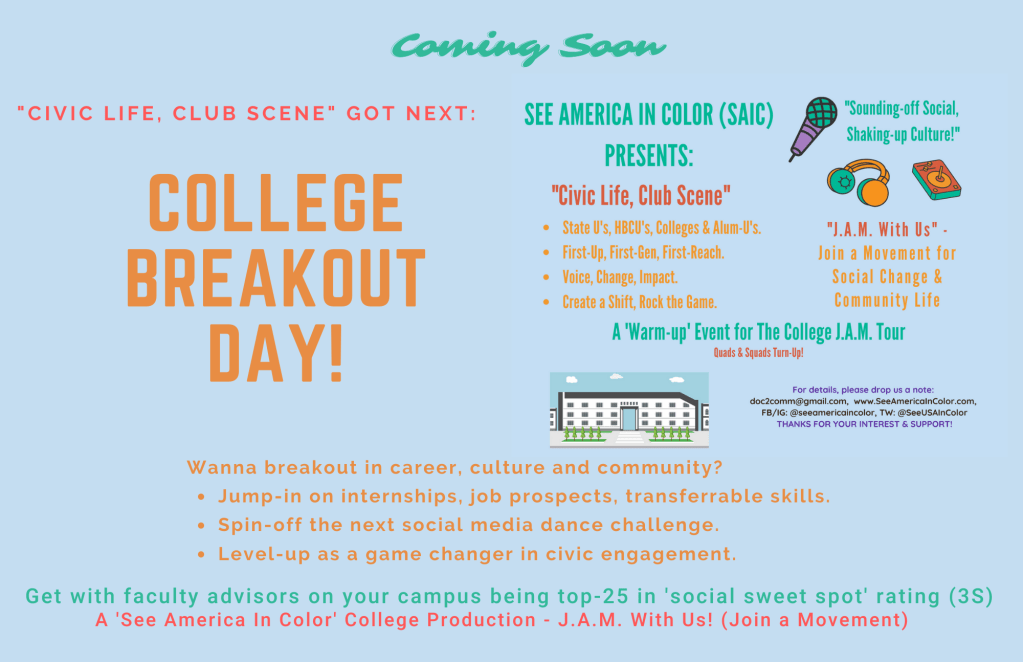
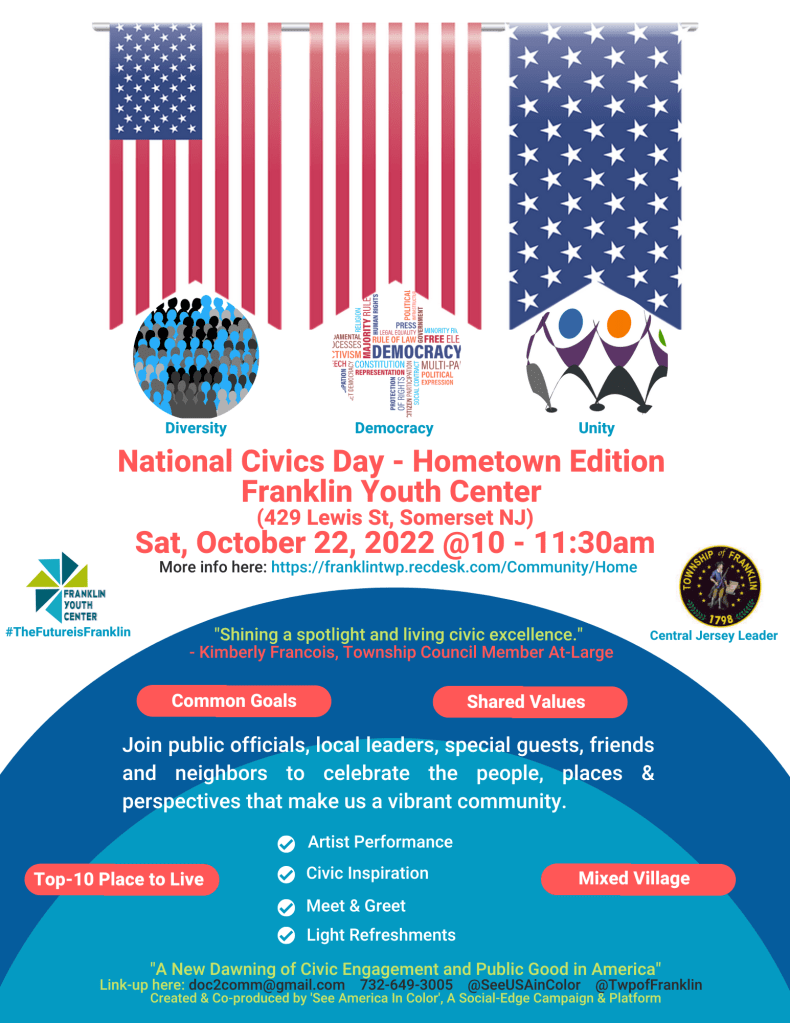
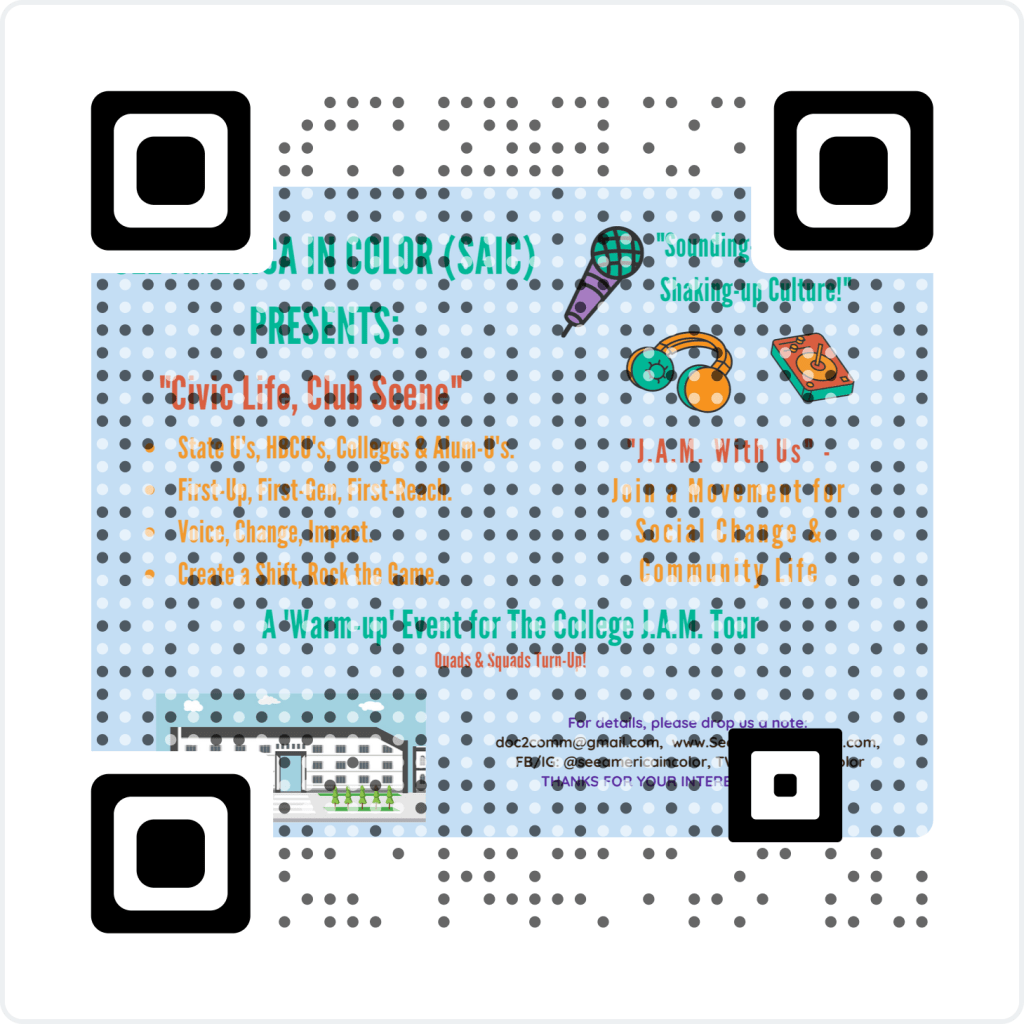
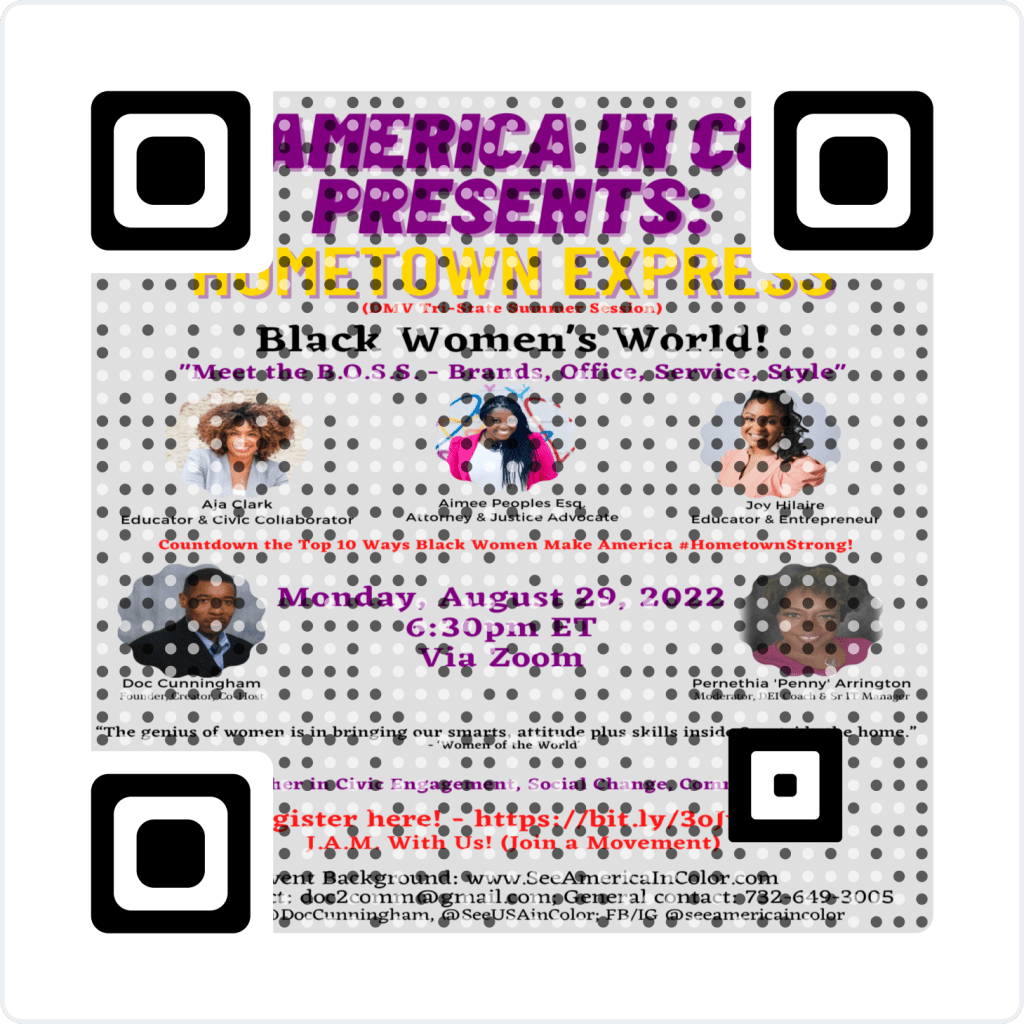
Scan the QR Codes below to “J.A.M. With Us” or learn more about the K-12 Social Challenge Contests or register for the DMV ‘BOSS’ Forum.

J.A.M. With Us!
K-12 Social Challenge Contests
DMV BOSS Forum
8/29/22, 6:30pm ET
Civic Engagement, Social Change, Community Life!

Independence Day Rewind for the Culture: Let’s Make Things Plain So Folks Aren’t Played the Fool Anymore!

Doc Cunningham
Sounding-Off Social

There goes the neighborhood! So what comes to mind? Well, might depend on whether you’re Gen X, Y, Z or top the generation gap. In one case it’s the title of a 1992 movie based in a NJ neighborhood. The plot is of a secret prison escape to find hidden money buried under a house. But for other folks the phrase is a throwback to times of ‘white flight’ around perceived fear of blacks moving into a neighborhood. With Justice Ketanji Brown Jackson now on the Supreme Court, those on the wrong side of history might be thinking (or even saying)…there goes the country!

Street Crossing

Meantime, news reports of Supreme Court rulings, January 6th Congressional hearings, Mexico border human smuggling, white supremacists marching and a July 4th parade mass shooting as well as protests for another black male tragedy in policing, got folks calling-up Marvin Gaye, “What’s goin’ on?” The short answer is America’s unfolding the next phase of its journey. Flashback to the days of our founding in the village, right through today in the ‘hood. Like a good plot in a movie or hook for a song, See America In Color (SAIC) has a revealing thread from American history, the ‘Black to America’ story and #HometownStrong comebacks.

Author Isabel Wilkerson reminded us that this past July 4th was significant because America has been without slavery (1619 to 1865 = 246 years) for as long as its been an independent nation (1776 to 2022). Plus, we know the ideals from the Declaration of Independence were about advancing freedoms and self-determination. That makes sense when compared to the “Checklist of Our Liberties”:

  • Inalienable (Unalienable) Rights: That which is there like air and should be universally available (e.g. life, liberty, pursuit of happiness)
  • Constitutional Rights: That which sets us apart as a Republic (elections, representation, best life)
  • Democratic Rights: That which allows us to participate in the general affairs of the country (voting, serving, supporting)
  • Consensus Rights: That which is a prevailing view, expectation or practice (e.g. around choice, pride, community)

But the thread that connects these liberties with the ideals seems to keep getting knotted-up or otherwise unraveled from the fabric of America. Two reasons might help explain why, using examples from sports and tech. There’s the concept in pro sports called “Delay of Game”. It’s when a player tries to slow-down the progress of the other team. The penalty in basketball draws a technical foul while in hockey it’s sitting-out a player for two minutes in the penalty box. Some feel America is guilty of “Delay of Game” when it comes to rights, liberty and justice for all. Who’s ready to callout those times deserving of a technical foul or sitting-out a political player in the penalty box?

Hockey Player

If that’s not enough to make the point, how ‘bout the tech case of applying a filter to pictures on your phone. This changes the look and feel of the image. In a sense, America’s journey has had different factors affecting its image which include oppression, discrimination, segregation, etc. One of the main problems comes from a ‘White Supremacy’ filter that distorts not just the image folks see or reflect, but also the chance to fully embrace those words from our founding document of “all are created equal.”

So as an Independence Day rewind for the culture, let’s make things plain so folks aren’t getting played anymore. A 50,000 ft view uses the high ideals we strive for as ‘we the people’ for perfecting our union. The longshot view takes us through the push and pull running its course over the 18th, 19th, 20th and 21st centuries. You might even look at things not just from an American history perspective but also with a New World history point of view. This helps to see clearly based on the:

Independence vs Freedom

1. Age of Revolution (Constitutional Convention)

This was the jump-off for America’s startup. The founding fathers came together around the Declaration of Independence as a new nation. No more relying on Britain to determine our taxation, representation and the fate of future generations. But a system design and operating manual was needed, which led them to drafting the Constitution and supporting documents. Much of the work that came from the Constitutional Convention has continued to guide how we function as a republic. But there’s always been an undercurrent pulling folks from shores into deeper/choppy waters with repeating stories of survival.   

2. Age of Emancipation (13th, 14th, 15th)

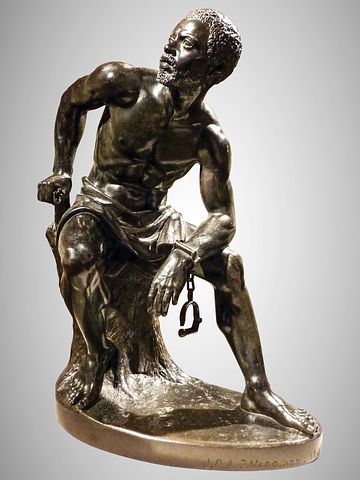
Since our founding it took almost 100 years (1776 to 1865) before emancipation from slavery came to be in the writing of Lincoln’s proclamation. Moreover, Juneteenth reminds us that even then, there was a further two and a half years delay in word getting to slaves in Galveston Texas. Other benefits of freedoms came with the 13th, 14th and 15th Amendments. Those were key for releasing folks from feelings of bondage, servitude and second-class status. The gains didn’t depend on just a presidential proclamation but also on civic engagement and political involvement.        

Freedman Statue

3. Age of Integration (’64, ’65, ’68)

As often happens with major social/political shifts, the Supreme Court played a role in going from emancipation to integration. Some say the Brown vs Board of Education ruling was pivotal to moving from the “separate but equal” doctrine of segregation. This led to three important public policy milestones: Civil Right Act of 1964, Voting Rights Act of 1965 and the Fair Housing Act of 1968. These were key to ‘opening up America’ for business and opportunity for all its citizens. But some believe the possible gains helped to spur a backlash to the civil rights movement which we see playing out in many ways today.   

4. Age of Deconstruction (Civics Convention)

There’re couple ways to look at our current times. One is folks trying to deconstruct the American experiment to better understand its inner working. This is like what happens as a kid when you get tired of playing with a toy, so curiosity has you pulling it apart to then put it back together. Another way to see it is people wanting to blow-up the whole thing. They’re looking to deconstruct America in a problematic way, to then put it back, but with a filter that favors power and control. Maybe a Civics Convention today could be a nod to the Constitutional Convention from our past? Wanna pull-off new public policy milestones?      

To get a real sense for the checklist of our liberties like Reproductive Rights, Second Amendment Rights, etc, let’s follow the See America In Color thread. It brings a better picture of social issues with less political filter and more history, civics and culture. If that doesn’t work for you then try a line from the movie Independence Day. To meet the challenges facing our democracy we gotta keep “fighting for our right to live. To exist. And should we win the day, the Fourth of July will no longer be known as an American holiday, but as the day the world declared in one voice, [we will not vanish without a fight. We’re going to live on!]”. Just think, maybe someday we can be all that we need to live that good life.  

To learn more about how you can “J.A.M. With Us” for social change and community life, checkout info below and signup link.

SAIC’s “J.A.M. With Us”

Tracks: One Republic – Someday – https://youtu.be/vNfgVjZF8_4

Mickey Guyton – Black Like Me – https://youtu.be/zPH9hgKSai8

America’s Got a Root Cause Problem: We Gotta Go from An Outdated Way of Seeing the Constitution to An Updated Way of Living Our Best Life!

Doc Cunningham
Sounding Off Social

It’s the graduation season as young and older prepare to move to the next level. Kindergartners to first grade, elementary to middle, middle to high, high to college and college to the real world. There’s a real expectation that some things will change while some other things remain kinda the same.

Graduation Next Level

This might be a good time for us as a nation to think about what we could change to go to the next level. With recent tragedies in Buffalo NY, Uvalde TX and Tulsa OK (to name a few), there’re those who won’t have the chance to ride the wave with us. Their lives were cut short, which leaves many folks wondering, how do we address the common link across these events. Is it the case that America’s got a bias problem or more directly, a root cause problem?

As these incidents happen time and again, it seems the possible solutions that get thrown around keep falling short. If this were a tech company, the coders would do a deep dive into the software to figure-out whether there’s a ‘bug’ in the system. Sometimes that ‘bug’ can be repeated across other areas because of similar functions. It’s the tech team’s job to fix the problem once and for all in a new product release. If only as citizens or elected officials our public policy process could work like that?

Well, See America In Color (SAIC) came about due to a similar dilemma. After a series of national news stories between 2012 and 2015, the concerns and complaints coming out of many of the protests and demonstrations were sounding the same, like a broken record. This led to a deep dive in American history, the ‘Black to America’ story and #HometownStrong comebacks. SAIC adds ‘smarts’ to civics the way biz/tech leaders do with systems and gadgets. Plus, this deep dive took us into the ‘belly of the beast’ of history, civics and culture so guess what we found?

Bill of Rights

The Bill of Rights came about as a compromise between the Federalists and the Anti-Federalists. One group liked the idea of a Central (Federal) Government as an overseer of the States. But the other side wanted to make sure that individual rights were not trampled on. In addition to that balancing act, we also found that America has always wrestled with tug-of-war forces around higher ideals vs weaker beliefs. That might help to explain, for example, how we had the Declaration of Independence but still ended up with slavery. So, if we’re gonna move from an outdated way of seeing the Constitution to an updated way of living our best life, we gotta add ‘smarts’ to how we roll as:

1. Consumers

Back in the day, we went from horse-and-buggy to automobile (by adding ‘smarts’). There were prob some folks who felt threatened by a perceived loss in the ‘old way’ of getting around. After a while though, many realized that they could get to more places in a shorter span of time. In modern days, when we went from AM to FM or pay phones to cell phones we saw those not as replacement but as improvement. If going from outdated to updated when it comes to technology is seen as improvement, why is it that to go from white supremacy to diversity is described as a ‘great replacement’?

2. Workers

During the onboarding process at a job, a new employee gets ‘schooled’ on some important company policies. They learn the written rules and later on the unwritten rules. There might even be a binder or employee handbook that they’re advised to become familiar with. What if as part of a DEI strategy, you could get a better understanding for civic/social issues? Whether thru an SAIC college event, HR forum or community program, folks can level-up or turn-up as leaders in the culture. Maybe that’s why many Gen Z workers today see that as an important part of their social impact cred.

Next Gen

3. Aficionados

A college graduate normally has great excitement/enthusiasm about their major or area of interest. This gives them a path to landing their starting job in a chosen field. Over time, they join the ranks of subject matter experts and company leaders. For other folks it’s not so cut-and-dry. It’s a side hustle or personal setback that might put them on a path of turning pain into purpose or passion into profit. SAIC was born out of both. So no matter your day job, having a solution mindset with an eye on setbacks and tragedies that affect families/communities can help to spur change with civic/social issues.   

4. Changemakers

There was a time when wearing seatbelts wasn’t even a thing. Then road safety studies showed how we could reduce fatalities. A major campaign was launched to create a culture shift in how folks viewed seatbelts. What if we could do the same in other areas of life? We can reduce gun fatalities with a culture shift, since the origins of the Second Amendment was fear of insurrection, British invasion and slave rebellion (See Federalist Papers #9, #10, #29). These days most drivers embrace seatbelts for road safety, so we can do the same in other areas as bonafide changemakers.     

Human Chain Link

It’s interesting when you look at solutions being proposed to address some of the urgent issues. There seems to be a root cause problem, a prevention problem or a truth problem. For example, we spend more money on the ‘Department of Corrections’ but don’t even see where it’s needed in a kinda ‘Department of Prevention’. It’s been said that the strength of a chain depends on the weakest link. Maybe there’re some weak links (like seen during slavery) that we gotta do more than just get by. We gotta find the courage to change our approach.   

Tracks: Sia – Courage to Change – https://youtu.be/p5QfyF9pkHU

Leela James – Trying to Get By – https://youtu.be/o-oLmIdfNPc

#HometownStrong Comebacks from the North to the South of America: What’s it Gonna Take to Have a ‘Socially Healthy’ Civic Life Beyond Red Flag News Stories

Doc Cunningham
Sounding Off Social

If you’ve ever watched Steph Curry warm-up before a game, it’s a kinda pre-show itself. He’ll do drills in dribbling one, two or more balls at the same time. He’ll take 3-point shots from different spots on the court. He’ll even take some from almost the half-court line. It’s as if he’s getting ready for whatever the game might call for.

Pre-game Show

His hand-eye coordination is gonna be up for the task. Plus, if they’re behind and need a comeback or the game’s close and needs a last second shot, he’ll be ready to rock. As communities and the nation try to bounce back from Covid, social protests and post-election hangups, maybe there’re some drills we could call on too from See America In Color (SAIC).

Recent news stories reminded us of the challenges. Reports of public officials wanting to burn books. There’s Harvard’s confessed ties to slavery. In between that was news of a pending Twitter buyout to become private. Did you hear there’s been a big spike in antisemitism over recent years? And results of a State report that said the Minneapolis PD showed bias and racism in its patterns and practices. These stories span education, biz, culture, public service and policing. It’s one reason why SAIC is engaging ‘civics partnerships’ across K-12 school districts, colleges/universities, biz stakeholders, community groups and hometown connections.

Student at Work

SAIC’s Civic Life Tourney is kinda like the warm-up before the big game. Schools now can sign-up for three social challenge contests where students will receive scholarship awards and local recognition. The Tourney provides them a safe space to express thoughts, feelings, ideas on civic/social issues as well as connect the dots across history, civics and culture. But other pressing challenges for students and communities might be in “covid rebound, mental health release”, or how we bridge social/cultural divides as well as how we live-up to civic ideals for a more ‘socially healthy’ way of life.

Think of the social landscape these days like what happens on your windscreen after a long road trip. There’re lots of bugs splattered across the hood, bumper and glass. When it comes to the issues of our times, especially with real-time posts on social media, we seem to have stuff splattered across our feeds. Since the nationwide protests triggered by George Floyd’s death, many organizations have been focused on upping their social impact game. To put students, employees and communities in the driver’s seat for #HometownStrong comebacks from north to south will depend on how we:   

1. Educate

The civil rights movement had a formula for change. It was based on a three-pronged approach of demonstration, education and legislation. Street demonstrations were important but not enough. There were community-based workshops to ‘school’ citizens on the different aspects of civic engagement. Similarly, SAIC’s ‘smart-civics’ content takes a ‘civic engagement plugin’ approach to reach higher in American Dream and civics education. It’s not just about facts, methods and definitions but also eye-opening awareness, essence and truth.    

Civic Engagement Plugin

2. Legislate

Many have quoted the words of Dr King who said “injustice anywhere is a threat to justice everywhere.” Legislation that moves us beyond the ‘red flag’ news stories of our times gotta be geared towards freedom, equality and justice. Throughout history those three ideals have been the constant struggle. Furthermore, there must also be efforts to shore-up the pillars of democracy. This makes sense when you consider words recently spoken by a former President who said “man’s capacity for justice makes democracy possible, but man’s inclination to injustice makes democracy necessary.”

3. Debate

Ever wondered, why bother to debate someone on an issue? You soon realize the discussion isn’t gonna be about reason and context but about insult and innuendo. In school, prepping for a debate contest means getting a handle on the topic, studying the subtleties and organizing the key points. In today’s social debates, what we have is more about prepping for performance politics, organizing the insults and creating the viral moment. With SAIC, its main framework builds on a snapshot of history, civics and culture around “7 phases, 3 communities and 2 questions.” That helps to anchor the debate points.

4. Relate

Across the country folks have their own way for how they relate. In parts of the south, there’s a kinda “unspoken past” that might set the tone for how some interact. In parts of the north, there might be a kinda “spoken present” that signals how some feel about your presence and opinion. But if we’re gonna have a better future we’ll have to figure-out ways to relate that lessen hate and elevate acceptance. How we achieve a more ‘socially healthy’ way of life depends on whether we choose to bully, badger and beat people into submission or work towards consensus and common good which need shared-truth.  

Healthy Workplace

For a biz to be a healthy place to work, it’s gotta have some ideals and practices that help to make ‘breakthrough innovations’ possible. Similarly, if a nation is gonna have a more ‘socially healthy’ way of life it’s gotta have some ideals and practices for how folks educate, legislate, debate and relate. The civil rights movement made change possible by how it created shifts in the culture. The spectrum of SAIC’s Content & Culture Mall is geared towards how folks handle the red flag issues of our times. So, let’s bring change to the mix and then we get to dance our stress away.   

Checkout the Civic Life Tourney sign-up link to learn more here.

Tracks: Skip Marley – Change – https://youtu.be/VXbKf-uSmJo

Demarco Ft Stephen Marley – Dance My Stress Away – https://youtu.be/n3OBKQ1isds

How SAIC’s Civic Life Tourney Empowers Local Players & Game-Changers, Where Success at Being Community Best Is a Real ‘Sizzle’ Test!

Doc Cunningham
Sounding Off Social

Who knew Rock music is America’s favorite genre? According to results of a CBS News poll, 32% of Americans pick Rock as first choice, followed by Pop at 15% and then Hip Hop at 14%. Those results apply to a general audience of any age. For those under 30, Hip Hop’s mainstream, #1 all the way baby!

Party Like a Hip Hop Star

In a sense this might explain the format of the Grammys since it’s geared to a wider audience. But with some other Awards shows where the target audience is younger, then Hip Hop might reign supreme. There’re so many Awards shows since there’s so much talent to go around. That got SAIC thinking.

With entertainment and sports, the movers and shakers got things on lock when it comes to celebrating talent across genres in music, and across film on the big screen or small screen. So what if we could do with civics the same as we do with showbiz? The answer might be in SAIC’s Civic Life Tourney and how we “make history fun, civics fresh, culture feel-good.” Checkout the interest link on our Facebook page to learn more.

We watched one of the most thrilling Final Four Championships for both men and women. The play was next level, the competition fierce and the thrills were out-of-this-world. SAIC likes to say the NCAA Tournament brings together 60+ teams that “make basketball fun, competition fresh and college life feel-good.” What we’re trying to do with our Civic Life Tourney takes a page from March Madness.

2022 NCAA Women’s Basketball Champions

But there’s something else in the mix. We watch the game and get the chance of instant replay, above-the-rim camera view and a game clock down to the tenths of a second. We see players achieve new levels of their dreams. In other words, there’re some ‘smart’ features to go along with the great sports play and content. Since SAIC is about “smart civics, better picture”, we envision the Civic Life Tourney as another option for students and communities “to blaze a trail in dreams, roots and culture” in the form of:        

  1. SAIC at Home

We overlook that it takes three streams of light (RGB: red, green, blue) to give us the beautiful picture we see on our smart TV. While we’re watching we don’t have to remind ourselves of that fact, it’s just a given. As we raise a family, some say they’d want their children to not see color, to just see people for the content of their character. But history and civics remind us, while it’s great to “not see color” that sometimes there’s colorism working behind the scenes among African Americans or there can be racism working behind the scenes that show up as hate or discrimination. That’s the ‘SAIC at home’ message.   

2. SAIC at School

In science we learn the spectrum of light is made up seven colors. We don’t normally see those colors with our naked eye within the light. But the SAIC message for students builds on the color TV example. It’s the combining of those three colors of red, green and blue that make for a better picture than on a black & white TV. With SAIC, having a better picture of civic/social issues comes from combining American history, the ‘Black to America’ story and #HometownStrong comebacks. That also means whether Black, White, Asian, Pacific Islander, Latinx, LGBTQ or Bi-racial, you’re part of the better picture.

Light Spectrum

3. SAIC at Work

As we perform in the workforce, one’s skillset and training take on new meaning. What’s learned in school doesn’t seem to always have a one-to-one connection to what’s needed to do a job. Oftentimes the link isn’t as direct or exact as one might expect. But an intangible asset that must be developed over time for greater impact is being able to “connect the dots” across work functions. SAIC at Work (i.e. school-work thru life’s-work) is about connecting the dots across history, civics and culture. Folks can then make greater social impact in an increasingly diverse workforce and responsibility.           

4. SAIC in Community

Nowadays we can ‘mirror-cast’ our smart phones to our TVs. Cars are loaded with ‘smart’ features like backup camera, crash avoidance and lane-departure warning. Radios or smart devices at home display the name of a song and sometimes even the lyrics. We love that our tech & toys come with these bells & whistles that make us look hip and feel cutting-edge. SAIC in Community brings content, plus the idea of a next-level look & feel to history, civics and culture. While Race is a social construct, SAIC is a social-edge campaign/platform adding ‘smarts’ to civics, like biz/tech leaders do with systems and gadgets.

Campus Block Party

So SAIC’s Civic Life Tourney isn’t just about projects in essay, arts or tech. The sizzle is to empower students and communities to bridge social/cultural divides. The theme of #AmericaLiveUp is geared towards our “community best” status in personal, cultural and civic ideals. If we can avoid getting hung-up on race but instead embrace ethnicity or values, we’ll be a step closer to appreciating our diversity. It’s a question of who we are as a nation. Some see themselves as the ‘chosen ones’ or ‘golden ones’. But it’s the real ones that can turn a micro-aggression slight into insight (instead of a fight) and still stay positive.   

Checkout the Civic Life Tourney Interest link on our Facebook page to learn more.    

Tracks: Jon Baptiste – We Are – https://youtu.be/MkpvNaBe0mg

Erica Campbell – Positive – https://youtu.be/_XBGhhdEuzA

The Emerging Hometown Debate on How to Make Culture Relevant Beyond Hashtags, Street Protests and Viral Slogans/Videos

Doc Cunningham
Sounding Off Social

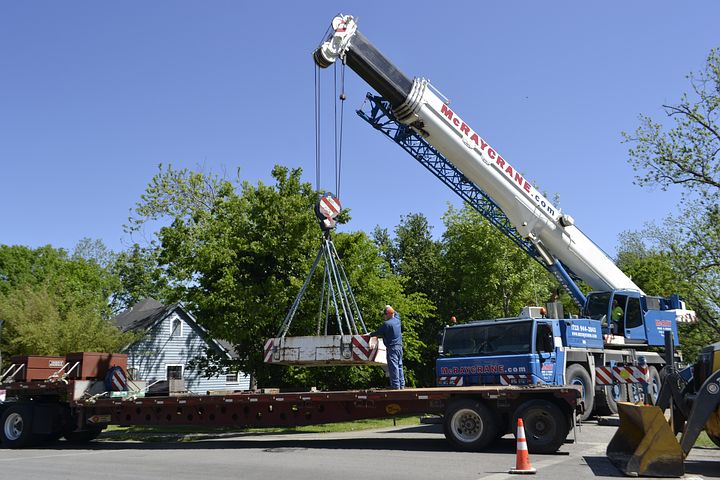
It was the news story that carried the day! Heavy-duty cranes took up positions to move post-civil war statues from the public square to museums. This action was brewing for some time but gained momentum after events in Charlottesville in 2017. One official shared the view that “I’m not disappointed in how this day has gone because it’s been really wonderful to see people get so excited about history.”

Crane Project

There’s always been a debate on why it takes a tragedy or widespread social unrest for change to happen. And even then, sometimes the change doesn’t fully address the situation at a root cause level. That thought certainly went into how SAIC came to be. From the deep dive in American history, the ‘Black to America’ story and #HometownStrong comebacks, there were certain issues and complaints from the 50s and 60s that kept resurfacing in the 90s & 2Ks.

Part of what makes SAIC a social-edge campaign/platform is from what happens in the tech space. When an app or software system is released in the marketplace, the product team reviews errors found in the development process. This helps them make changes for the next upgrade. Some of the corrections also come from complaints made by customers using the product. This root cause analysis ensures that problems found aren’t carried forward in the next release. Then, additional ‘smarts’ and new features get added to the update by covering the wider ‘true vs false’ system conditions. This requires some product knowledge and market awareness to minimize future ‘bugs’ or operating pitfalls.

Trending Hashtags

What if we could do the same by making culture relevant beyond hashtags, street protests and viral slogans/videos? These days it seems where the money resides on the sidelines and where the solution is missing, need to connect. We see examples of this dilemma when folks resort to rage marketing, woke bashing, performance art or botched journalism (selling books based on hold-back-the-facts reporting). Plus, some would prefer to have social consciousness seen as corny and civic ignorance seen as cool. But there’re other options for channeling community energy, whether through parent activism or broader civic participation as individuals and hometowns.

SAIC’s effort to “make history fun, civics fresh and culture feel-good” is about connecting the dots and bridging social divides. We’re better able to separate ‘truth vs falsehood’ concerns that tend to inflame civic/social issues. SAIC got clues on this based on what folks used to do to add smarts, style and status to their social game. One example is how some founding fathers were inspired by the Enlightenment Age where learning, facts and reasoning were valued over ideology and stuck-in-the-mud thinking. Another example is in how African-Americans benefited from starting many schools, colleges and local towns after the civil war. So SAIC updated this mindset, added in some ‘smarts’ and packaged it towards change through:

1. Education

Consider that there was a time when blacks were seen as inferior and viewed by those in religious circles as having ‘the curse of Ham’. That belief was used to demean, dehumanize and discriminate based on skin color. These days, the idea of social consciousness is being spun in some circles in a similar ‘curse’ kinda way to discredit and distract. We always hear about the 3Rs in basic education. Well, SAIC took things a step further by developing 5Rs for civics education: Rights, Responsibility, Rigor, Reach & Role. These deepen us in roots & culture for greater understanding and social savvy.   

2. Equity

Supreme Court Building

The work of equality has been ongoing since America’s founding. It’s been tackled in different ways throughout history by abolitionists and civil rights activists. The period from the Supreme Court rulings of Plessy vs Ferguson in 1896 to Brown vs Board of Education in 1954 saw the greatest push in this area. Now the focus isn’t just about equality but also equity. That’s what the nomination of the first black woman on the Supreme Court is about. It’s in showing that with the expertise and when given the chance, other folks can do the work and be their best at the task. That’s kinda how we went from black & white TV to color TV. We went from just ‘white’ light in the box to three streams of colored light in the box for a better picture. Equity gives a better picture of America.    

3. Empowerment

The trucker protests in Canada seem to be on the move. Word is that some are headed to Washington D.C. The jury is still out on what they’re trying to achieve but it’s one example of how the idea of empowerment has become more about generating media coverage than making a difference. What the SAIC framework allows is for real empowerment in the areas of civics, career, community and culture thru gains in voice, change and impact. In other words, as the saying goes “give a man a fish you feed him for a day. Teach him how to fish and you feed him for a lifetime,” for your best life experiences over time.        

4. Engagement

There’s a difference between excitement and engagement. Excitement often shows up as a trend. Engagement often shows up as a fixture. It’s like when a driver hits the gas to get the tires screeching, that’s excitement. There might even be tire marks to prove it. But engagement is what happens after the smoke clears. We can all find moments where we complain or protest or make a scene. But after the dust settles, what role are we gonna play to keep the fire of democracy burning or to make change happen? Was the ‘tire spinning’ just about social media branding or misinformation pushing?

Truck Caravan

Beyond the trucker protests and some of the news stories like those about banning books or students being bullied or grievance spreading, is folks trying to forge a sense of community. They want to build support around like-mindedness. Humans are social beings so in a sense the desire for community is normal. But if we add ‘smarts’, swag, status and more, we can be like those that came before us who embraced change for the greater good. We can have civic/career dreams come to life by playing hard, not just counting clicks or dollars but creating shifts and landing among the shining stars.     

You can join the conversation and support our efforts with SAICs “Dear America 2022” Letters and Impact Statement at the Facebook ‘Hometown Chat’ Page here http://www.Facebook.com/seeamericaincolor.    

Tracks: Drake – Come to Life – https://youtu.be/0at_WWsVeVA

Earth, Wind & Fire – Shining Star – https://youtu.be/BPtSPJK8rx8

What Black History Month Might Mean for a 2026 America: 4 Keys on Having Next Level Civics at the Forefront of Culture

Doc Cunningham
Sounding Off Social

Who’s ready for the call? Well, it depends on whether you watch the Superbowl for the commercials, the halftime show, the game itself or some combo. After a teaser on social media, the halftime show’s producers were hyping it as the best 12-minute music collab on stage. That’s less than a quarter in football play, with this year’s unexpected matchup between a newbie QB and one who reinvented himself.

SAIC’s Civic Life Tournament

Meantime, for SAIC there’s something else brewing off the field with prizes to handout. We’re calling all “Gen X, Gen Y, Gen Z, Gen Everybody” for what’s described as a Civic Life Tournament. After a recent preview of our 2022 “Field of Dreams”, this rollout brings three social challenge contests that will empower students and communities to blaze a trail in dreams, roots & culture. It’s about how we make history fun, civics fresh and culture feel-good to bridge social/cultural divides.

Over the past few years, we’ve dealt with pandemic, protests and post-elections drama. These have highlighted some sticky civic/social issues past and present. In addition, we hear news stories about the Supreme Court candidate ‘short list’, the Electoral Count Act, college admissions criteria, banning certain topics in K-12 education and voting rights rollback. We wonder why we still can’t figure this out. SAIC’s deep dive in American history, the ‘Black to America’ story and #HometownStrong comebacks reveal the root causes being due to America’s pitfalls like:

  • Turning self-evident truths into ‘hypocrisy on ice’.
  • Letting seeds of prejudice grow into trees of racism with fruits of inequality and hate.
  • Debating Affirmative Action without noting discrimination and representation.
  • Falling prey to the ‘snowflake syndrome’.
“Unsee” American History

The ‘snowflake syndrome’ is the newest way of folks trying to ‘unsee’ history. Think about going to the doctor’s office and filling-out the new patient form. They want to know if you suffer from any allergies or past health issues in your family background. The reason is so you can get sound medical advice on things to watchout for in diet, medication, etc. Even-though some stuff might be uncomfortable to hear as a patient, the doctor can’t fall prey to having only a limited view of your medical history. So why should students and citizens not learn aspects of American history as if they’re allergic to black history or it makes them somewhat uncomfortable? Isn’t the info needed towards our social well-being as a nation?

See America In Color – Smart Civics, Better Picture

That’s what SAIC’s ‘smart civics’ framework brings to the mix. It does so like a doctor meeting with a new patient. Plus, it’s about how we move from an outdated to an updated view of things like when we went from black & white TV to color or mobile phones from OG to 5G. This includes understanding what black history might mean for a 2026 America when the country will celebrate 250 years of independence. SAIC adds ‘smarts’ to civics education for next level content that opens our eyes to the:

1. Framers of Freedom – Frederick Douglass & Harriet Tubman

The founding fathers were ‘framers of freedom’ in forming the United States. But those like Frederick Douglass and Harriet Tubman were framers too. He sought the abolition of slavery and she led the ‘underground railroad’ for freedom from the south. For both, freedom was less about personal self-interest and more about greater good for blacks and the nation. In other words, one view of freedom was focused on becoming a sovereign nation while the other was on how we live-up to personal, cultural and civic ideals. Even if freedom has self-interest, when broadened it’s about “E Pluribus Unum” in higher purpose.

2. Stompers of Hate – Mamie Till Mobley & Ida B. Wells

Sporting Event Broadcast

What would cause people to host a watch-party for blacks being lynched? Or to celebrate the beating of Emmett Till? Hard to imagine this happened when you think of the excitement in watching a major event on TV today. Mobley didn’t want America to ‘unsee’ what happened to her son. So even-though he was brutalized his funeral was open casket. Ida B. Wells decided she was going to put lynching on blast. As a journalist she wrote stories that helped to make America see its history in real time. Then as now, acts of hate against Blacks, Asians, Jews and other groups are tied to those stuck on ignorance, poor self-love and fear. Is that the kind of America we want to keep repeating?    

3. Movers of Culture – Rosa Parks & Bob Marley

First there was Claudette Colvin who refused to give up her seat on a Montgomery Alabama bus. She didn’t want folks to view her as second-class just because she was black. Nine months later Rosa Parks took a similar stand which helped set-off the Montgomery bus boycott. Bob Marley made music that moved people across the globe. In one song he chants “keep your culture, don’t be afraid of the vulture. Grow your dreadlocks, don’t be afraid of the wolfpack.” SAIC has tweaked those words in saying to America “Grow your culture towards inclusion. Don’t be afraid of the backtrackers.”       

4. Changemakers of Civil Rights – Bayard Rustin & Dr Martin Luther King Jr

The first round of changemakers in the 1800s helped usher in the 13th, 14th and 15th Amendments. Those weren’t enough to steer the ship so the civil rights movement of the 40s, 50s and 60s helped forge three key laws. The Civil Rights Act of 1964 dealt with discrimination in employment, commerce and public service. The Voting Rights Act of 1965 dealt with voter suppression and subversion at the polls. The Fair Housing Act of 1968 dealt with roadblocks to home-buying. Bayard Rustin played a key role as part of the LGBTQ behind-the-scenes. He was also instrumental in planning the March on Washington in 1963 where Dr King made his ‘I Have a Dream’ speech. So what’s the focus of our next gen changemakers?     

Civil Rights Bill Signing

It helps to figure-out whether certain things in history were a feature or flaw. For example, some saw the Three-Fifths Compromise as a feature to hold on to slavery and the benefit of reduced ‘property taxes’ since blacks were treated as property and couldn’t vote. Some wanted the ‘added-value’ of govt funding that comes with higher population from counting blacks in society. But the Compromise dehumanized them as three-fifth human, which made the law a flaw. So today we gotta ask, “Is the Senate’s Filibuster rule the new Three-Fifths Compromise (it requires 60 of 100 i.e. 3/5 vote) a feature or flaw in how’s it’s applied?” If we’re looking for a better way of life and to protect voting rights it might be time for change!  

You can join the conversation and support our efforts with SAICs “Dear America 2022” Letters and Impact Statement at the Facebook ‘Hometown Chat’ Page here http://www.Facebook.com/seeamericaincolor.    

Tracks: Post Malone Ft Khalid – Time for Change – https://youtu.be/5gtXnUeJ9UE

Janet Jackson – Rhythm Nation – https://youtu.be/OAwaNWGLM0c

Hometown Best Op-Ed

SAIC’s Hometown Best Op-Ed

(Part 2 of 2) America as The Social Capital of the World: But Are We on a Slip-Slide in Democracy as a Nation Towards Our Worst Instincts and Bad Side?

Doc Cunningham
Sounding Off Social

It’s a new year and by now Santa Claus made it back to his digs in the north. As folks settle-in for the winter months, there’s a flurry of sporting events that help us deal with short days and cold nights. For football fans, this season’s slate of bowl games kept them on edge due to last minute thrills or covid cancellation ills.
Airport Terminal

Not everybody was happy with things as travel was severely affected. Some folks had to jump through hoops to get back home. There were system breakdowns due to staffing shortage and bad weather. That created frustrations in air travelers who felt the airlines dropped the ball. That’s interesting when you consider other frustrations people feel these days that are tied to civic/social issues. Whether dealing with travel alerts or political drama in spurts, some might wonder, how did we get here?

It might be the case as a nation that we dropped the ball on civics. That’s basically what former military leaders shared in a public statement they released regarding the current state of American democracy. They issued a strong warning that we should recommit to civics education. SAIC has positioned itself in that lane towards building social capital, maybe on a scale that we see with organized college sports.

Civics Education

An advertising billboard in the south, promoting higher learning asks the question, why should we get an education? The answer on the billboard basically says, “so we can live the life of our choosing.” Similarly, civics education is important so we can move closer to becoming a more perfect Union of our choosing. That makes sense from a constitution standpoint but what about a cultural point-of-view? Well, civics is to culture as deodorant is to hygiene. Without it, the atmosphere can get funky when things smell/look bad (as happening in some areas of public affairs these days). Who we become as citizens is just as important as what we become as professionals.

SAIC’s deep dive in American history, the ‘Black to America’ story and #HometownStrong comebacks is about making history fun, civics fresh and culture feel-good. The content stream is built around a template to foster voice, change and impact in career, community and culture. It’s also about connecting the dots across history and current issues, across career dreams and purpose/passion. That’s possible when we understand the social mindset during different times throughout history as seen back in:           

1. Ports & Profit – 1607

The first British settlers arrived on America’s shore in 1607 and setup shop in Jamestown Virginia. They were part of a group sponsored by the Virginia Company of London that was looking for more places to produce/sell goods. Their profit motive was also tied to creating new ports and thus trade routes to the Western World and Far East. Many struggled with disease, despair and drastic weather conditions they weren’t used to. They persevered which is why America’s story (in part) is built around profit. But when the profit-incentive led to the idea of degrading or dehumanizing people, this opened the door to slavery.

2. Property & Power – 1619

Things began to shift when 20+ Africans arrived in the Hampton area (formerly Jamestown). The early settlers were busy dividing up land amongst themselves which translated to building wealth. But beyond the physical property, human property was also in play. The settlers turned to Africans as an unpaid labor source which led to boosting their profit-driven enterprises. Whether 1619 was the first time that blacks arrived in the U.S. is often debated. But when a brand new store opens its doors there’s sometimes a “soft opening” with limited options and then a grand opening with full-scaled service.

3. Purpose & Dreams – 1620

While that was taking shape in Virginia, another group of British settlers arrived in Massachusetts. They became known as pilgrims/puritans, in part for taking a pilgrimage from a foreign land, but also because they were a religious group hoping to establish a different order for practicing their faith. They felt oppressed by the church hierarchy so the journey took on a sense of purpose to flee persecution. Maybe that’s one reason why America became known as a nation of immigrants as many others (oppressed or impressed) arrived here from countries all over the world to start anew and hopefully live the American Dream.        

Next-Level Dreamers

4. Promise & Potential – 1776

As the settlement phase of British arrivals took-off and the slavery phase of African arrivals boomed, the colonies eventually had a falling-out with the ruling class back home. Things came to a head as they felt it was time to break-off from England. The American Revolution was the road to Independence as a sovereign nation. Even-though there were attempts at Insurrection by ‘loyalists’ of Britain, the Founding Fathers drafted some important documents that would become the promise of the new nation and speak to its potential as a force for good in the world.     

With news reports, political debates and social topics on generational wealth, immigration, critical race theory, reparations, religious-right, insurrection (1/6/2021) and more, they point back to key times in history. Furthermore, there’s a recurring thread on race used to stoke fears or divide/deny access and resources. With organized sports, many look past these issues if it means getting great entertainment value. So America, if you are what you say you are, a superstar, then let’s reboot civics education to rise as a nation fulfilling the promise, purpose, property and profit tied to our freedoms. That’s real social capital!  

Social Topics

You can join the conversation and support our efforts with SAICs “Dear America 2022” Letters and Impact Statement at the Facebook ‘Hometown Chat’ Page here http://www.Facebook.com/seeamericaincolor.    

Tracks: Jon Batiste – Freedom – https://youtu.be/3YHVC1DcHmo

Lupe Fiasco Ft Matthew Santos – Superstar – https://youtu.be/hVkBlsgthLg

(Part 1 of 2) America as The Social Capital of the World: But Are We on a Slip-Slide in Democracy as a Nation Towards Our Worst Instincts and Bad Side?

Doc Cunningham
Sounding Off Social

Just after Halloween and before moving into Thanksgiving mode, word hit the airwaves that international travel restrictions would be lifted. It was one of the most welcomed news in months. Family members who were kept apart across the miles could visit one another again. When the first in-bound flight landed at JFK, it was sheer excitement as folks hugged tightly and long. But before Santa Claus could check-in for his flight from the North Pole, that news had been dampened by another Covid-19 variant.

Santa’s Sleigh

As all this is happening on the family side of things, there’s also concern around ‘town & country’ affairs. A new report issued by Harvard’s Kennedy School that shared polling results of young people ages 18-29, showed that only 7% of them see America as a healthy democracy. It also revealed that 52% of them believe America as a democracy is either ‘in trouble’ or ‘failing.’ This info lined-up with other recent news about the first-ever time that America made the list of ‘backsliding’ democracies by an International Organization based in Sweden.

While it’s clear that family and country are on people’s minds around the holiday season, when you add in some of the events of school violence, social anxiety, health challenges and political struggle, they put matters front-and-center. SAIC’s bumper sticker slogan of “get a shot of vaccine and a boost of civics” might be a good start to helping keep families safe and citizens on point. But is it enough to get us over the ‘Covid & Conflict’ hump?

Based on a deep dive in American history, the ‘Black to America’ story and #HometownStrong comebacks, there’s more we can do towards a shared purpose. What if in 2022 our collective aim as families, communities and a nation was to have America be seen as the social capital of the world? For starters It would mean getting past some of our hangups and hiccups like:

  • A culture war around vaccine shots and Sesame Street’s ‘Big Bird’.
  • Attacking public officials for mindless reasons.
  • Using civic insecurity or racial backlash as a ‘wink wink’ for ignorance, as a badge of honor or for giving racism a free pass.
Holiday Lights

One of the takeaways for SAIC was realizing that life in two Americas can mean seeing in black or white, living uptown or inner city as well as spreading social division or building social capital. With division vs capital, one side is influenced by keeping history/tradition in standstill while the other is influenced by making shifts in pride/promise towards goodwill. Plus, social capital opens doors for more economic opportunity and triumphs in human spirit. Consider Santa Claus and the Christmas vibe of gifts, cheer and holiday lights. If Santa is impressed by all the multi-colored lights, then how might we work towards living and branding as the United States of See America In Color? Well, we might build social capital around:      

1. Media Standing

Considering the original purpose of media was to dispel conspiracies about America’s breakaway from the British, there’s another battle today around clicks, tiks, toks and snaps. Media has been expanded to include news, sports and pop culture. Just think about organized sports and being an All-American in terms of strong academics as well as superb game skills. What if we could push a similar narrative when it came to civics and culture? It would help to raise our All-American standing as media and citizens. That’s what SAIC’s civics media/marketplace collab hopes to do as we build our social capital chops.

2. Culture Bridging

When America spun-off from Britain after the Revolution, there was a kinda cooling-off period where new words were added to the American language. While the British write ‘colour’, the Americans write ‘color’ or ‘favourite’ as ‘’favorite’. Spell-check might flag one word over the other depending on where you live. These days there’re more pressing cultural ‘red flags’ to worry about. So SAIC offers a new way of spelling-out the issues. SAIC’s new language and focus can help achieve culture-bridging even if you live in different states or on different sides of the ‘social issues’ fence.

3. Life Skilling

Hollywood Blvd

Dr King was quoted as saying “I Have a Dream that’s deeply rooted in the American Dream.” The SAIC translation says he was talking about career dreams and civic dreams. No matter one’s field of dreams, whether sports, biz, Hollywood or other life pursuits there’s some expectation of growing in your line of work. This means knowing more, improving on your skills and maybe even gaining stature in the game. Similarly, celebrities and citizens can build social capital by growing in public affairs so that life-skilling isn’t just about making money but also about connecting the dots in history, civics, culture and social impact.      

4. Solution Building

We wonder if public service for some is more about cultural performing than solution building, conflict than common good. Yea, it’s hard to legislate against hypocrisy/ego but we can educate against ignorance/deception or agitate against inequality/injustice. SAIC can add value by how we build social capital, spur civic renewal and maybe even move folks away from a love affair with an election lie, for the sake of our democracy. In other words, it’s like putting civics on a treadmill or doing ‘bend & stretch’ moves for upping our social game as “Healthy People, Healthy Planet, Healthy Public-Good.”

Social Game

We learn at an early age by mastering the 3Rs, aka Reading wRiting and aRithmetic. They are building blocks for an education and achieving our career dreams. But what about those civic dreams? Maybe we need to consider a fourth ‘R’ for civic Rigor. This way we not just see ourselves as Americans from a family perspective but also raise our standing as All-American citizens. No kid wants to be on Santa’s ‘naughty’ list and no adult should want to see democracy go down the drain. So, if we can build social capital, it will be like what dreams are made of where it feels good to be alive!

You can join the conversation and support our efforts with SAICs “Dear America 2021” Letters and Impact Statement at the Facebook ‘Hometown Chat’ Page here http://www.Facebook.com/seeamericaincolor.    

Tracks: Beyoncé – Be Alive – https://youtu.be/4wYdZi3tFJ4 

Mickey Guyton – All American – https://youtu.be/mCUrFtE8lno

Thanksgiving and The Pilgrim’s Journey to America: What It Means Today for Having a Strong Voice in the Streets or Corporate Suites

Doc Cunningham
Sounding Off Social

Some retailers are beginning to worry if the Christmas holiday shopping season is gonna be a boom or bust. There’s been news of supply chain issues and ships stuck at sea waiting to be unloaded. One test-case for the holiday season will be the Black Friday gift-buying grab. But first there’s Thanksgiving Day when many families sit around the table for a big meal.

Turkey Centerpiece

This American traditional feast was supposedly started not long after the pilgrims set foot on New England shore. Before they arrived, a local indigenous tribe celebrated the occasion as a feast of thanks-giving for the harvest. Then they invited the pilgrims to their feast. The pilgrims liked the idea and adopted it as Thanksgiving for safe passage from Europe. Over the years it grew in appeal and during the brutal years of the Civil War, President Lincoln kinda made it “certified official” as an American holiday custom.

It’s a big part of the kickoff to the end-of-year holiday season. It’s also a great time to hangout with family and friends with food, football and lively spirits to go along. So, at first it went from an indigenous custom to a pilgrim and Native American occasion for coming together. Not sure what has the potential to do that now, considering the culture war climate that exists. As if the vaccine debate wasn’t enough, the drama has spilled over into municipal workers as well as public education around how we learn history.

Thanksgiving History

But what some miss as a takeaway from the first sit-down between the native tribe and the pilgrims might be a lesson for all the “tribe talk” in today’s socio-political world. It’s a hard concept to grasp these days when you hear all the squabbles on the election campaign trail or some cable news tale. The OG native Americans were open to the idea of “think self but beyond self.” Interestingly, this idea might also have been a test-case for America’s future in how it handled the sharing of opportunity, inalienable rights and economic benefits with all its citizens. We see that struggle even today with public policy negotiations.

SAIC’s deep-dive in American history, the ‘Black to America’ story and #HometownStrong comebacks revealed something else about the pilgrims. They were “sick & tired” of the social/religious climate at home. So they took the journey from England to America which speaks to how to “walk in your calling” and have a strong voice in the streets or corporate suites. This might even cause us to ask, “what is America’s True Calling?” The process of answering that question has been folded into SAIC as a social-edge campaign and platform. America’s true calling is not simply about advocating for democracy or defending human rights or promoting fair trade. But more for real it’s about how we engage our:          

1. Better Angels

Civil War Battle

During the early part of the Civil War, Lincoln had a major decision to make. Was he for abolishing slavery or for saving the Union? Initially, it was more the latter. He really didn’t want southern states to break-away from the US. He asked folks to think about a more “eternal reason” for keeping the union in tack. In his first inaugural address he called on the nation to summon the “better angels of our nature.” That’s one way to understand the idea of “walking in your calling” or appreciating how Lincoln may have been trying to connect America to its True Calling.       

2. Shared Purpose

Every year on Thanksgiving morning, families look forward to the holiday parade. It’s an event for the kids who enjoy seeing the balloons high in the air. It’s also enjoyed by parents, because maybe it’s a reminder of younger days feeling full of wonder. The idea of parades and marching bands is good ol’ American apple pie, with a great feeling of excitement in coming together. That’s what SAIC with its framework, focus, functions and features represents. It’s about bringing a feeling of excitement and wonder in coming together for a shared purpose.        

3. Civic Renewal

Throughout history, America has seen many rounds of turmoil and strife. There were rebellions that shook the powers-that-be when it came to abolishing slavery. Fannie Lou Hamer was the first to coin the term “sick & tired of being sick & tired” but there were others who understood that feeling. They reached the point of having seen enough, so they took steps to make change or make a difference. While Hamer had an unsuccessful run for congress, that didn’t stop her from “walking in her calling.” Her actions led to the civil rights movement taking shape in the south. In a sense, it was her investment in civic renewal.   

Unpack the Issues

4. Public Good

In the process of getting an education, we graduate by completing a certain number of credits. That means we’ve earned some level of knowledge and understanding in an area that will serve us well later in life. That’s true whether going on from high school to college or vo-tech, or from college to a professional career. If what we do with academics prepares us for a life in biz or career, then what we do in civics can prepare us for a life of public-good. SAIC’s vision around ‘smart civics’ is about how we achieve a more socially healthy way of life towards public-good.        

W.E.B. Dubois wrote in his book and was also quoted in a speech saying, “The problem of the twentieth century is the color-line.” Well for America, SAIC believes the challenge in the twenty-first century is the color-stream. As a family, when we watch the social issues unfold, we gotta get away from seeing history as a projection stream of “white light” (the way a black & white TV works), to seeing history as projection streams of “colored light” (read, green and blue, the way a color TV works). In combining American history, the ‘Black to America’ story and #HometownStrong comebacks, just imagine how much of a better picture we’ll have of civic/social issues for a higher level or citizenship?

Civics Lesson

You can join the conversation and support our efforts with SAICs “Dear America 2021” Letters and Impact Statement at the Facebook ‘Hometown Chat’ Page here http://www.Facebook.com/seeamericaincolor.    

Tracks: Emeli Sandé – Family – https://youtu.be/vsGSo5XMDQQ

Common – Imagine (Live Session) – https://youtu.be/vP6cDIyLPEk

Upcoming Events

Men’s Panel, Thursday 11/11/21 6:30pm ET. Register here: https://us02web.zoom.us/meeting/register/tZAvf-qopzMpHNd1QvbuSaiDHD0erMZ9NmNe

Women’s Panel, 11/15/21 6:30pm ET. Register here: https://us02web.zoom.us/meeting/register/tZModuqhrz8iHNYTL9Fmh-IChQ-ihMCTNaS9